
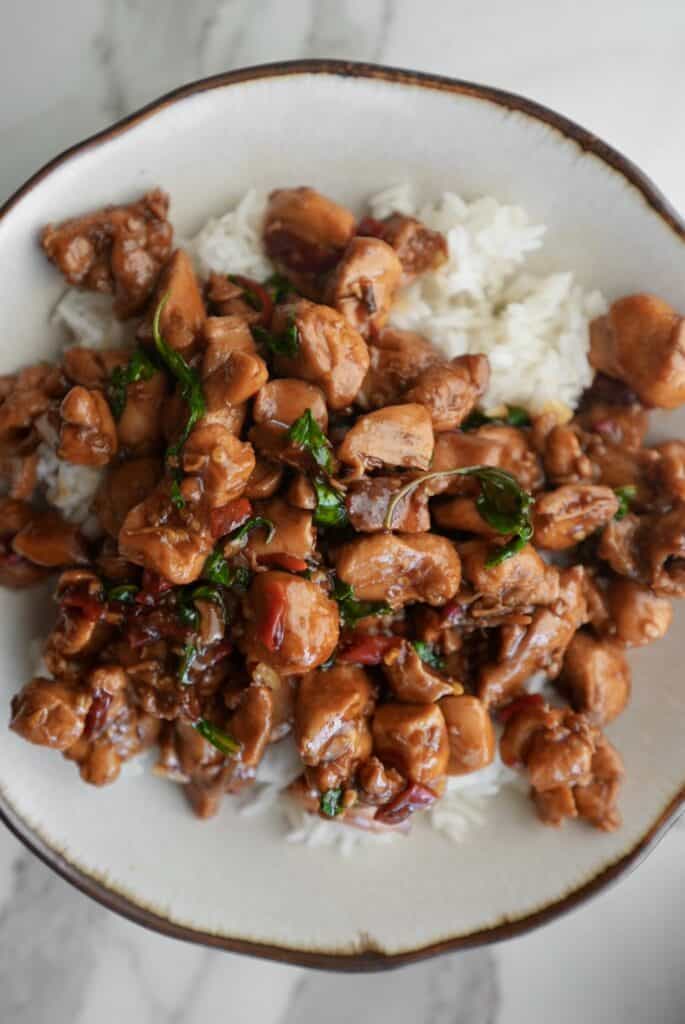
Thai Basil Chicken is one of those dishes that’s incredibly simple but packed with bold flavor. It’s fast, spicy, savory, and slightly sweet, with tons of garlic, chilies, and fragrant basil. Served over jasmine rice with a runny fried egg on top, it’s humble but also a showstopper!
This was one of Jeff and my favorite dishes while we were in Thailand, and we ended up ordering it constantly. There was a little restaurant next door to the hotel we were staying at that was ran by the sweetest grandma. We went there everyday while we were in Chiang Mai. She was probably thinking who the heck are these people and why do they keep coming back?! In her mind, she was probably just cooking regular Thai food, but to us, it was the most amazing food we’d ever had!
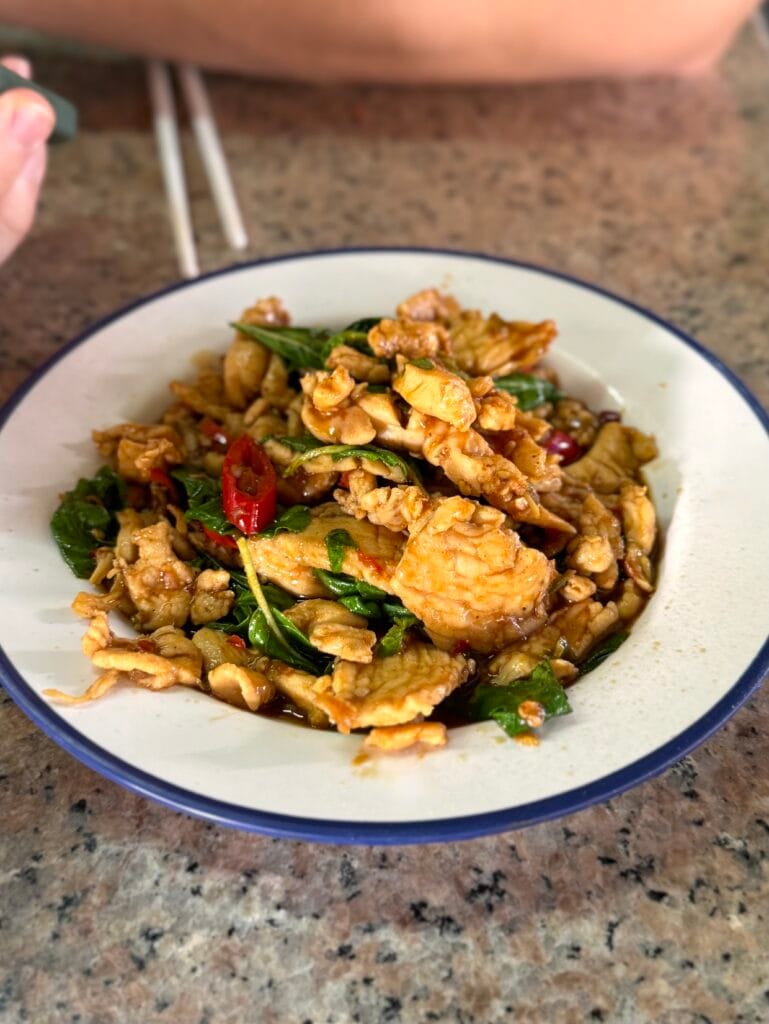
Pad Kra Pao is one of those meals you can find almost everywhere in Thailand – from street food stalls to small local restaurants – and it always hits the spot. Every place has their own special recipe or way of making it.
One of the things I love most about this dish is how flexible it is. While pork and chicken is classic, you can easily swap in other proteins like beef, shrimp, or even tofu depending on what you have on hand. The sauce works with just about anything, which makes it a perfect “clean out the fridge” kind of meal.
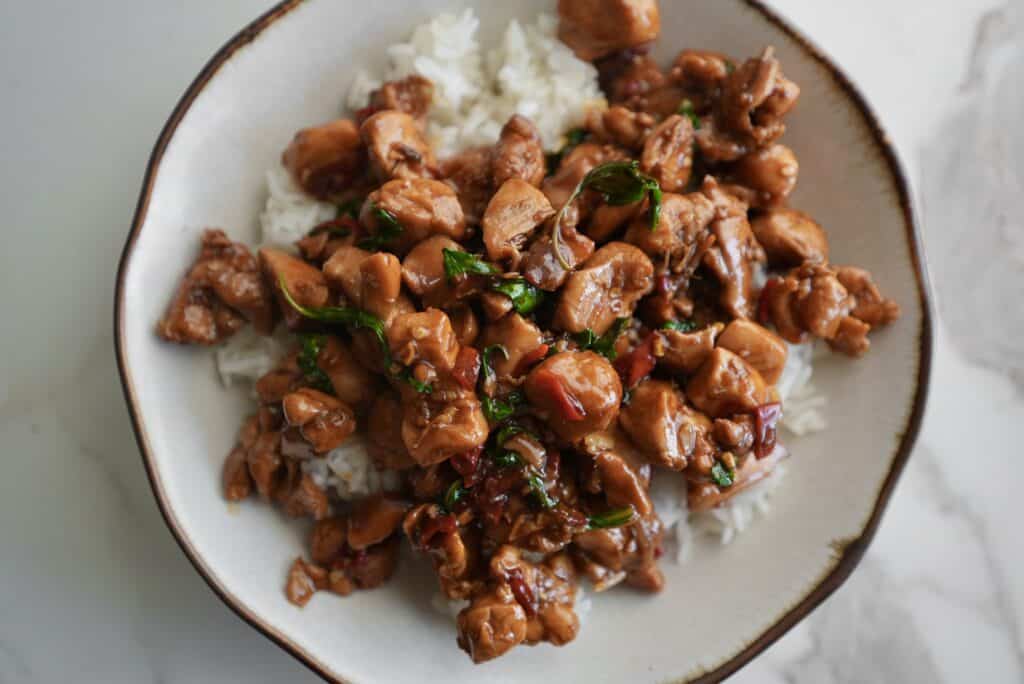
Ingredients:
• Shallot: Adds a mild sweetness and savory depth as the base of the dish.
• Garlic: A key flavor builder that gives the dish its signature bold, aromatic punch.
• Thai bird’s eye chilies: Bring the heat and a sharp, spicy kick that defines pad kra pao.
• Chicken thighs: Juicy and flavorful, they stay tender while soaking up the savory sauce. (You can also swap in pork, beef, shrimp, tofu, or whatever protein you prefer.)
• Fish sauce: Adds saltiness and deep umami for that classic Thai flavor.
• Dark soy sauce: Gives the dish a deeper color and slightly richer, caramel-like depth.
• Soy sauce: Adds balance and saltiness to round out the sauce.
• Oyster sauce: Brings sweetness and savory richness that helps coat the meat.
• Sugar: Balances the heat and salt while enhancing overall flavor.
• Chicken broth: Helps create a light sauce so everything coats the rice nicely.
• Holy basil (or Thai basil / sweet basil): The star of the dish – adds an herbal, peppery aroma that finishes everything perfectly.
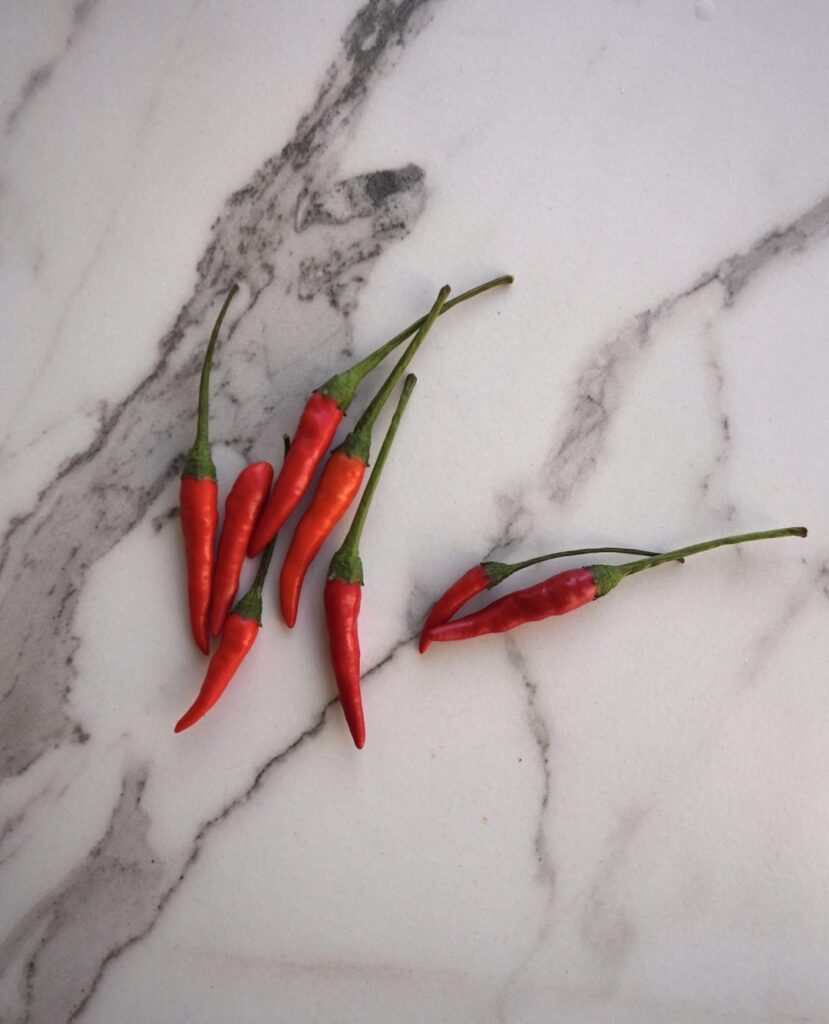
What Chili Peppers to Use
The chilies used in Pad Kra Pao are typically Thai Bird’s Eye Chilis (prik kee noo), known for their small size and intense heat. These chilis are a cornerstone of Thai cooking, delivering the kind of fiery spice that defines dishes like Pad Kra Pao. When crushed or sliced, their seeds and membranes release an aromatic oil that infuses the dish with a bold, vibrant flavor that pairs perfectly with the holy basil.
I can always easily find bird’s eye chilis at my local Asian markets, but if you can’t find any, there are a few excellent substitutes. Serrano peppers are a great alternative, as they have a similar fresh heat but are milder, making them a good option for those who want to dial back the spice. For a closer match in heat, habanero peppers can be used.
Another option is to use dried Bird’s Eye Chilis, which are the real thing, but slightly less flavorful and intense since they’ve been dried.
What is Holy Basil?
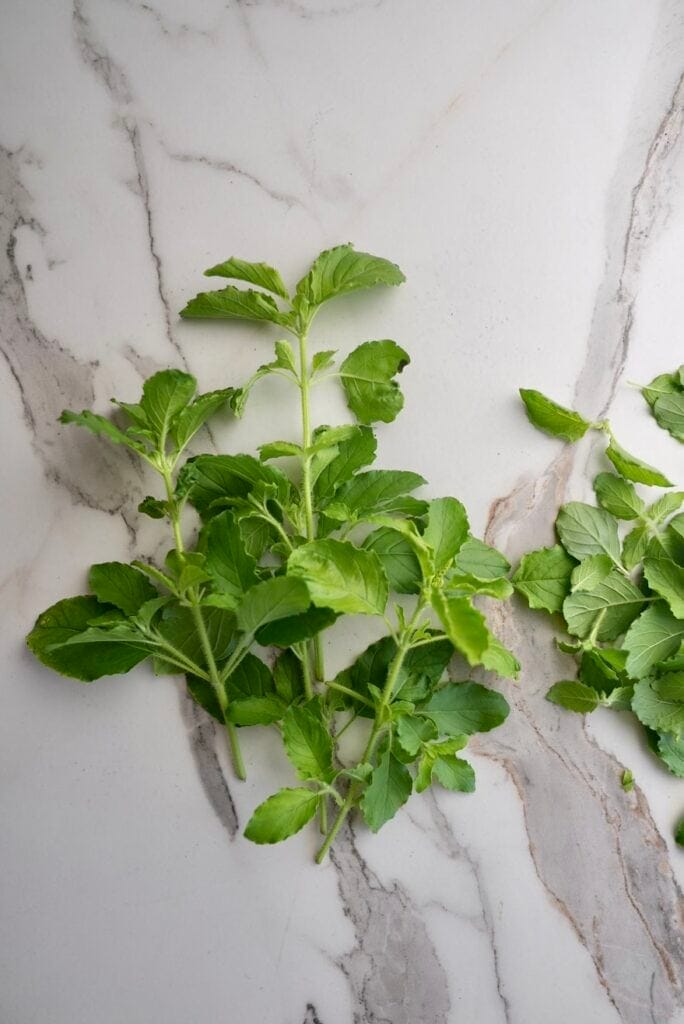
Holy basil, known as kra pao in Thai, is the heart and soul of Pad Kra Pao – it’s even where the dish gets its name. This vibrant herb has a uniquely spicy, peppery, and slightly anise-like flavor that sets it apart from other types of basil.
Outside of Thailand, however, holy basil can be notoriously difficult to find. If you’re craving Pad Kra Pao and want the most authentic flavor, growing your own holy basil at home is an excellent option. It thrives in warm climates and is relatively low-maintenance.
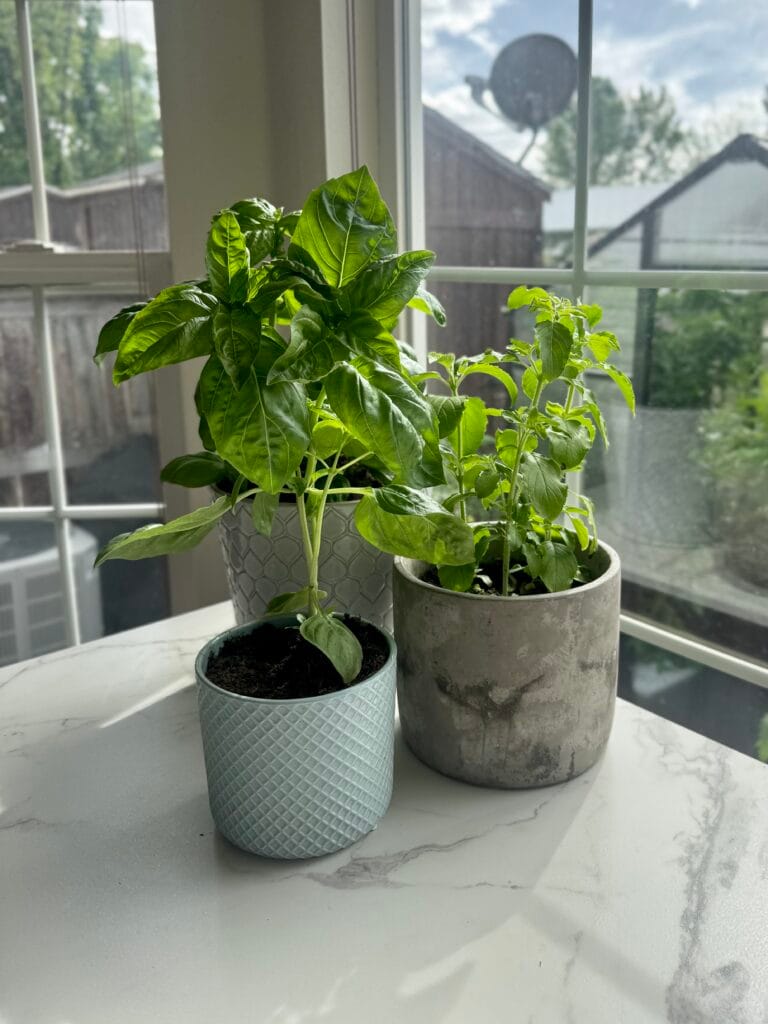
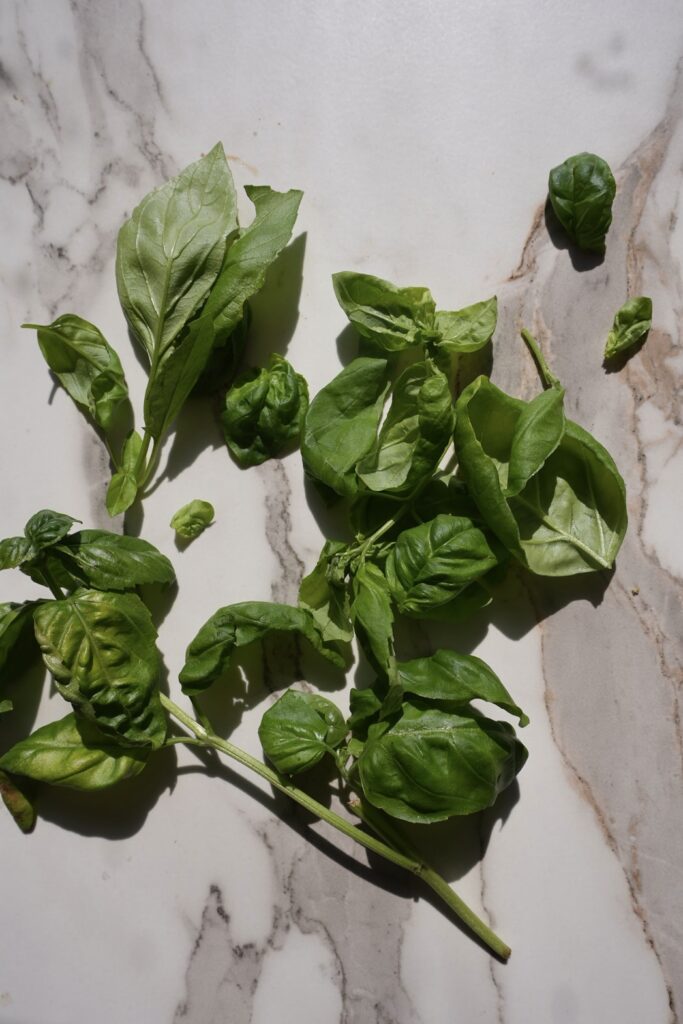
Alternatively, you can use substitutes, though they won’t perfectly replicate the unique flavor. Thai basil (pictured; the basil with the purple stems) is the closest substitute. It has a mild anise flavor. Italian sweet basil can work in a pinch but lacks the peppery bite.

Thai Basil Chicken
- Total Time: 20 minutes
Ingredients
- Neutral cooking oil
- 1 shallot, thinly sliced
- 8 cloves garlic, thinly sliced
- 4 Thai bird’s eye chilis, deseeded (adjust according to your spice preference; keep seeds if you like it extra spicy!)
- 1 lb chicken thighs, diced
- 1 tablespoon fish sauce
- 1/2 tablespoon dark soy sauce
- 1 tablespoon soy sauce
- 1/2 tablespoon oyster sauce
- 1/2 tablespoon sugar
- 1/2 cup chicken broth
- 2 cups holy basil leaves (substitute for Thai basil or Italian basil)
- Jasmine rice and fried egg for serving on the side
Instructions
- Heat a generous drizzle of neutral oil in a pan or wok over medium-high heat.
- Add the shallots, garlic, and chilies. Stir-fry until fragrant and lightly golden.
- Add the diced chicken and cook until browned and nearly cooked through.
- Stir in fish sauce, dark soy sauce, soy sauce, oyster sauce, sugar, and chicken broth. Mix well and simmer until the sauce slightly reduces.
- Turn off the heat and fold in the basil leaves until just wilted and fragrant.
- Serve over jasmine rice with a fried egg on top.
- Prep Time: 5 minutes
- Cook Time: 15 minutes
Nutrition
- Serving Size: 2-3



I’ve had this in many Thai restaurants but didn’t realize how easy it was. Will definitely be making again.
It really is so easy! Thank you for sharing, Martha! Glad you enjoyed this one. 🙂