
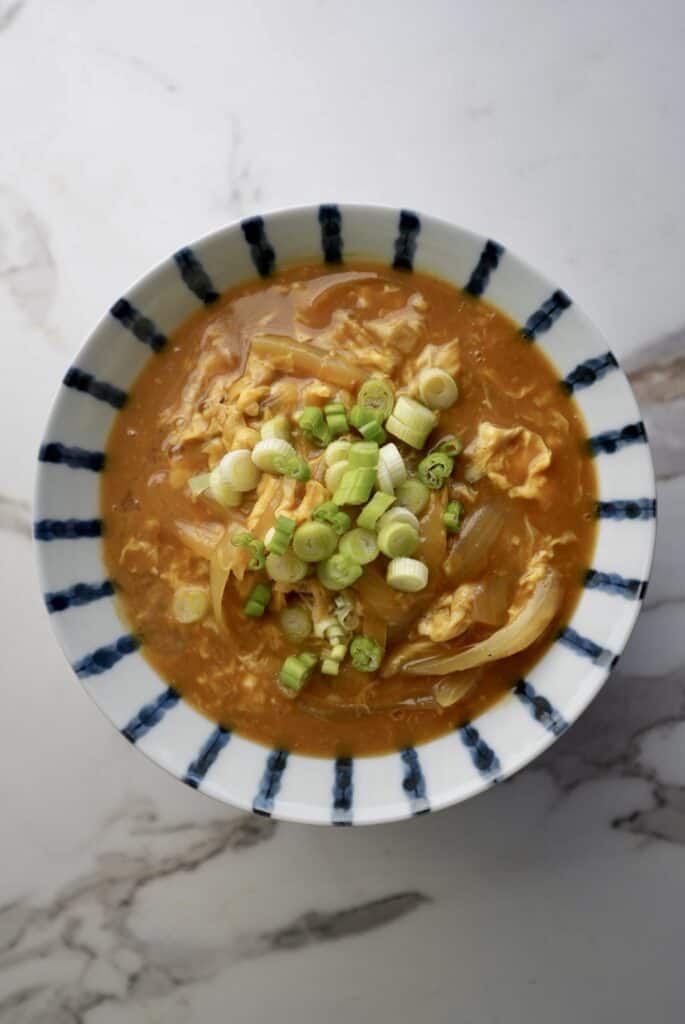
If there is one dish that instantly transports me back to Japan, it’s curry udon. But mixed with egg drop soup?! Yes PLEASE.
When I lived in Japan, I lived right next to an udon shop, and this was always my favorite thing to order. There was something so comforting about walking into the restaurant on a chilly day and being greeted by a steaming bowl of thick udon noodles swimming in a rich, savory curry broth. Never got tired of it.
Curry udon is the ultimate comfort food. The broth is a flavorful combination of dashi, soy sauce, mirin, and Japanese curry roux, while the chewy udon noodles make it especially satisfying. In this version, I also add tender shredded chicken and silky egg ribbons, which make the soup feel even heartier and more nourishing. But feel free to swap out the chicken for another protein! Every bite is warm, cozy, and packed with flavor.
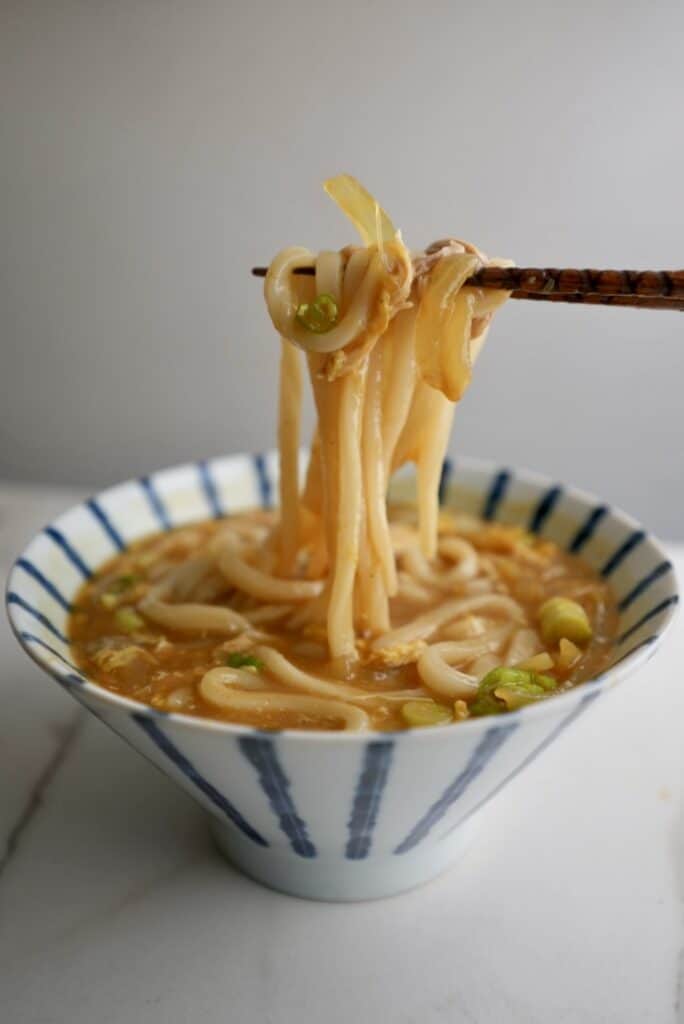
One of my favorite things about curry udon is how approachable it is to make at home. Using Japanese curry roux gives the broth its signature richness with minimal effort. This makes it a great weeknight meal when you’re craving something comforting (but easy!).
Whether you’re already a fan of Japanese curry or trying curry udon for the first time, I think you’ll understand why this dish became such a staple for me while living in Japan.
How to Make Dashi: Japanese Cooking Stock
There are three main ways to make dashi, each with its own advantages in terms of flavor, ease, and time. I ordered them from most complex to simplest:
- Dashi from Scratch: Traditional dashi, made by simmering kombu (dried kelp) and katsuobushi (dried bonito flakes), is considered the best method. Soak the kombu in water, heat just below boiling, and add katsuobushi. This method is ideal for dishes with the purest flavor.
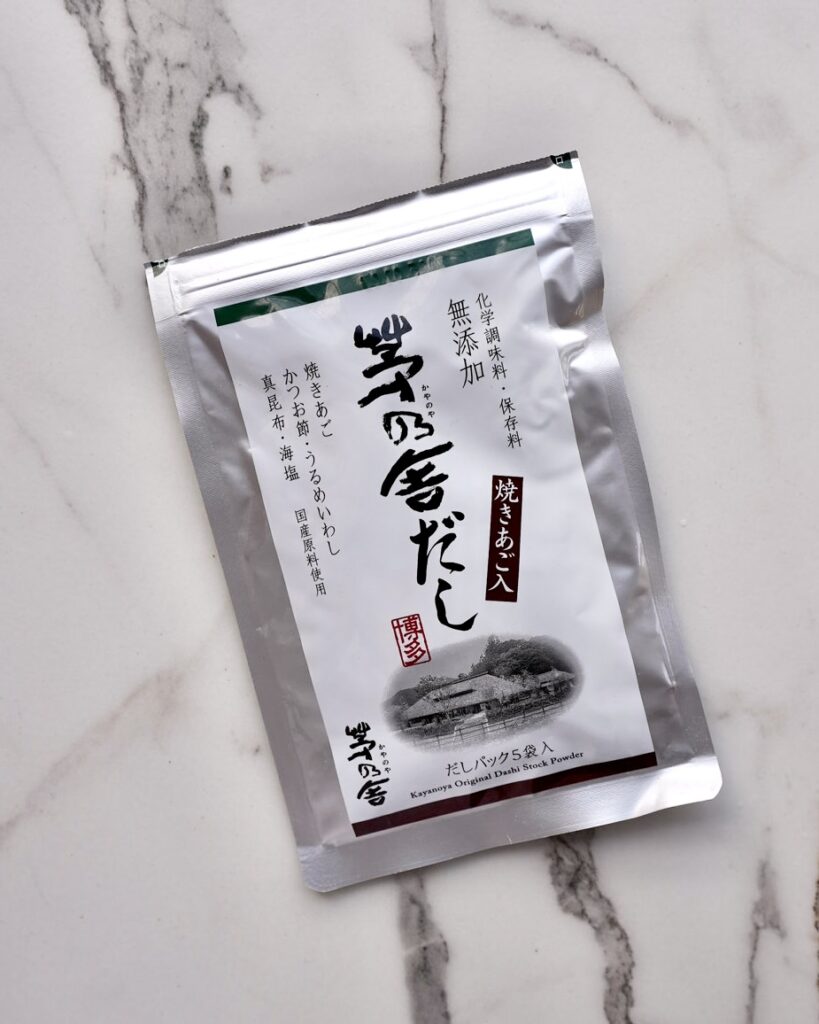
- Dashi Packets: Dashi packets, resembling tea bags, contain dried kombu, katsuobushi, and sometimes shiitake mushrooms or dried sardines. Just simmer the packet in water for a few minutes for a quick and flavorful broth. Buy dashi packets here from one of my most recommended dashi brands, Kayanoya.
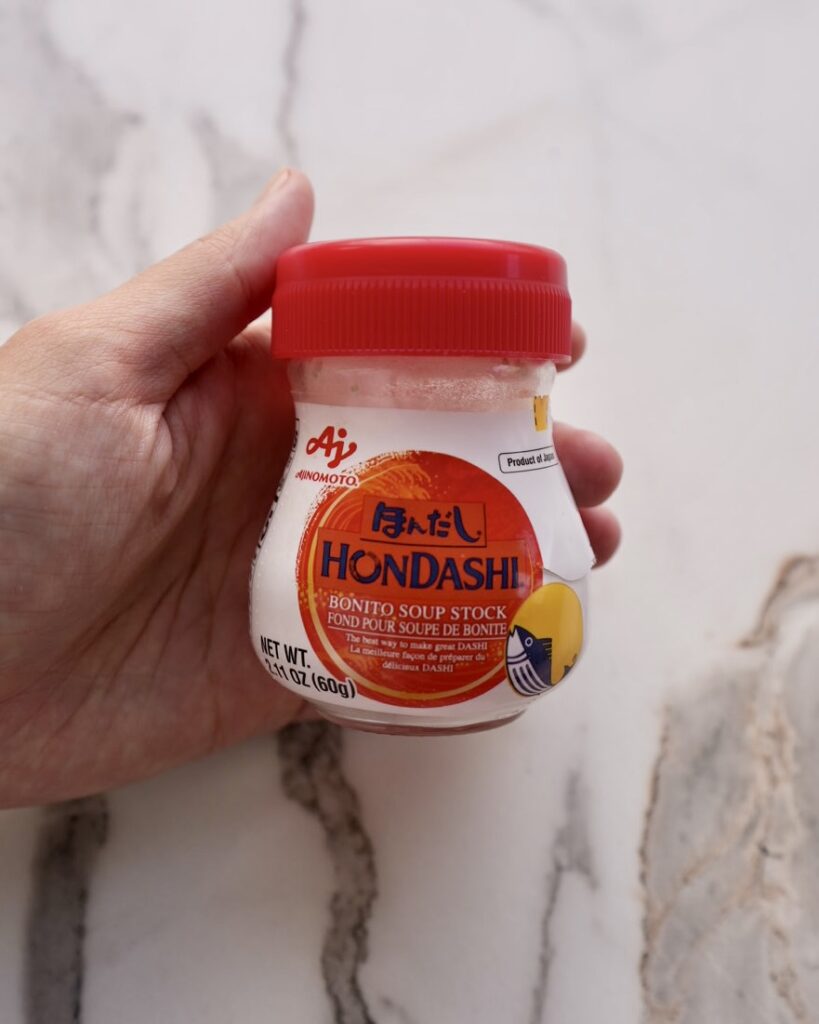
- Instant Dashi (Hondashi): Instant dashi, often called hondashi, is a granulated or powdered form of dashi. Just a spoonful dissolved in hot water creates a quick and flavorful stock. This option is convenient and ideal for busy days. Buy hondashi here.
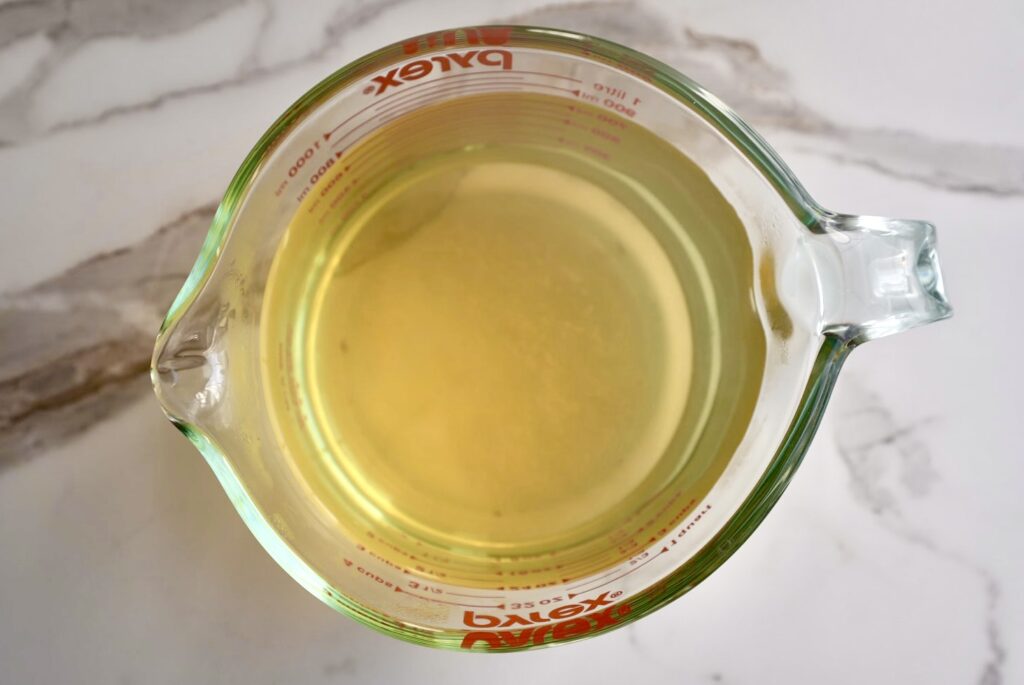
Making Dashi From Scratch
Dashi is a fundamental Japanese stock that forms the backbone of countless dishes. It provides a delicate yet deeply savory flavor known as umami.
Made traditionally from kombu (dried kelp) and katsuobushi (dried bonito flakes), dashi is prized for its ability to enhance other ingredients without overpowering them. It’s used in a wide variety of dishes, from miso soup and noodle broths to simmered vegetables, nimono, and even sauces and dressings, making it an essential component of authentic Japanese cooking.
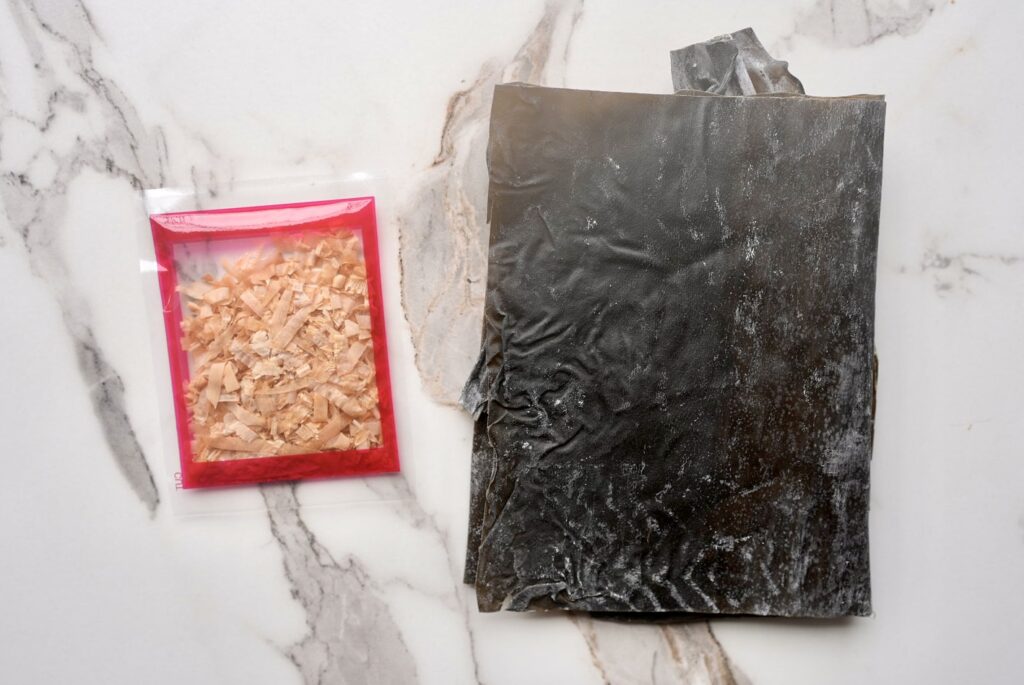
Like I mentioned above, you can use shortcuts to make dashi (which I do all the time! Making it from scratch is a little more work than I am cut out for, especially on busy days). So here’s how to make it from scratch:
- Prepare Kombu: Soak the kombu in cold water.
- Heat the Water: Slowly bring the kombu water to just below a boil.
- Remove: Take out the kombu before the water boils to prevent bitterness.
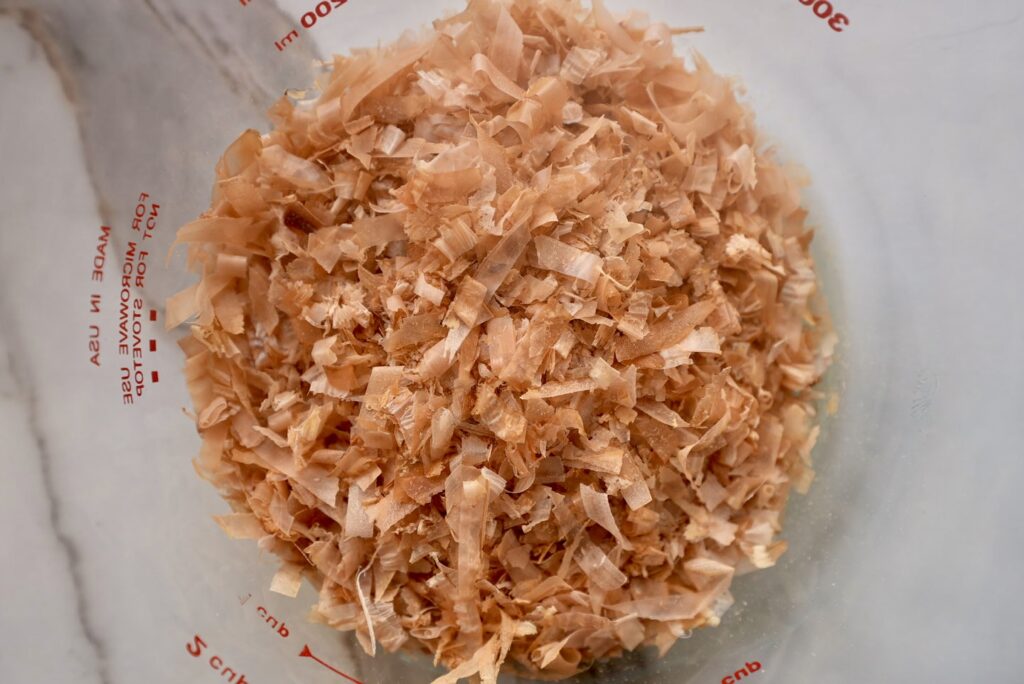
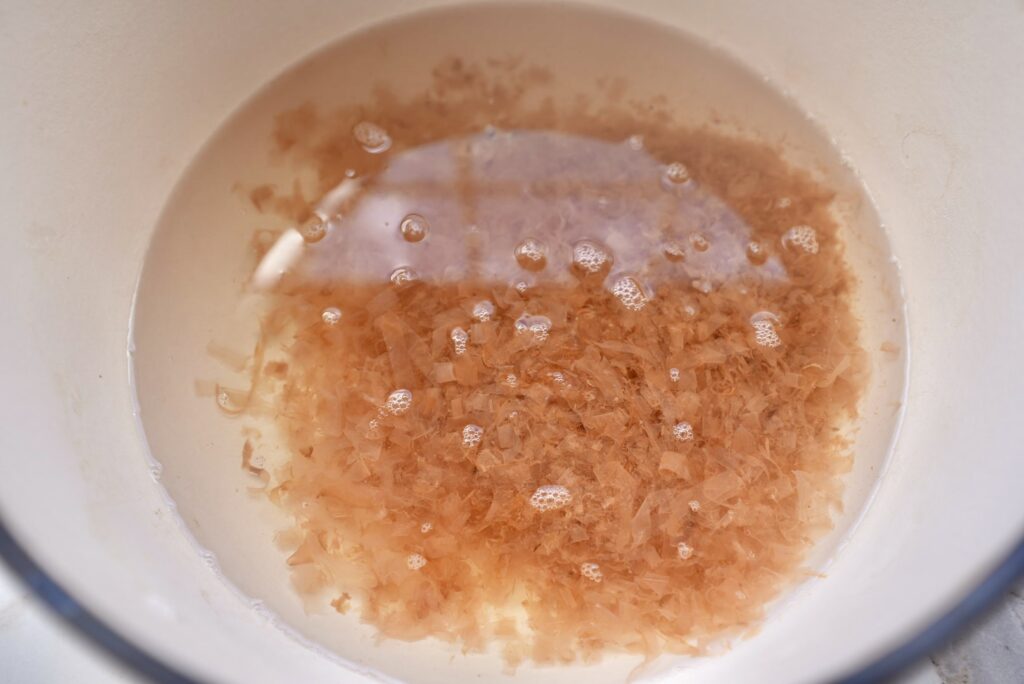
- Add Katsuobushi: Sprinkle in bonito flakes and let them steep for a few minutes.
- Strain: Remove the bonito flakes using a fine-mesh sieve.
Making Japanese Curry at Home
Japanese Curry Udon combines two beloved comfort foods – curry and udon noodles – into one bowl of deliciousness.
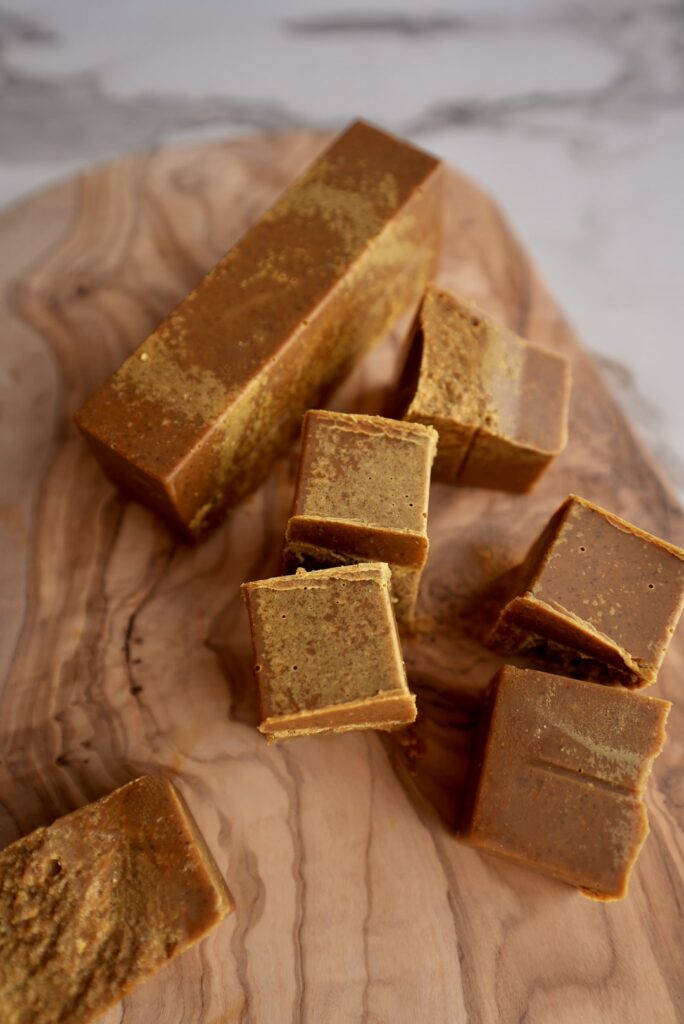
To make the base of Japanese curry, you will need Japanese curry roux. It’s a concentrated curry base made by cooking flour, oil or butter, and Japanese curry spices into a thick paste, often sold in block or cube form. When added to simmering meat and vegetables, it melts into a rich, savory, slightly sweet curry sauce that’s a staple in Japanese home cooking.
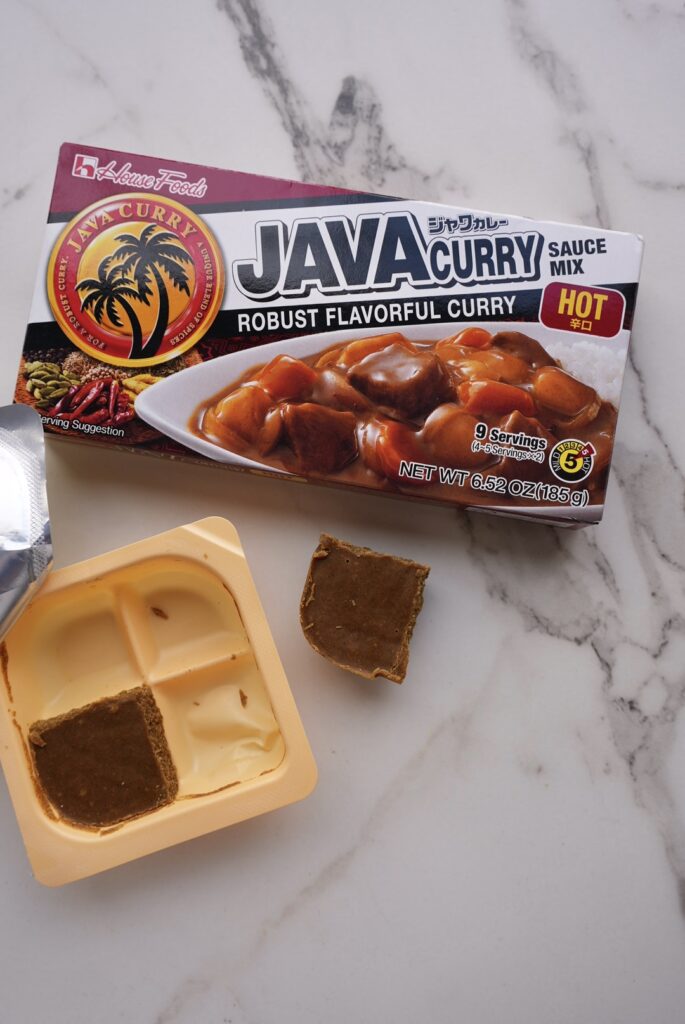
I recommend using store-bought Japanese curry roux from:
• Java Curry (pictured; the one I like the most because I think it is the spiciest!)
• S&B Golden Curry
• Vermont Curry (best for those who like curry on the sweeter side).
Otherwise, you can also make my homemade Japanese curry roux at home, too! The ingredients are a little cleaner and easier to adjust if you have allergies or anything.
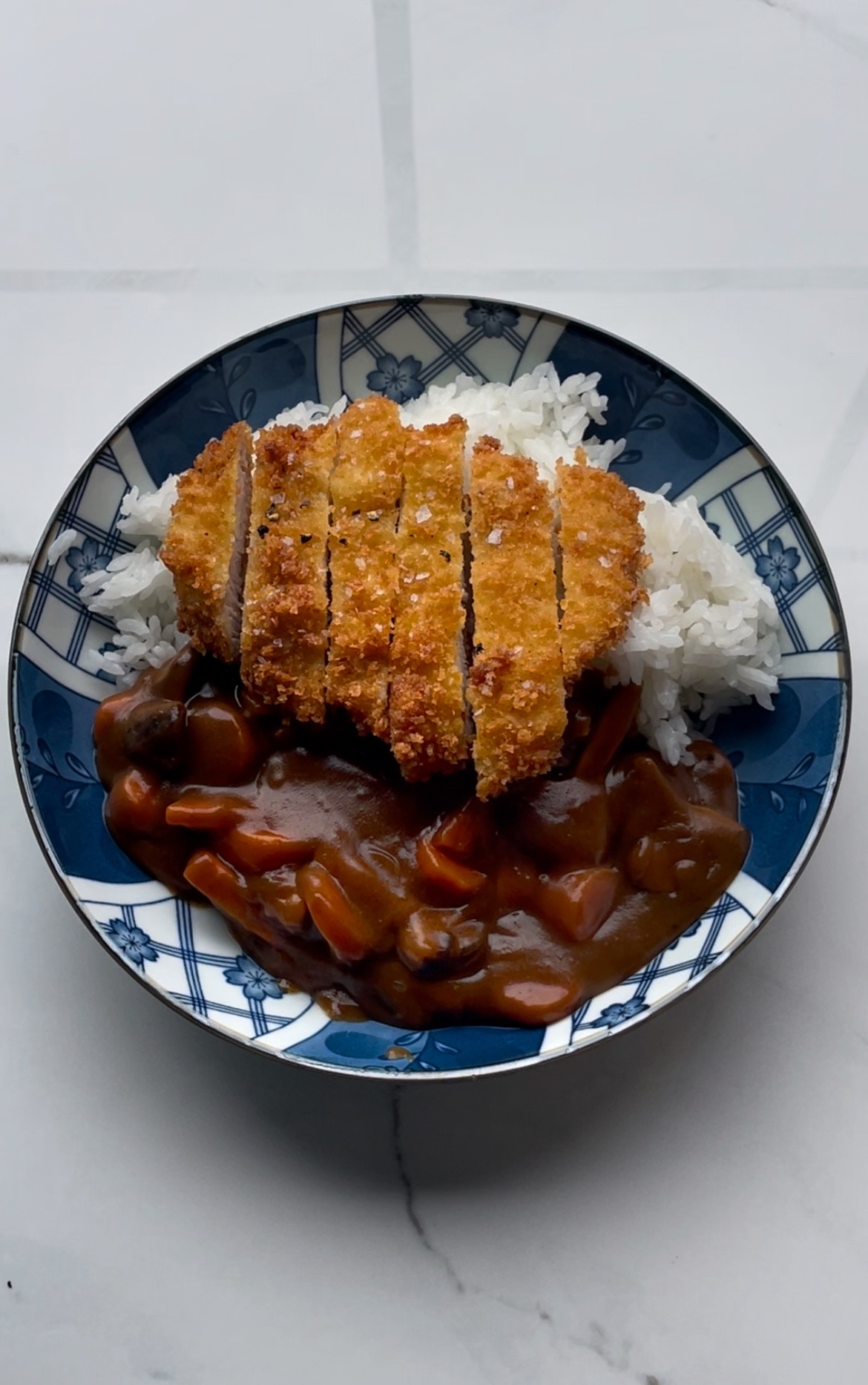
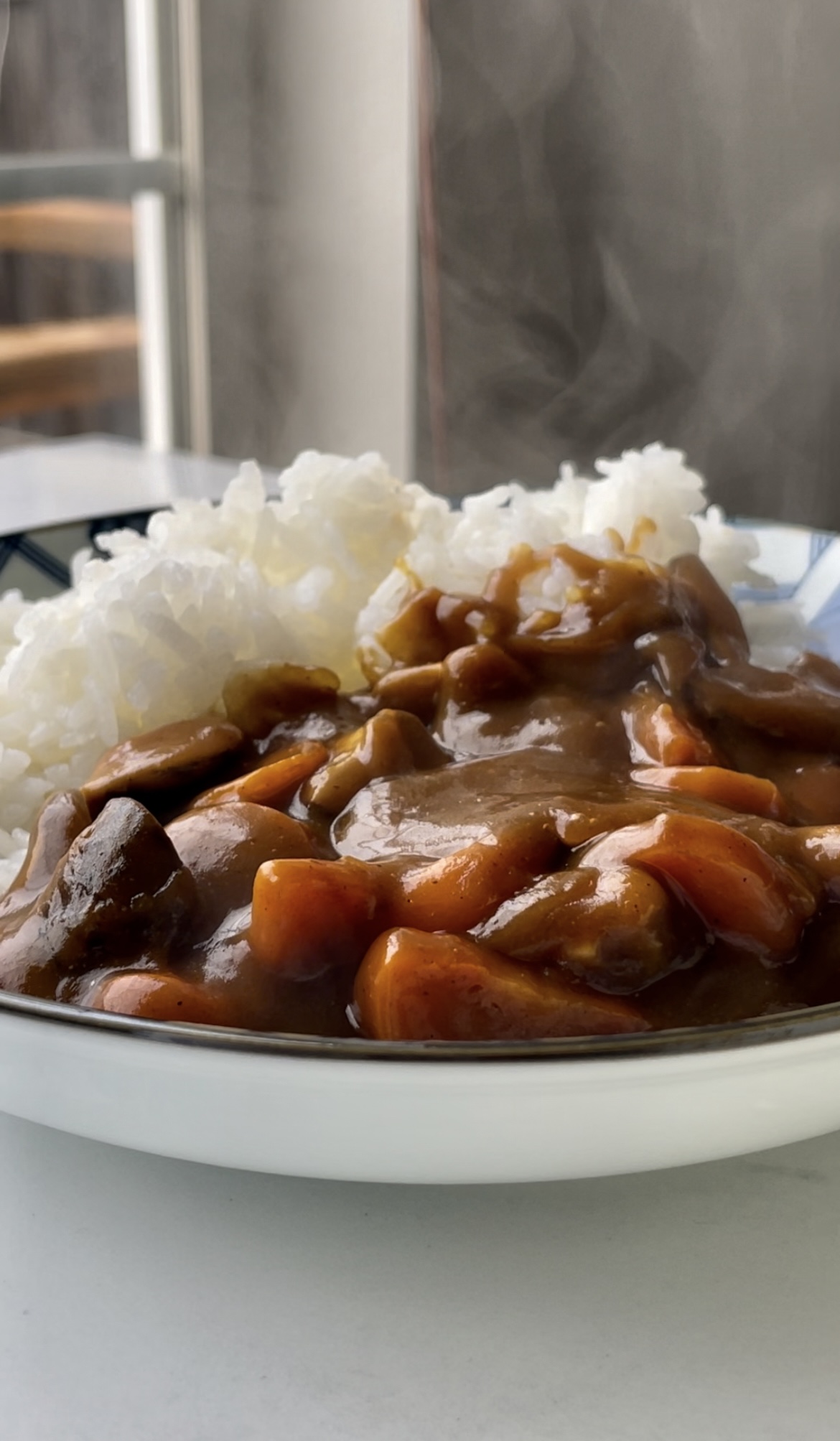
Check out my other popular recipes that use Japanese curry!:

About Udon Noodles
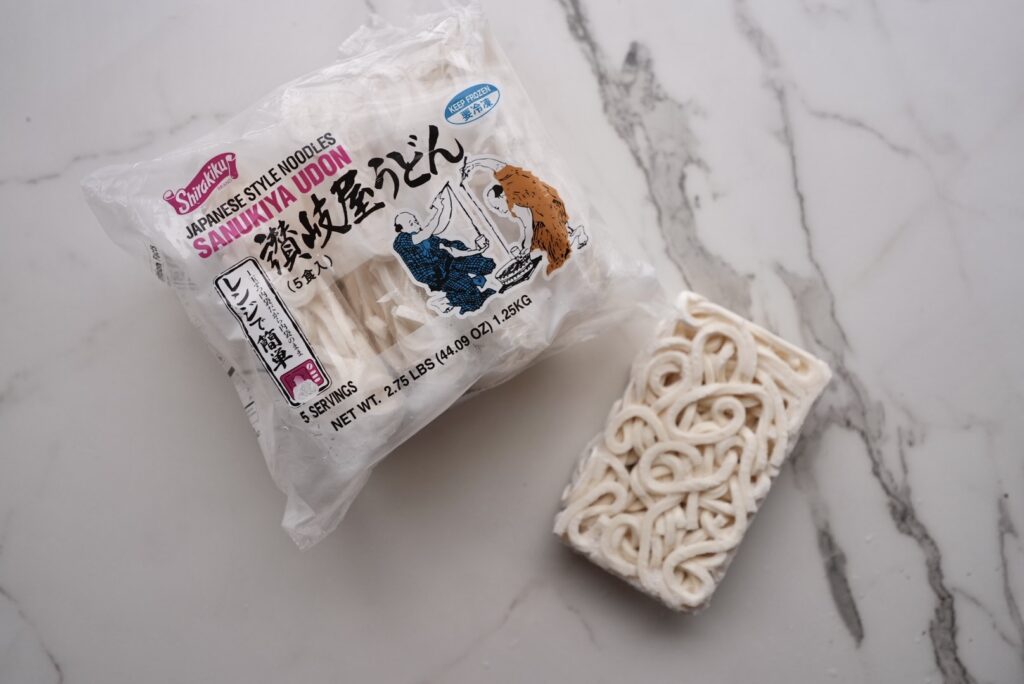
Udon noodles are thick, chewy Japanese wheat noodles known for their hearty textue and versatility. They are traditionally served in hot soups, stir-fries, or cold dishes, and come in three main forms:
- Fresh Udon: Chewy, bouncy texture, often found in the refrigerated section of Asian grocery stores. These noodles cook quickly and absorb flavors well.
- Frozen Udon: Great alternative to fresh, as it retains much of the same chewy texture (pictured).
- Dried Udon: Firmer, less chewy texture compared to fresh or frozen versions. I personally stray from purchasing dried udon and stick with fresh or frozen.

Egg Drop Curry Udon
- Total Time: 20 minutes
Description
This cozy curry udon combines chewy udon noodles, tender chicken, and silky egg ribbons in a rich, savory Japanese curry broth.
Ingredients
- 1/2 yellow onion, thinly sliced
- 5 cups dashi (alternatively, you can use 5 cups water with 5 teaspoons of hondashi)
- 2 tablespoon soy sauce
- 1 tablespoon mirin
- 2 cubes Japanese curry roux
- 1/2 tablespoon sugar
- 1/2 lb cooked chicken thighs, shredded (feel free to substitute any protein)
- 2 eggs, beaten
- 2 servings udon noodles (I recommend using udon noodles that aren’t dried, because they are thicker and chewier. You can find them at most Asian markets) Optional Garnish: Green onions and togarashi (Japanese chili spice)
Instructions
- Heat a large pot over medium heat. Add the sliced onions and sauté for 5-7 minutes, stirring occasionally, until softened and lightly translucent.
- Pour in the dashi, then add the soy sauce, mirin, sugar, and Japanese curry roux. Whisk until the curry roux has completely dissolved and the broth is smooth.
- Add the shredded chicken and bring the broth to a gentle simmer. Cook for 2-3 minutes, allowing the chicken to warm through and absorb the flavors of the broth.
- Act quickly for this egg drop portion: Remove the pot from the heat and stir the broth in one direction a few times to create a circular motion. Then, while pouring in the opposite direction, slowly drizzle the beaten eggs into the pot. Watch as silky egg ribbons form throughout the broth. Do not stir.
- Meanwhile, prepare the udon noodles according to the package instructions. If using frozen udon, they typically only need a few minutes in boiling water.
- Divide the cooked udon noodles between two serving bowls and ladle the hot curry broth over the top. Garnish with green onions and serve immediately.
- Prep Time: 5 minutes
- Cook Time: 15 minutes
Nutrition
- Serving Size: 2



i just tried this recipe today for a hearty post-exercise lunch! i used thin beef in place of chicken and had it over brown rice instead of udon. it turned out so delicious and comforting. now that i know it’s so easy, i can’t wait to make it again for people i love!
Hi Kay, that sounds absolutely delicious! Glad you were able to customize it too! Yum! Thanks for your review. 🙂