
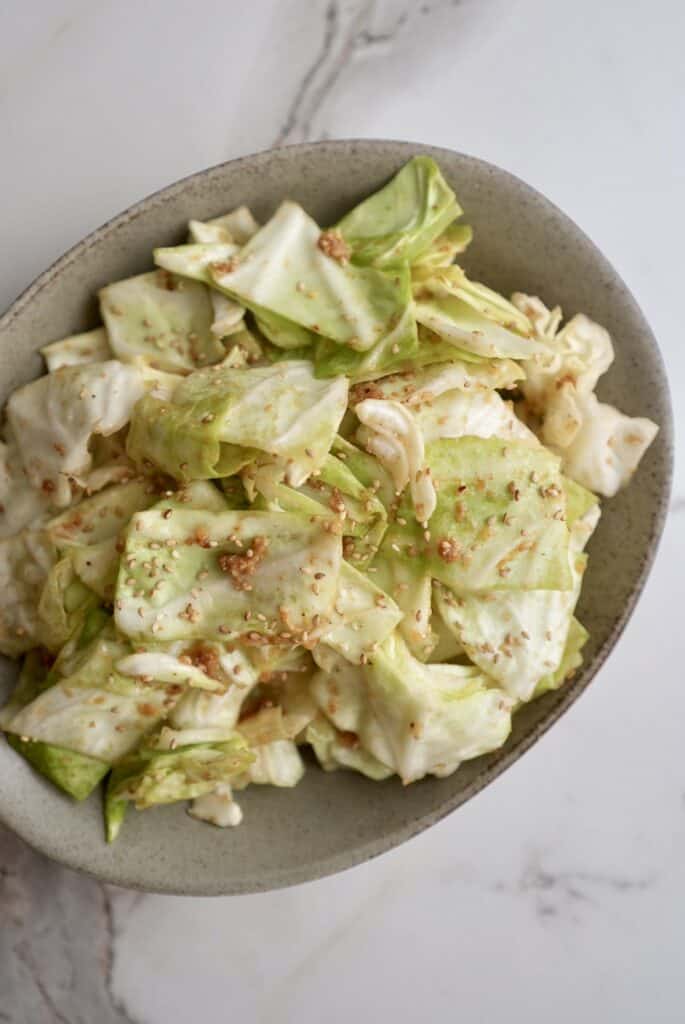
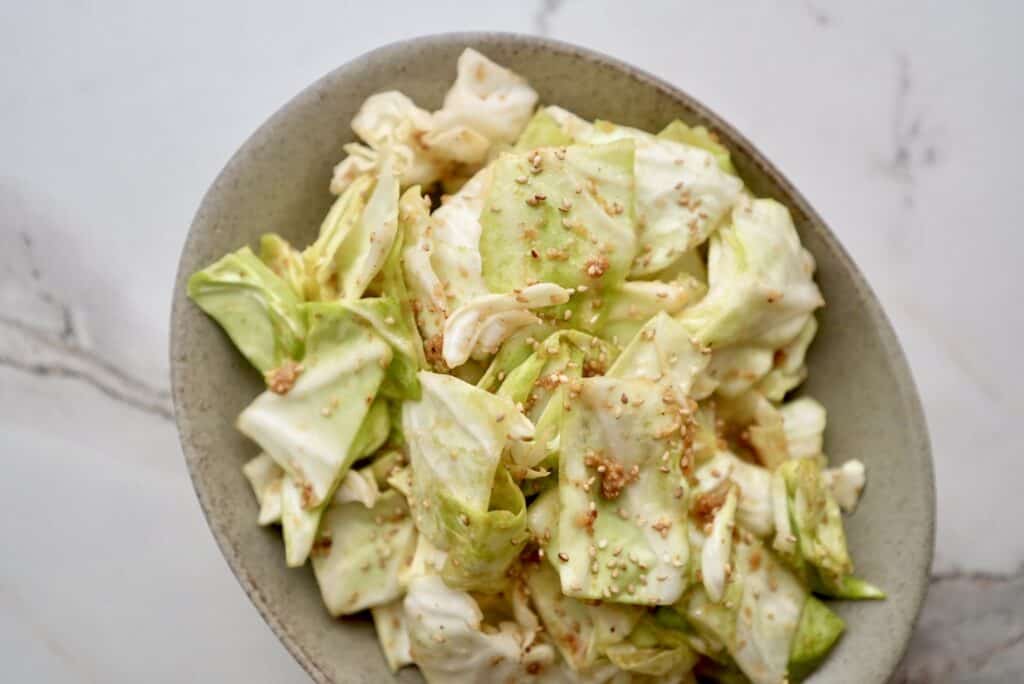
Yamitsuki Cabbage (やみつきキャベツ), often translated as “Addictive Cabbage,” is a popular Japanese izakaya side dish known for its irresistible combination of crunchy cabbage and savory seasonings. Seriously, once you have it, it’s hard to go back!! The word yamitsuki means “addictive” or “can’t-stop-eating-it,” which perfectly describes this dish.
With just a handful of ingredients, it transforms humble cabbage into a delicious side. At one point or another everyone’s got a random head of cabbage in their fridge that they don’t know how to use up… well, here’s the perfect way! Plus, it’s an awesome way to get in a lot of greens in a yummy way.
Traditionally, Yamitsuki Cabbage is made by tossing fresh cabbage with sesame oil, garlic, salt, and seasonings such as chicken bouillon or sesame seeds. You’ll often find Yamitsuki Cabbage served as an appetizer at Japanese izakayas, where it’s enjoyed alongside grilled meats, karaage, yakitori, and cold drinks. Because it comes together in just minutes and requires no cooking, it’s also a popular homemade side dish throughout Japan.
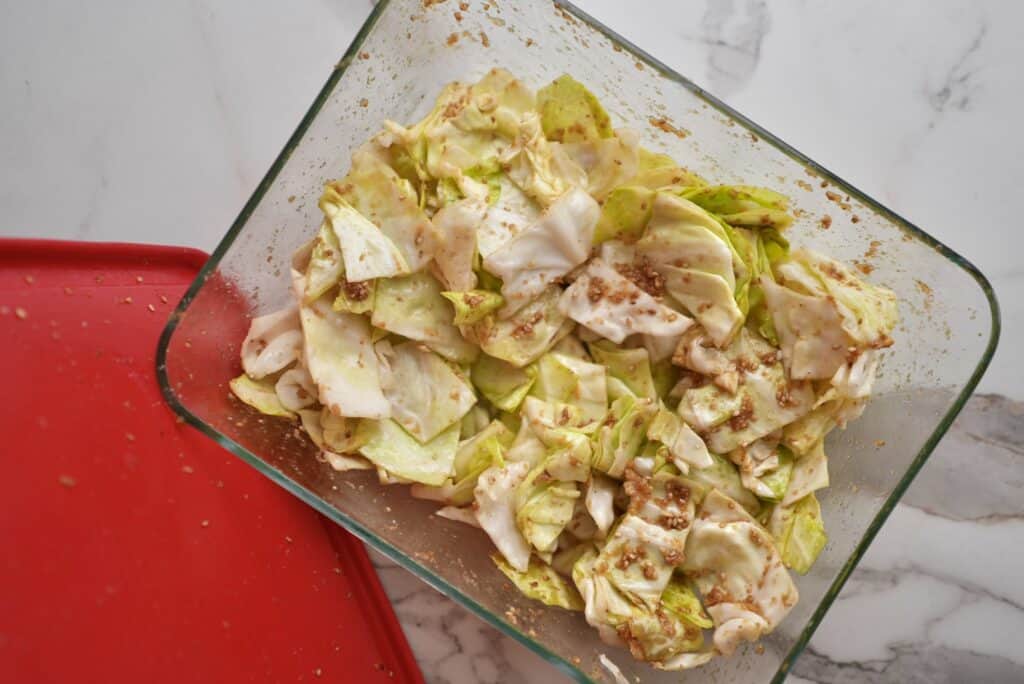
One of the reasons this dish has remained so popular is its versatility. It can be customized with ingredients like chili flakes, nori, toasted sesame seeds, or fresh green onions, making it easy to adapt to your own taste. No matter how it’s prepared, the combination of cabbage and seasonings is what makes this classic Japanese side dish so addictive.
Ingredients:
• Cabbage: The star of the dish. Fresh cabbage provides a crisp, refreshing crunch that contrasts well with the savory seasonings.
• Garlic: Fresh garlic adds a bold, pungent flavor that gives Yamitsuki Cabbage its addictive quality. As it sits with the cabbage, the garlic infuses the entire dish with savory depth.
• Toasted White Sesame Seeds: Toasted sesame seeds contribute a nutty aroma and subtle crunch. Grinding or lightly crushing some of the seeds before mixing them in helps release their oils and intensifies their flavor.
• Toasted Sesame Oil: Sesame oil is one of the key flavor components in this recipe. Its rich, roasted flavor coats the cabbage and ties all the ingredients together, giving the dish its signature savory taste.
• Soy Sauce: A small amount of soy sauce adds umami and saltiness while enhancing the natural sweetness of the cabbage. It also helps distribute the seasonings evenly throughout the dish.
• Salt: Salt helps draw out a bit of moisture from the cabbage while enhancing its flavor. Because personal preferences vary, it’s best to add it gradually and taste as you go.
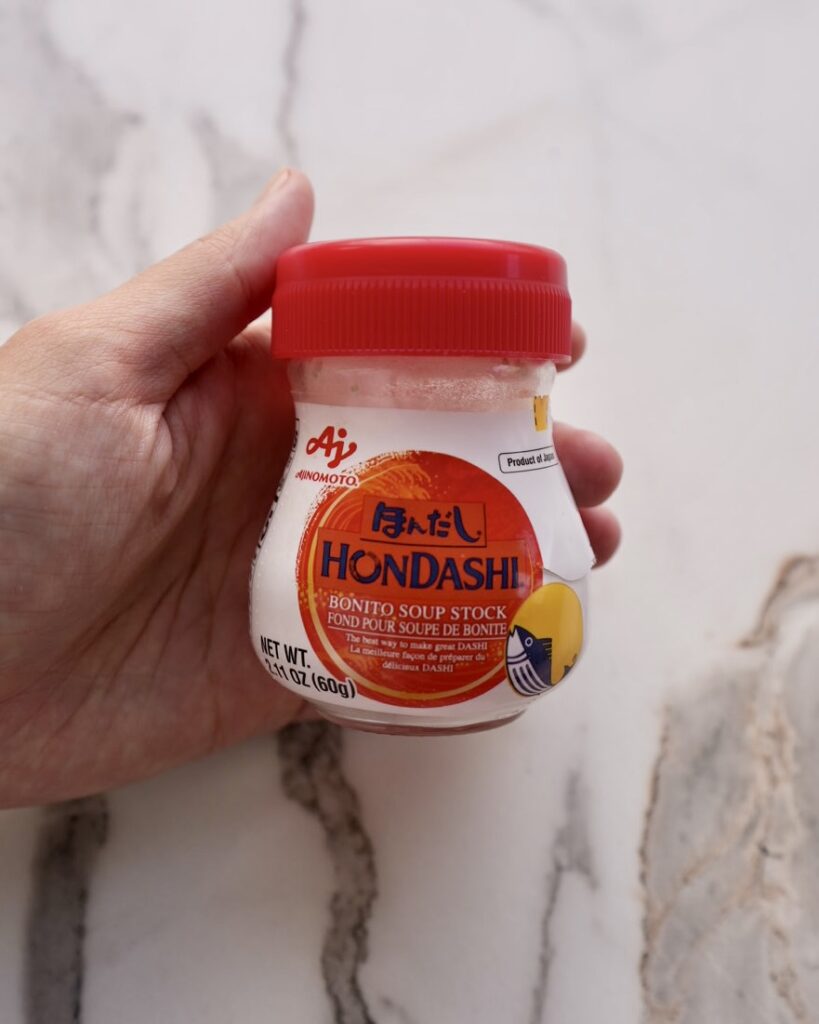
• Hondashi: Hondashi is a Japanese dashi seasoning made from bonito fish stock that adds an extra layer of savory umami. Even a small amount makes the cabbage taste richer and more complex, giving the dish the classic izakaya-style flavor that makes it so irresistible.
How to Crush the Sesame Seeds
In Japan, traditionally a suribachi and surikogi are used to crush the sesame seeds. A suribachi is a Japanese mortar with ridged, textured walls designed specifically for grinding ingredients like sesame seeds into a paste. The surikogi is the accompanying wooden pestle, which gently presses and crushes ingredients without damaging the mortar’s grooves.
No, you don’t need a suribachi and surikogi – They’re wonderful tools, but totally optional. You can also crush toasted sesame seeds using:
• A mortar and pestle
• A spice grinder or coffee grinder (pulse lightly)
• A zip-top bag + rolling pin
The goal is just to break the seeds open to release their oils and flavor, and any of these methods will get you there.
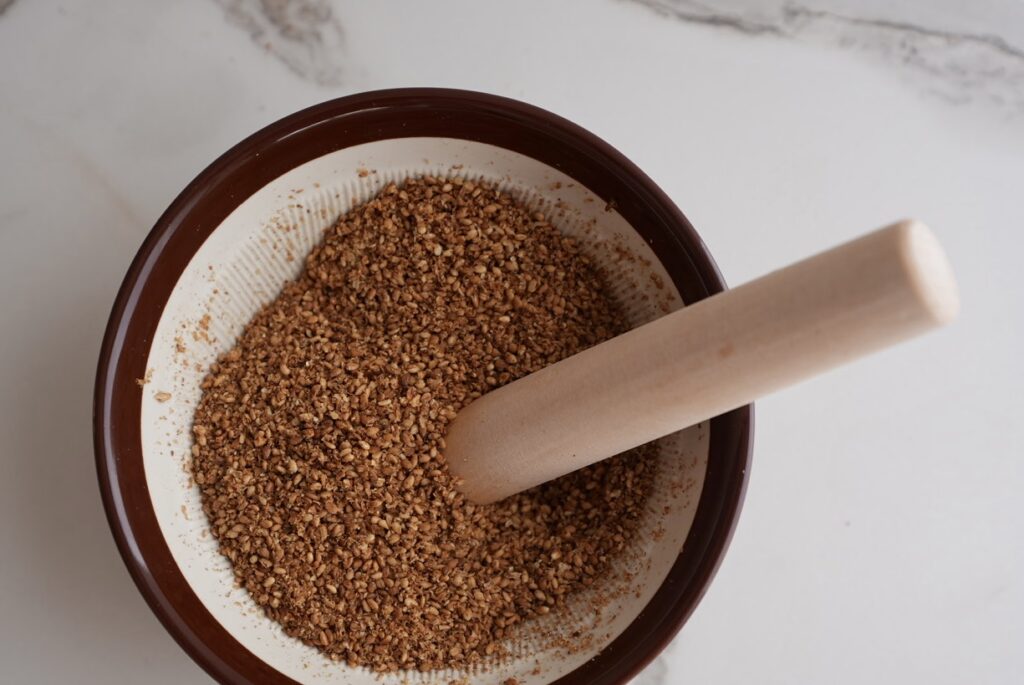
Beyond crushing sesame seeds for goma dressing, a suribachi and surikogi are used in many traditional Japanese cooking techniques:
• Grinding Spices: They’re perfect for grinding seeds like poppy, mustard, or shiso seeds to release their oils and aroma.
• Making Pastes: You can turn garlic, ginger, or miso into smooth pastes for sauces, marinades, or soups.
• Mixing Dressings and Sauces: The textured bowl helps emulsify ingredients like miso, vinegar, soy sauce, and oils for dressings or dipping sauces.
• Traditional Japanese Sweets: Some wagashi recipes use the suribachi to grind beans or seeds into fine pastes.
The ridges of the suribachi make it uniquely effective at grinding and emulsifying without overworking the ingredients, which is why it’s such a staple in Japanese kitchens.
Yamitsuki Cabbage (Addictive Cabbage)
- Total Time: 10 minutes
Description
Yamitsuki Cabbage, or “Addictive Cabbage,” is a quick and flavorful Japanese side dish made with crisp cabbage tossed in garlic, sesame oil, toasted sesame seeds, and umami-rich seasonings.
Ingredients
- 1/2 head cabbage (~300 grams)
- 3 cloves garlic
- 2 1/2 Tbsp toasted sesame seeds
- 2 tbsp toasted sesame oil
- 1/2 tbsp soy sauce
- 1/4 tsp salt (I recommend doing a little at a time until you reached your desired level of saltiness – feel free to add more!)
- 1/2 tsp hondashi
Instructions
- Cut the cabbage into bite-sized pieces.
- Grind the toasted sesame seeds using a suribachi and surikogi (amortar and pestle, spice grinder, or crushing them in a resealable bag with a rolling pin works, too). This helps release their nutty flavor and aroma.
- In a large container (this is where you’re going to add all the cabbage, so make sure it’s big enough! A large bowl with a lid or ziplock bag works too) with a lid, grate the garlic. Add the toasted sesame oil, ground sesame seeds, and soy sauce, then stir to combine.
- Add the cabbage to the container. Sprinkle the hondashi and a small amount of the kosher salt over the cabbage. Secure the lid and toss well to evenly coat the cabbage with the seasonings.
- Taste and adjust the salt as needed. I recommend adding the salt gradually, tossing, and tasting between additions until it reaches your preferred level of saltiness.
- Serve immediately and enjoy as a side dish, appetizer, or alongside your favorite Japanese meals.
- Prep Time: 10 minutes
Nutrition
- Serving Size: 3-4



0 Comments