
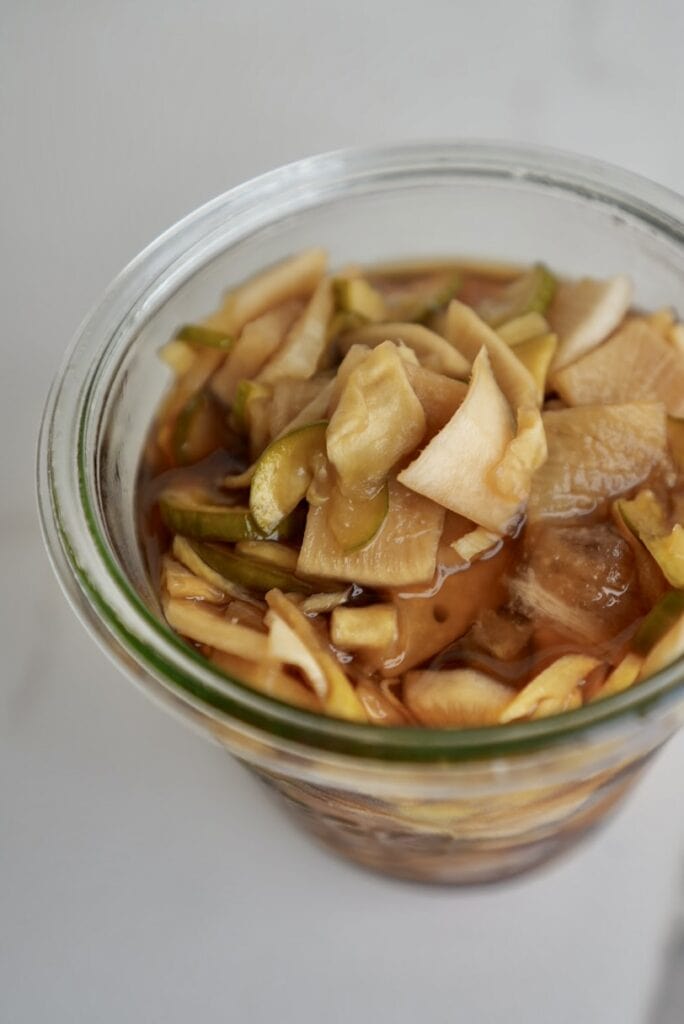
Fukujinzuke (福神漬け) is a traditional Japanese pickle made by marinating a variety of vegetables in a sweet and savory soy sauce-based brine. Common ingredients include daikon, lotus root, cucumber, eggplant, and ginger. It creates a colorful mix of crisp, crunchy vegetables with a balance of salty, sweet, and tangy flavors.
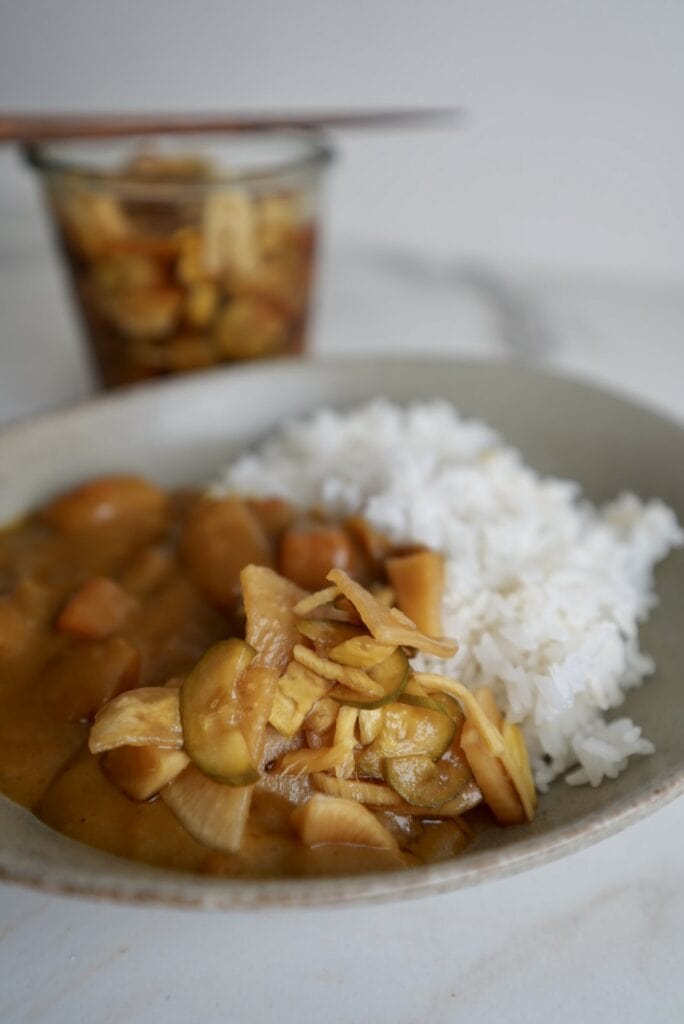
One of the most popular ways to enjoy fukujinzuke is alongside Japanese curry, where its bright, tangy flavor provides the perfect contrast to the rich, hearty curry. It sounds strange, but trust me. Even my friends that are pickle haters actually love fukujinzuke when paired with curry. The crunchy texture and lightly sweet soy-based seasoning help refresh the palate between bites, making it a classic accompaniment. So good!
While store-bought fukujinzuke often gets its signature deep red color from food coloring, homemade versions are typically a more natural golden-brown hue from the soy sauce and mirin. In many restaurants you can find either red or brown fukujinzuke. Both are yummy, it just depends on whether you want the red food coloring or not. Making it from scratch also allows you to customize the vegetables, sweetness, and saltiness to your taste while enjoying fresher, crispier pickles than most store-bought varieties.
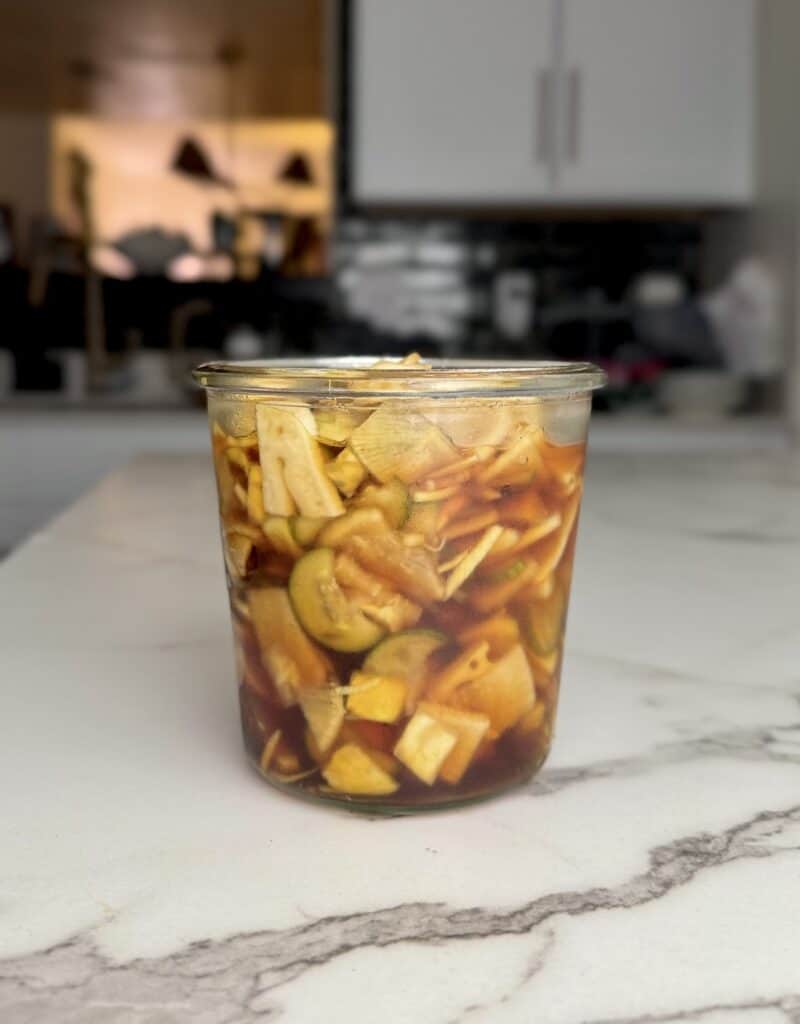
Ingredients:
- Daikon (White Radish): Adds a refreshing crunch and mild peppery flavor while readily absorbing the sweet and savory pickling liquid.
- Lotus Root: A classic ingredient in Japanese pickles with a crisp texture that stays pleasantly crunchy after pickling.
- Cucumber: Brings a fresh, juicy bite and subtle sweetness to balance the saltier ingredients. I love using smaller snacking cucumbers because they have fewer seeds and water. I recommend using Persian or Japanese cucumbers!
- Eggplant: Softens slightly as it pickles, soaking up the flavorful marinade while adding a silky texture. Any type will do.
- Fresh Ginger: Adds warmth and a bright, zesty flavor that complements the other vegetables. DO NOT use powdered ginger!
- Salt: Draws excess moisture from the vegetables, helping them stay crisp while allowing them to better absorb the pickling liquid.
- Soy Sauce: Forms the savory, umami-rich base of the pickling marinade.
- Mirin: Adds a gentle sweetness and depth while balancing the saltiness of the soy sauce.
- Rice Vinegar: Provides acidity and brightness that gives the pickles their signature tang.
- Sugar: Balances the salty and tangy flavors for a well-rounded pickle.
- Kombu (dried kelp): Infuses the marinade with a subtle umami flavor as it steeps.
Fukujinzuke (Soy-Pickled Vegetables)
- Total Time: 65 minutes
Description
Fukujinzuke is a traditional Japanese soy-pickled vegetable relish made with crisp vegetables in a sweet, savory, and tangy marinade, most famously served alongside Japanese curry.
Ingredients
- 75 g (2.7 oz) lotus root
- 75 g (2.7 oz) Persian or Japanese cucumber
- 75 g (2.7 oz) eggplant
- 30 g (1.1 oz) fresh ginger, finely chopped
- 300 g (10.6 oz) daikon (white radish)
- 2 1/4 tsp salt
- 1/2 cup + 2 tbsp soy sauce
- 1/2 cup + 2 tbsp mirin
- 1/4 cup rice vinegar
- 1/4 cup + 1 tbsp sugar
- 1 sheet kombu (dried kelp), about 2 × 2 inches (5 × 5 cm)
Instructions
- Peel the daikon, lotus root, and ginger.
- Thinly slice the daikon, lotus root, cucumber, and eggplant into bite-sized pieces, each less than 1/16 inch thick.
- Finely chop the ginger into 1/2 inch sticks.
- Place all of the vegetables and ginger in a large bowl, sprinkle with the salt, and toss to coat evenly. Let sit for about 20 minutes to allow the vegetables to release some of their moisture.
- While the vegetables are resting, combine the soy sauce, mirin, rice vinegar, sugar, and kombu in a medium-sized pot.
- Gently squeeze as much liquid as possible from the vegetables and transfer them into the pickling liquid pot. Don’t worry if they aren’t fully submerged!
- Turn the heat to medium-high and allow the vegetables to come to a simmer then remove immediately.
- Place the vegetables into a jar or container and pour the liquid on top.
- Refrigerate for at least 24 hours before serving. Store in the refrigerator for up to 2 weeks and serve chilled, especially alongside Japanese curry rice.
- Prep Time: 60 minutes
- Cook Time: 5 minutes



0 Comments