
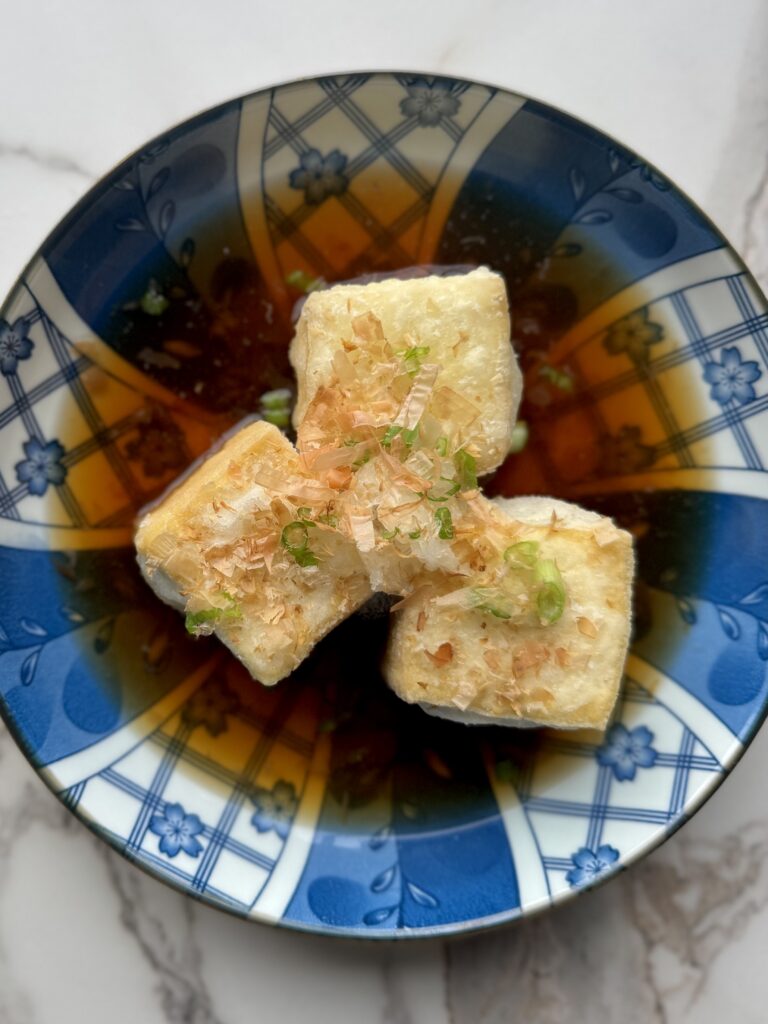
Agedashi Tofu is one of the most underrated Japanese dishes outside of Japan. At its core, it’s simply tofu that’s fried until delicate and crisp on the outside, then served in a savory dashi-based broth. But its simplicity is deceptive. The contrast between the custardy interior and the lightly crisp exterior is so satisfying! Especially once the tofu begins to soak up the broth. I love letting it sit in the broth for a while to really absorb all the flavors.
On Agedashi Tofu, toppings like grated daikon, ginger, green onions, or katsuobushi really complete the dish. They add freshness and texture, but the tofu is still the star. It’s a dish that highlights Japanese cooking at its best: restraint, technique, and respect for ingredients in a simple, beautiful way!
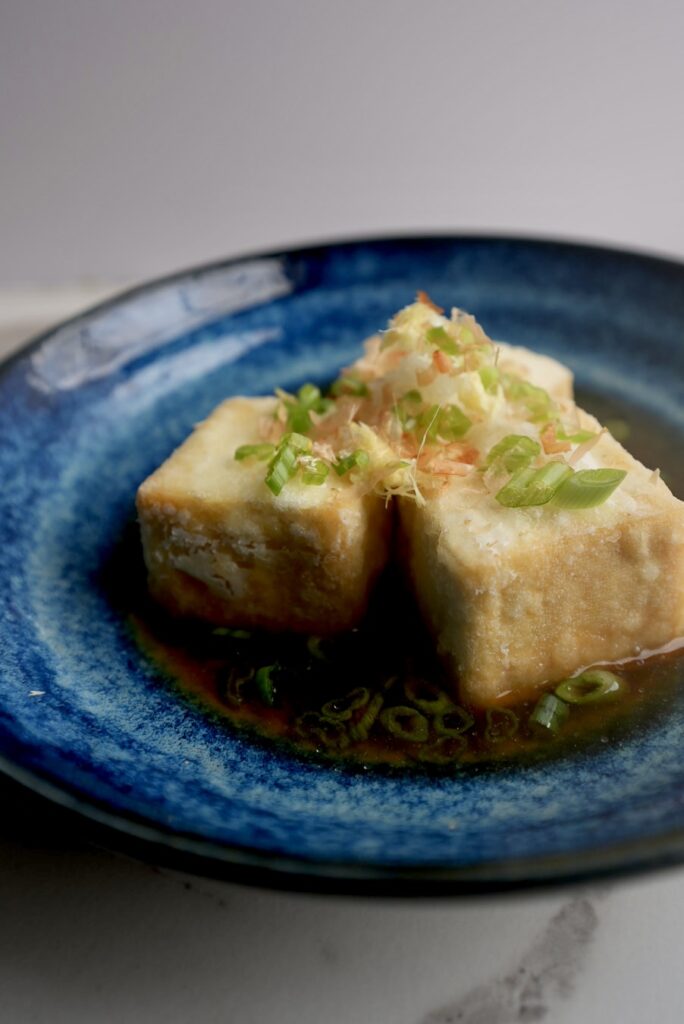
Outside of Japan, Agedashi Tofu is often overlooked in favor of flashier dishes. But it deserves far more attention. It’s comforting, elegant, and surprisingly flavorful for something so minimal. Whether served as a starter or a light meal, Agedashi Tofu is a reminder that some of the most memorable dishes aren’t the loudest ones. They’re the ones that let simple ingredients shine.
So how do you make it? Let’s get into it!
Ingredients:
- Tofu: Medium-firm tofu holds its shape slightly better, but you can also use silken tofu. Silken tofu offers an ultra-soft, custardy interior. When lightly coated and fried, the tofu develops a delicate crust that soaks up the savory broth.
- Ginger: Adds warmth and a subtle spice that cuts through the richness of the fried tofu.
- Cornstarch: Creates a light, crisp coating on the tofu that turns delicate and absorbent once it hits the broth.
- Dashi: Forms the base of the broth, providing a clean, savory umami flavor.
- Soy Sauce: Brings saltiness and depth, balancing the lightness of the dashi.
- Mirin: Adds gentle sweetness and gloss to the broth, rounding out the savory flavors.
- Daikon: Offers freshness and a mild sharpness that brightens each bite.
- Green Onions: Add a pop of color and a mild onion flavor for contrast.
- Oil (for deep frying): Allows the tofu to fry quickly and evenly, creating a crisp exterior while keeping the inside silky.
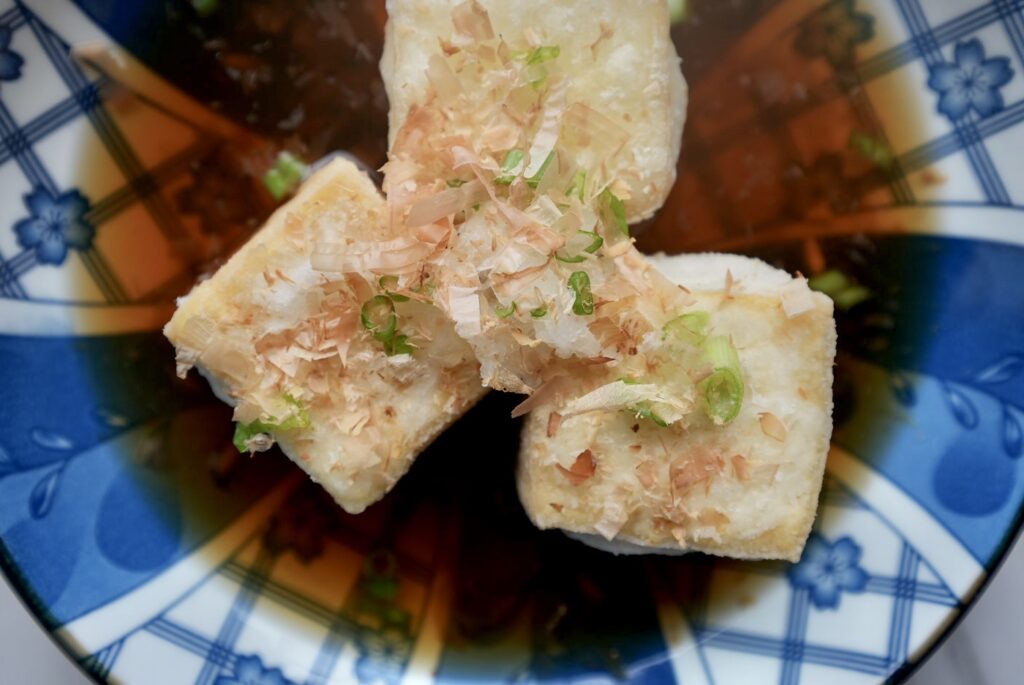
How to Make Dashi: Japanese Cooking Stock
There are three main ways to make dashi, each with its own advantages in terms of flavor, ease, and time. I ordered them from most complex to simplest:
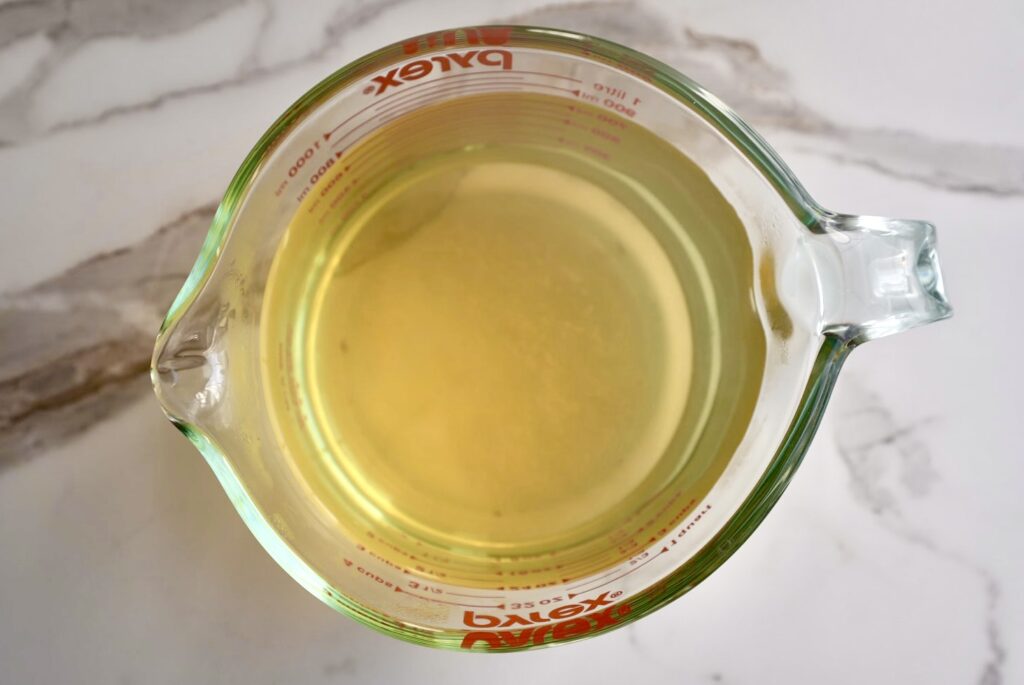
- Dashi from Scratch: Traditional dashi, made by simmering kombu (dried kelp) and katsuobushi (dried bonito flakes), is considered the best method. Soak the kombu in water, heat just below boiling, and add katsuobushi. This method is ideal for dishes with the purest flavor.
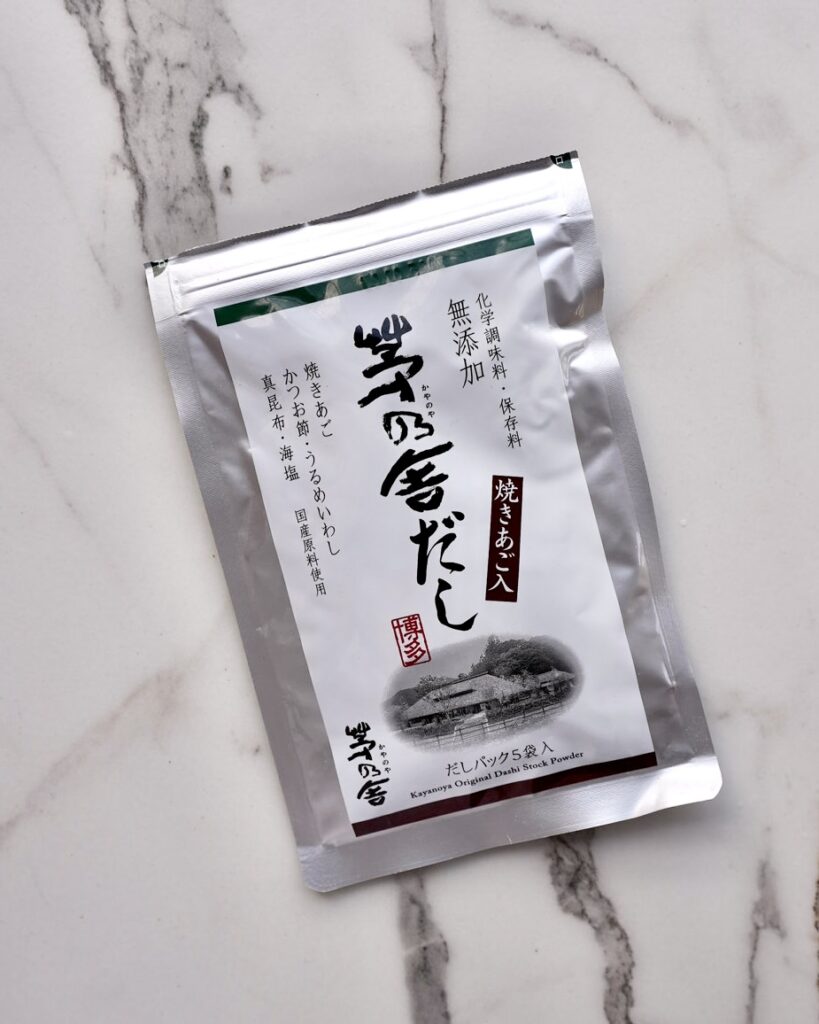
- Dashi Packets: Dashi packets, resembling tea bags, contain dried kombu, katsuobushi, and sometimes shiitake mushrooms or dried sardines. Just simmer the packet in water for a few minutes for a quick and flavorful broth. Buy dashi packets here from one of my most recommended dashi brands, Kayanoya.
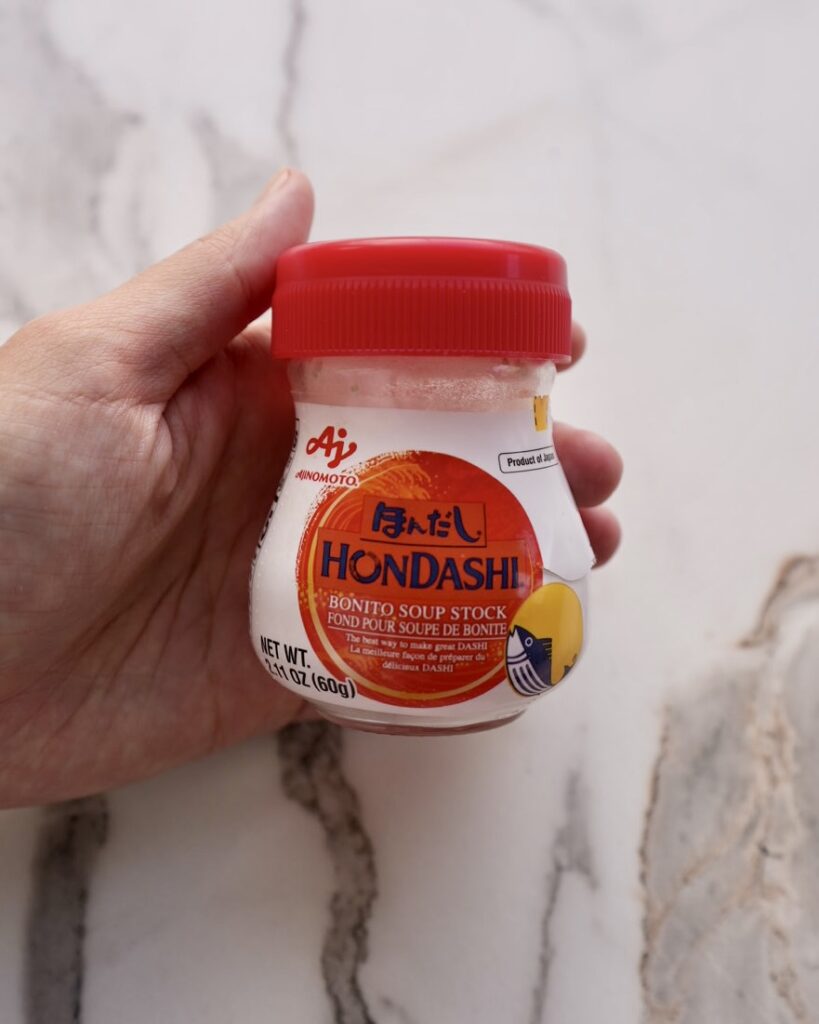
- Instant Dashi (Hondashi): Instant dashi, often called hondashi, is a granulated or powdered form of dashi. Just a spoonful dissolved in hot water creates a quick and flavorful stock. This option is convenient and ideal for busy days. Buy hondashi here.
Making Dashi From Scratch
Dashi is a fundamental Japanese stock that forms the backbone of countless dishes. It provides a delicate yet deeply savory flavor known as umami.
Made traditionally from kombu (dried kelp) and katsuobushi (dried bonito flakes), dashi is prized for its ability to enhance other ingredients without overpowering them. It’s used in a wide variety of dishes, from miso soup and noodle broths to simmered vegetables, nimono, and even sauces and dressings, making it an essential component of authentic Japanese cooking.
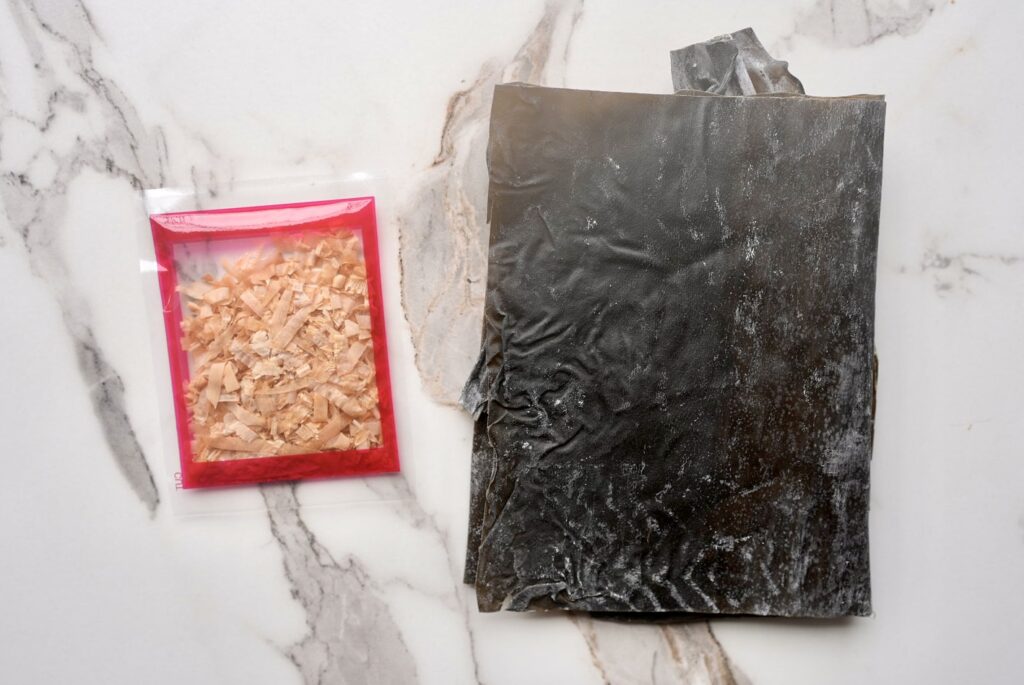
Like I mentioned above, you can use shortcuts to make dashi (which I do all the time! Making it from scratch is a little more work than I am cut out for, especially on busy days). So here’s how to make it from scratch:
- Prepare Kombu: Soak the kombu in cold water.
- Heat the Water: Slowly bring the kombu water to just below a boil.
- Remove: Take out the kombu before the water boils to prevent bitterness.
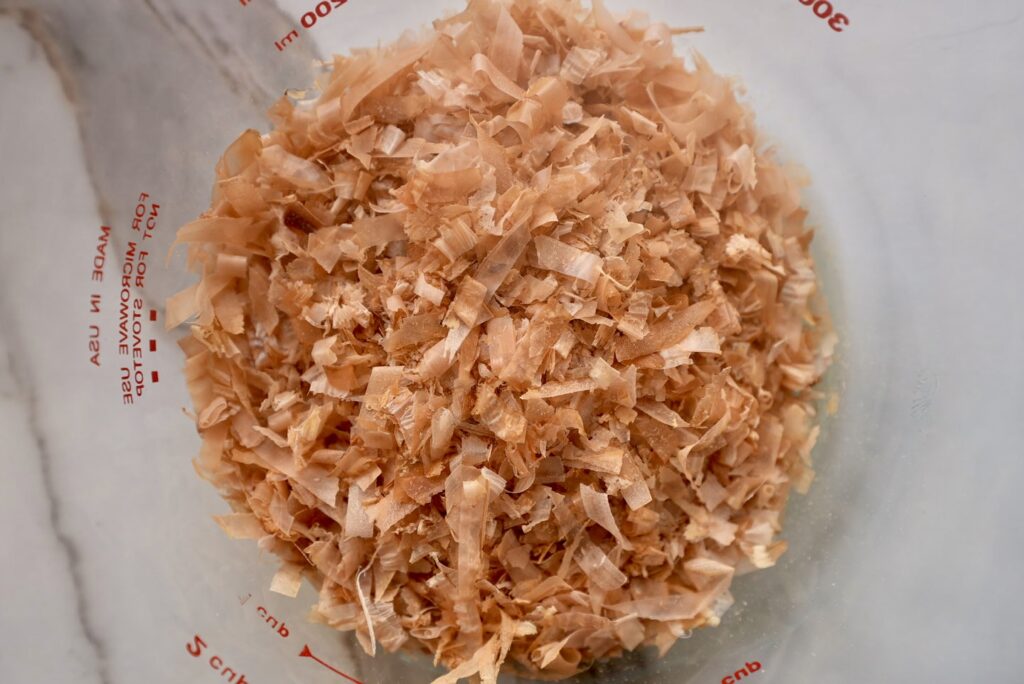
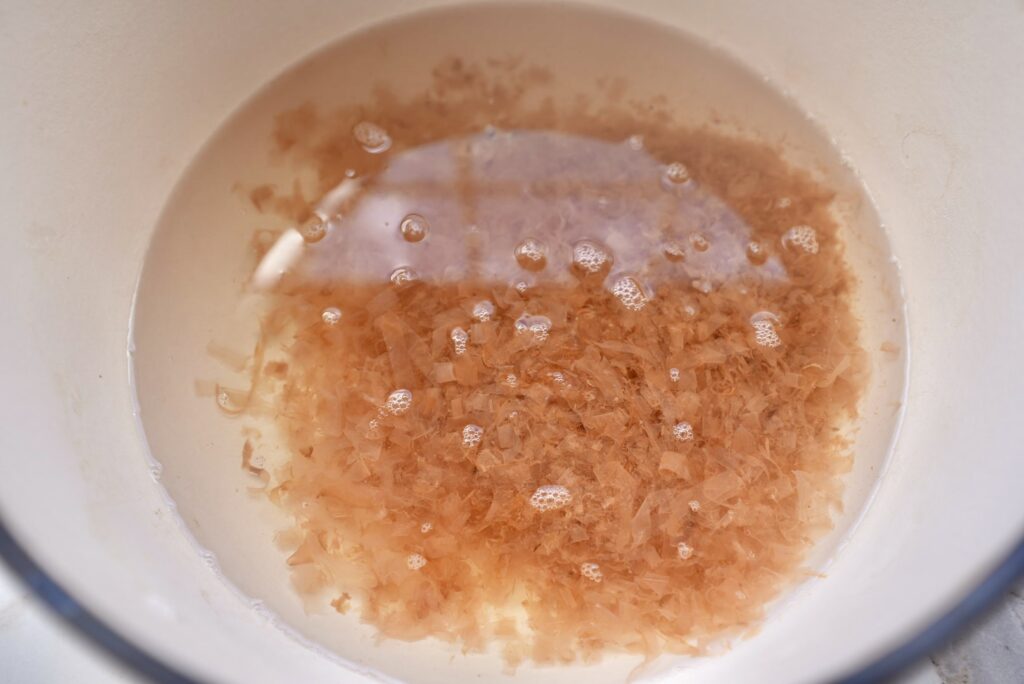
- Add Katsuobushi: Sprinkle in bonito flakes and let them steep for a few minutes.
- Strain: Remove the bonito flakes using a fine-mesh sieve.
Agedashi Tofu
- Total Time: 15 minutes
Description
Agedashi tofu is a classic Japanese dish of lightly fried tofu served in a warm, savory dashi-based broth that soaks into its crisp exterior and silky center.
Ingredients
- 14 oz medium-firm tofu (or silken tofu)
- 1/4 cup cornstarch
- Neutral oil, for deep frying
Broth:
- 1 cup dashi
- 2 tbsp soy sauce
- 2 tbsp mirin
Toppings:
- 3 tbsp daikon, grated
- 3/4 tbsp ginger, grated
- 3 green onions, thinly sliced
- Katsuobushi, for garnishing (optional)
Instructions
- Drain the tofu and gently pat dry with paper towels. Removing excess moisture helps the tofu fry properly.
- Cut into large cubes (about 2-inch pieces). For the tofu I buy, this usually means I cut it into sixths.
- Heat oil in a deep pan or pot to about 350°F (175°C).
- Lightly coat each piece of tofu in cornstarch, shaking off any excess. Carefully add the tofu to the hot oil and fry until pale golden and lightly crisp on the outside, about 2 – 3 minutes. Remove and drain on paper towels.
- In a small pot, combine dashi, soy sauce, and mirin. Warm gently over medium heat, but do not boil.
- Place the fried tofu in shallow bowls and pour the warm broth around the tofu (not over it!). Top with the daikon, ginger, green onions, and katsuobushi. Serve immediately while hot.
- Prep Time: 5 minutes
- Cook Time: 10 minutes
Nutrition
- Serving Size: 2



0 Comments