
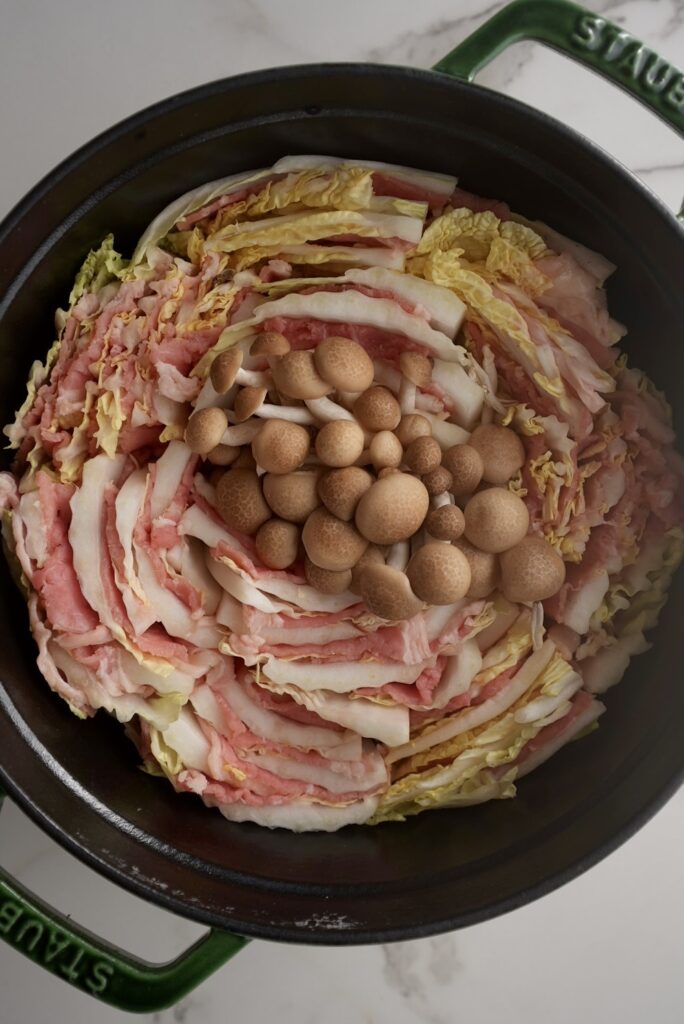
It’s a common occurrence to come home to my mom making “Nabe,” (鍋) the Japanese word for hot pot. Mille-Feuille Nabe (ミルフィーユ鍋 ) is a Japanese hot pot dish that creatively layers ingredients to resemble a “thousand-leaf” (mille-feuille) structure, similar to the French pastry with the same name.
Instead of pastry, the dish consists of alternating layers of napa cabbage leaves and thinly sliced pork belly, which are arranged in a circular pattern within a pot. These layers are then cooked with simple seasonings. The beauty of Mille-Feuille Nabe lies in its simplicity and presentation. Once cooked, the tender cabbage and pork create a rich, comforting flavor. Not to mention this dish is quite healthy, especially if you substitute the pork belly for beef.
The dish is usually served with dipping sauces like ponzu or sesame sauce. It’s popular during colder months, as it’s warm, nutritious, and easy to share at the table. The visual appeal and the blend of subtle flavors make it a beloved comfort food in Japan. And luckily, it’s fairly easy and inexpensive to recreate at home.
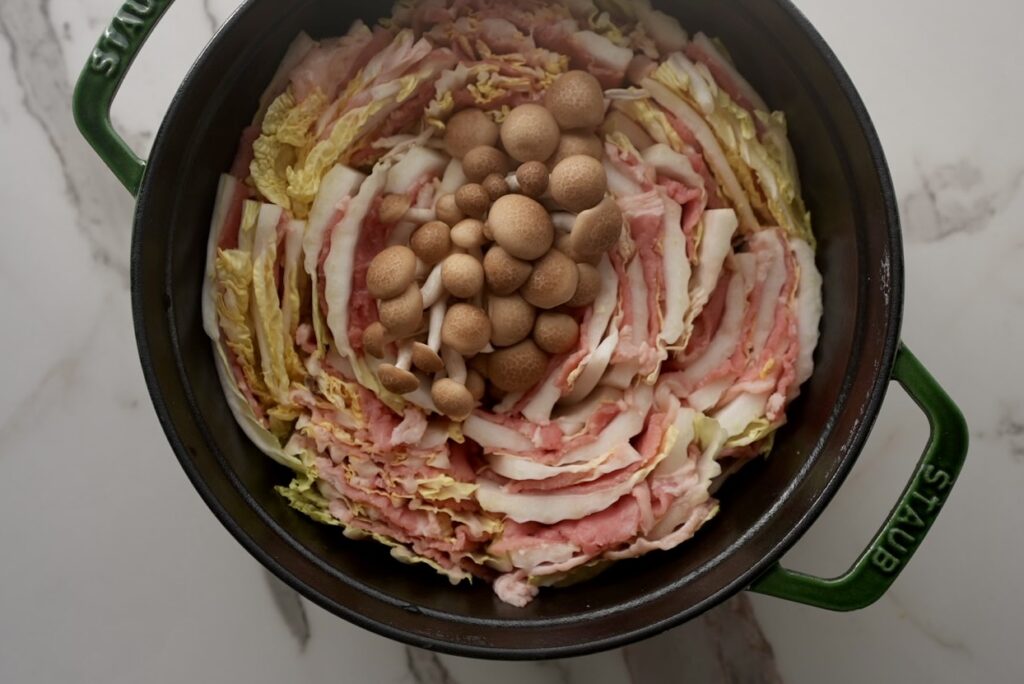
How to Make Mille-Feuille Nabe
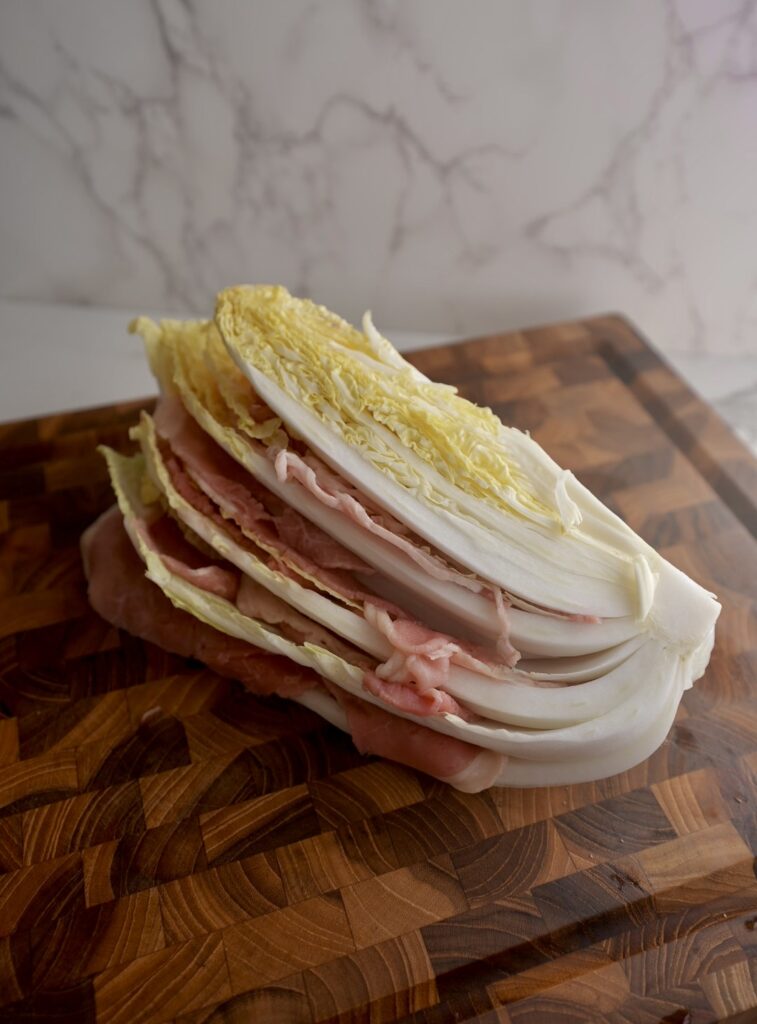
- Cut the cabbage lengthwise into quarters, while keeping the leaves attached at the core.
- Rinse the cabbage and drain well.
- Gently open the cabbage leaves and tuck slices of meat between the leaves, alternating cabbage and meat all the way through.
- Cut the layered sections into 2 – 3 inch lengths, and cut off the core as well.
- Stand the pieces cut-side up in a pot, packing them snugly.
- Add broth seasonings, and cover and simmer gently until the cabbage is tender and the meat is cooked through.
Recommended Dipping Sauce
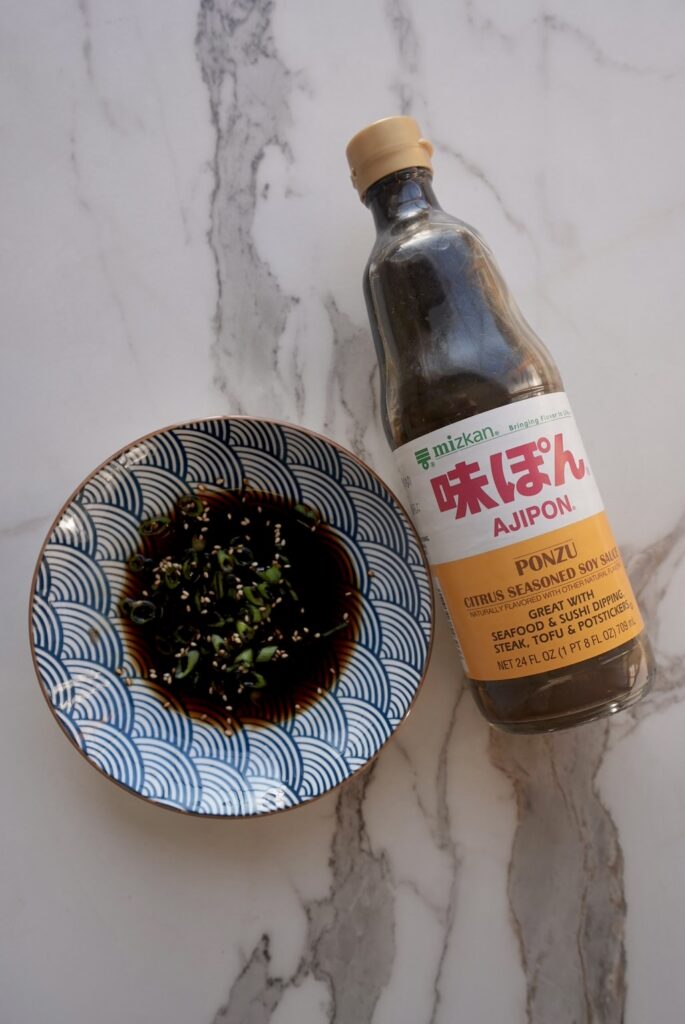
I like using ponzu with this dish, and it’s what is most traditional. Ponzu is a Japanese citrus-based soy sauce, typically made from soy sauce mixed with rice vinegar and citrus juice like yuzu, sudachi, or lemon. It’s salty, tangy, and bright, which cuts through the richness of the beef or pork and pairs especially well with tender napa cabbage. Here are a few other optional ideas for dipping sauces:
- Sesame Sauce (Goma-Dare): Creamy and nutty, usually made with ground sesame seeds, soy sauce, and sugar; great if you want something richer.
- Soy Sauce + Scallions: Simple and clean; add a little hot broth from the pot for balance.
- Soy Sauce + Chili Oil: Adds heat and aroma without overpowering the cabbage.
- Ponzu + Grated Garlic or Ginger: Boosts sharpness and warmth while keeping the citrus brightness.
- Ponzu + Sesame Oil + Scallions: A hybrid dipping sauce that’s both fragrant and savory, especially good with pork.
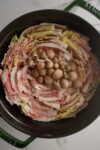
Mille-Feuille Nabe (ミルフィーユ鍋 )
- Total Time: 40 minutes
Description
Mille-Feuille Nabe is a Japanese hot pot dish where napa cabbage and thinly sliced beef or pork belly are layered in a circular arrangement and simmered in a light broth.
Ingredients
My Dutch oven is a STAUB 4-qt Cocotte, but any size will work – just adjust the ingredient amount accordingly.
- 2 1/2 lb of napa cabbage
- 1 1/2 lb pork belly or beef, thinly sliced (I purchase mine at the Asian Market and it comes thinly sliced)
- Other optional add-ins: tofu, himeji/enoki mushrooms, carrots, daikon
- 3 tablespoons soy sauce
- 1 1/2 tablespoon ginger, thinly sliced
- 3 cups dashi
Dipping Sauce:
- Ponzu
- Green onions and chili crisp for garnishing (optional)
Instructions
- Cut your napa cabbage in half, and then cut again into quarters. Do not cut off the core or stem yet.
- In each of the cabbage leaves, insert one layer of the beef/pork belly. Repeat for each cabbage leaf until you reach the top, ending with a cabbage leaf. Repeat with the other napa cabbage quarters.
- Cut the core/stem off of each napa cabbage and then proceed to cut the cabbage/pork belly slices into thirds.
- Beginning layering the cabbage/pork leaves (showing the alternating colors), starting from the outer section of the pot and going in. Using the thicker/harder cabbage leaves on the outside rim section enables more even cooking. Squeeze the cabbage and pork tight to leave room in the center if you want to add other (optional) add-ins (i.e. tofu, mushrooms, carrots, daikon, etc.)
- Over the top of the hot pot, add the soy sauce, ginger and dashi.
- Over low heat, begin cooking your Nabe with the lid on the Dutch oven. This can take anywhere between 5-10 minutes.
- Prepare your dipping sauces for each person in a small bowl. Enjoy your nabe with white rice or alone.
- Prep Time: 30 minutes
- Cook Time: 10 minutes
Nutrition
- Serving Size: 4



Is spicy hot pot ever a thing in Japanese cuisine? I loved this recipe, but want to try it again with some spice. Any suggestions?
Hi Grace! Japanese cuisine is not as spicy but you can definitely add in chili crisp. I love the brand Fly by Jing for that 🙂
Beautiful presentation and surprisingly simple to assemble. Layering made it look fancy and my husband was impressed
Made this for the first time tonight and it was a hit! Will be making again for sure. Also added tofu, mushrooms, and leek. So good!
Hi Nicole – thank you for trying my recipe! Those are great add-ins. So happy you loved this!
Saved as a favorite, I really like your blog!
So glad to hear! Thank you!