
If you’re exploring Japanese cuisine, Okonomiyaki (often referred to as a Japanese savory pancake) is a must-try dish that perfectly captures the essence of comfort food with a unique twist.
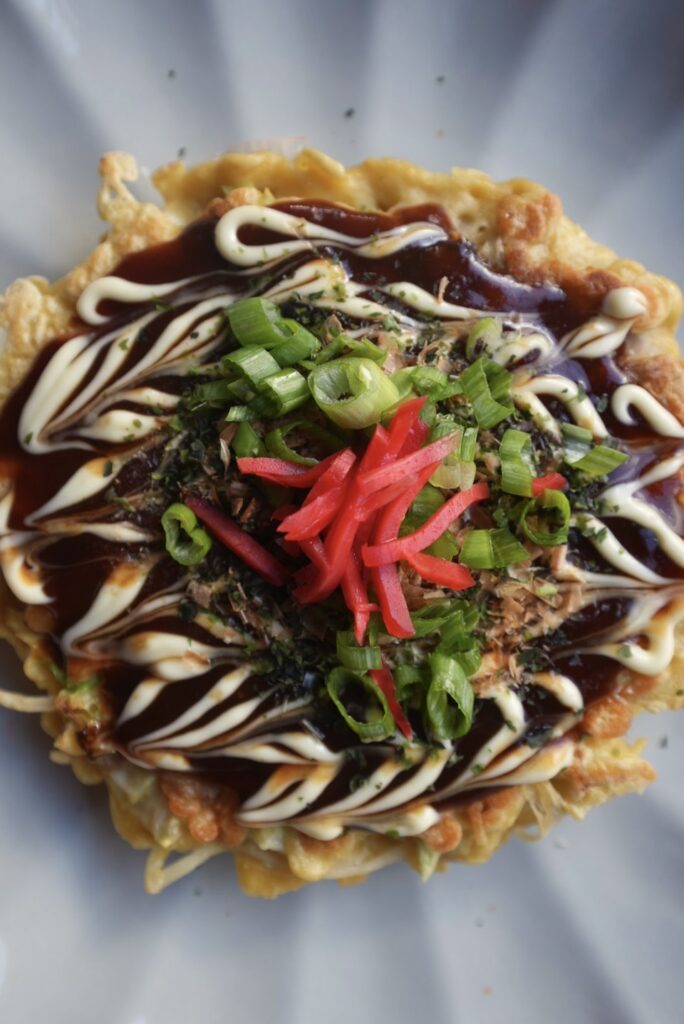
Okonomiyaki has its roots in the Kansai and Hiroshima regions of Japan, with each area offering its own distinct style. The name “Okonomiyaki” comes from the words “okonomi,” meaning “how/what you like,” and “yaki,” which means “grilled” or “cooked.” This name reflects the customizable nature of the dish, allowing for a variety of ingredients based on personal preference.
At its core, Okonomiyaki consists of a batter made from flour, eggs, water, and shredded cabbage. This batter is poured onto a hot griddle and cooked like a pancake. What makes Okonomiyaki truly special is the range of ingredients that can be added to the batter or used as toppings. Common additions include pork belly, shrimp, squid, green onions, and tenkasu (tempura scraps).
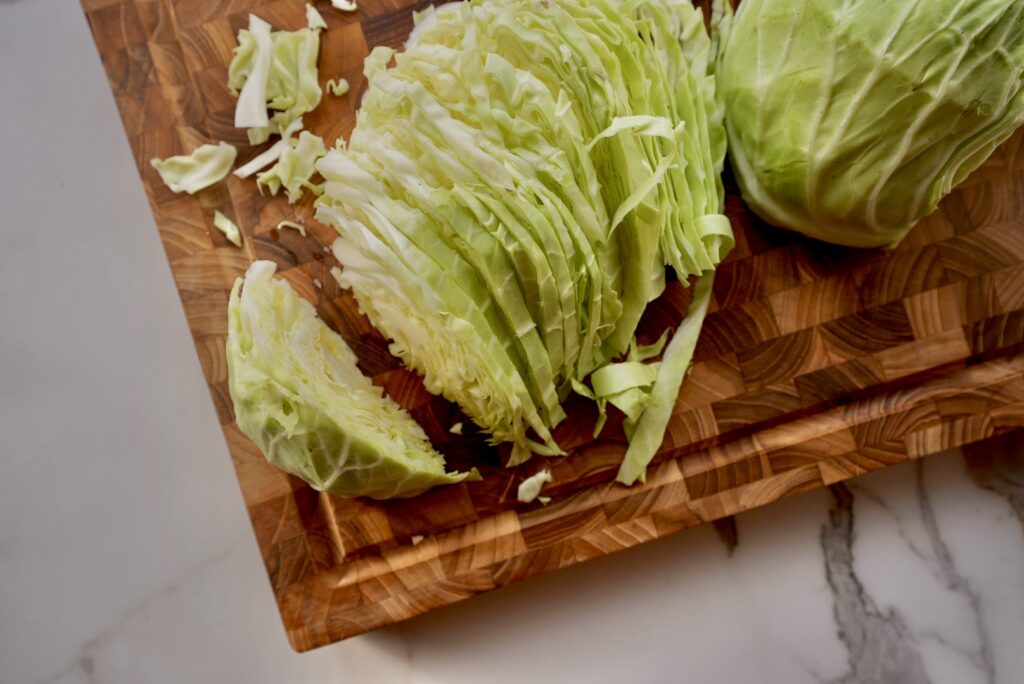
Ingredients:
Okonomiyaki requires fairly basic ingredients: flour and eggs are the base of the batter, with shredded cabbage mixed in. The whole dish is customizable, but here are some common ingredients I love that might seem intimidating or hard to find (though they’re easy to find in most Asian grocery stores):
- Dashi: Japanese broth made from kombu seaweed and bonito fish flakes. Adds a subtle umami flavor.
- Tenkasu (Tempura Scraps): A simple batter prepared from flour, water, and egg. This batter is dropped into hot oil and quickly puff up and turn golden brown. They add a crunch and extra flavor to okonomiyaki.
- Protein (Pork Belly, Seafood): Thinly sliced pork belly is popular for okonomiyaki (see photo), but seafood like shrimp, squid, or octopus can also be used. It can be mixed into the batter or layered on top.
- Okonomiyaki Sauce: A thick, sweet, and savory condiment similar to Worcestershire sauce. drizzled over the cooked pancake. You can make your own, too which I have the recipe for in the recipe card.
- Kewpie (Japanese Mayonnaise): Creamier and tangier than regular mayonnaise, and often drizzled on top.
- Aonori (Seaweed Flakes): Sprinkled over the finished pancake, adding a subtle oceanic flavor and vibrant green color.
- Katsuobushi (Bonito Flakes): Made from dried and shaved bonito fish. They add a smoky, umami flavor and dance on the hot pancake due to the heat.
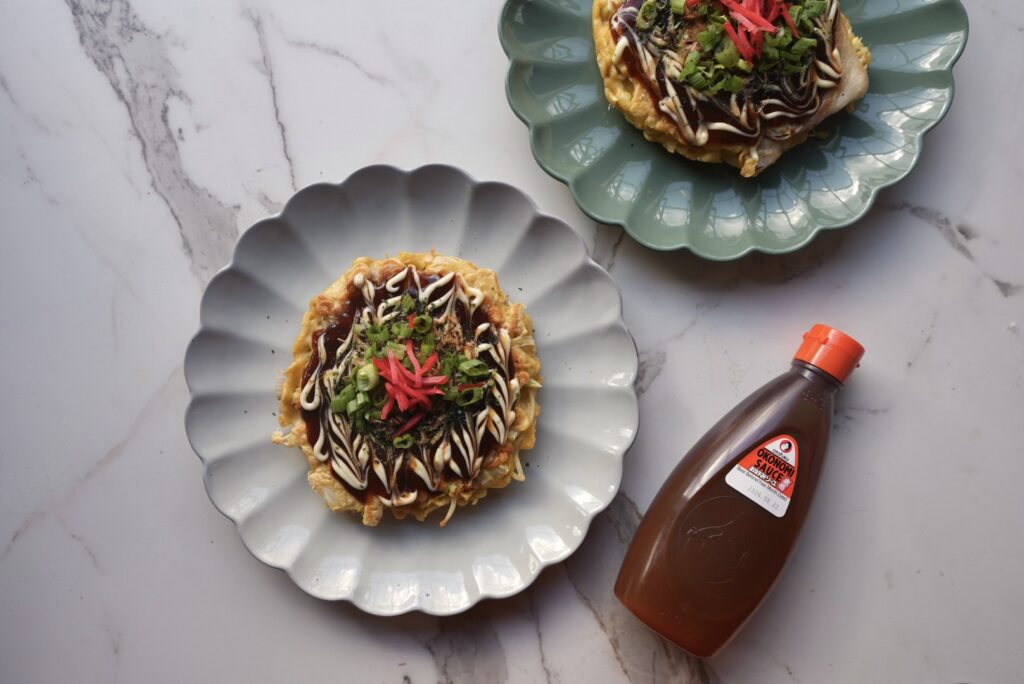
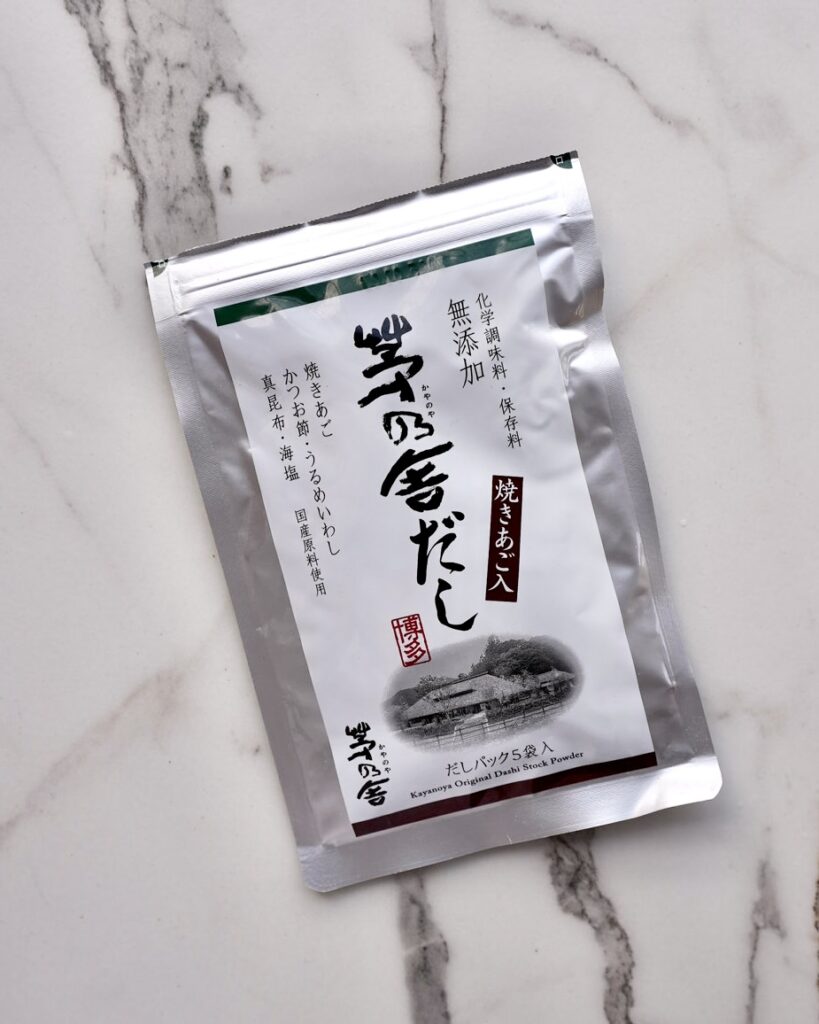
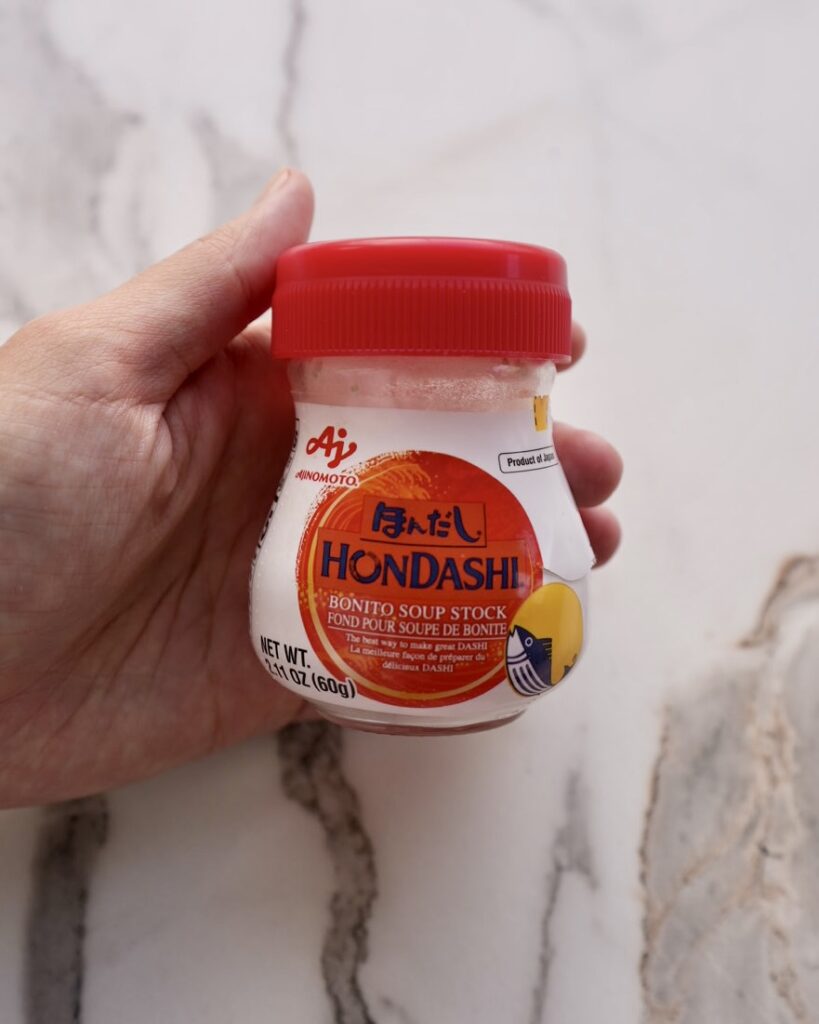
How to Make Dashi: Japanese Cooking Stock
There are three main ways to make dashi, each with its own advantages in terms of flavor, ease, and time. I ordered them from most complex to simplest:
- Dashi from Scratch: Traditional dashi, made by simmering kombu (dried kelp) and katsuobushi (dried bonito flakes), is considered the best method. Soak the kombu in water, heat just below boiling, and add katsuobushi. This method is ideal for dishes with the purest flavor.
- Dashi Packets: Dashi packets, resembling tea bags, contain dried kombu, katsuobushi, and sometimes shiitake mushrooms or dried sardines. Just simmer the packet in water for a few minutes for a quick and flavorful broth. Buy dashi packets here from one of my most recommended dashi brands, Kayanoya.
- Instant Dashi (Hondashi): Instant dashi, often called hondashi, is a granulated or powdered form of dashi. Just a spoonful dissolved in hot water creates a quick and flavorful stock. This option is convenient and ideal for busy days. Buy hondashi here.
Okonomiyaki (お好み焼き)
- Total Time: 25 minutes
Description
Okonomiyaki is a Japanese savory pancake made with a batter of flour, eggs, and shredded cabbage, customizable with various proteins and topped with okonomiyaki sauce, Japanese mayonnaise, aonori, and bonito flakes.
Ingredients
Batter:
- 1 cup all-purpose flour
- 2/3 cup dashi
- 3 eggs
- 1/2 teaspoon salt
- 1/4 teaspoon baking powder
- 2 cups cabbage, finely chopped
- 1/2 cup bean sprouts
- 1 lb pork belly, thinly sliced (substitute for bacon)
Toppings:
- Kewpie (Japanese mayonnaise)
- Okonomiyaki sauce (ingredients below if you’d rather go that route – just mix to combine)
- 3 tablespoons Worcestershire sauce
- 2 tablespoons ketchup
- 1 tablespoon oyster sauce
- 1 tablespoon soy sauce
- 1 tablespoon honey or sugar (optional for sweetness)
- 1/2 teaspoon Dijon mustard
- Optional Toppings: Aonori (seaweed flakes), katsuobushi (bonito flakes), pickled red ginger (beni shoga)
Instructions
- In a large bowl, mix together the flour, water, hondashi, eggs, salt, and baking powder until well combined.
- To your batter, add the chopped cabbage and bean sprouts.
- Heat a large non-stick skillet or griddle over medium heat and lightly oil it. Pour a portion (anywhere from 1/2 cup to 1 cup) of the batter mixture into the skillet, shaping it into a circle about 1/2-inch thick.
- Place a few slices of pork belly or bacon on top of the pancake. Cook for about 5-6 minutes, until the bottom is golden brown and the pancake is set.
- Flip the pancake carefully using a large spatula and cook for another 5-6 minutes, until the other side is golden brown and the pork is cooked through.
- Transfer the cooked okonomiyaki to a plate. Drizzle okonomiyaki sauce and Japanese mayonnaise in a crisscross pattern over the top. Sprinkle with aonori and katsuobushi. Add some pickled red ginger on top, if desired.
- Prep Time: 15 minutes
- Cook Time: 10 minutes
Nutrition
- Serving Size: 2-4



I love this recipe! I like that you went easy on the sauce.
Hi Orlando – so glad to hear! Thanks for sharing 🙂
Including options for fillings was great. I went with bacon and shrimp and it worked perfectly.
Oh yum! Sounds great, Brielle! 🙂