
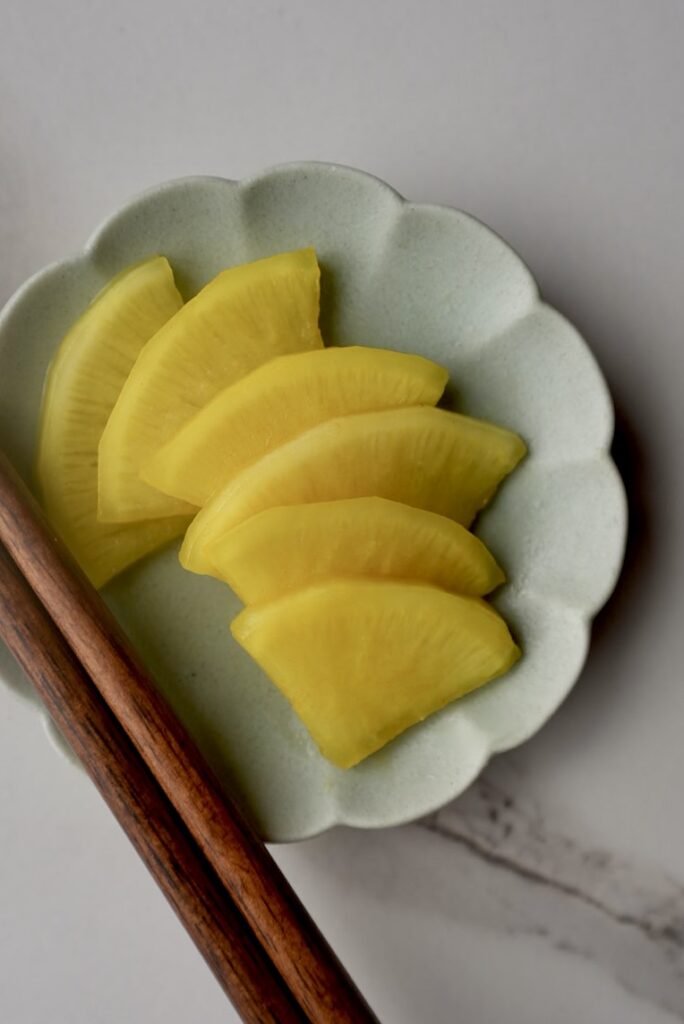
Growing up, I snacked on takuan all the time. I remember always reaching for those bright yellow slices straight from the fridge. It has the perfect balance of sweet, tangy, and salty flavors. Takuan is a traditional Japanese pickle made from daikon radish, known for its bright yellow color, sweet-salty flavor, and crisp texture. Often enjoyed as a snack or side dish, it adds a refreshing crunch and tangy-sweet balance to a variety of meals.
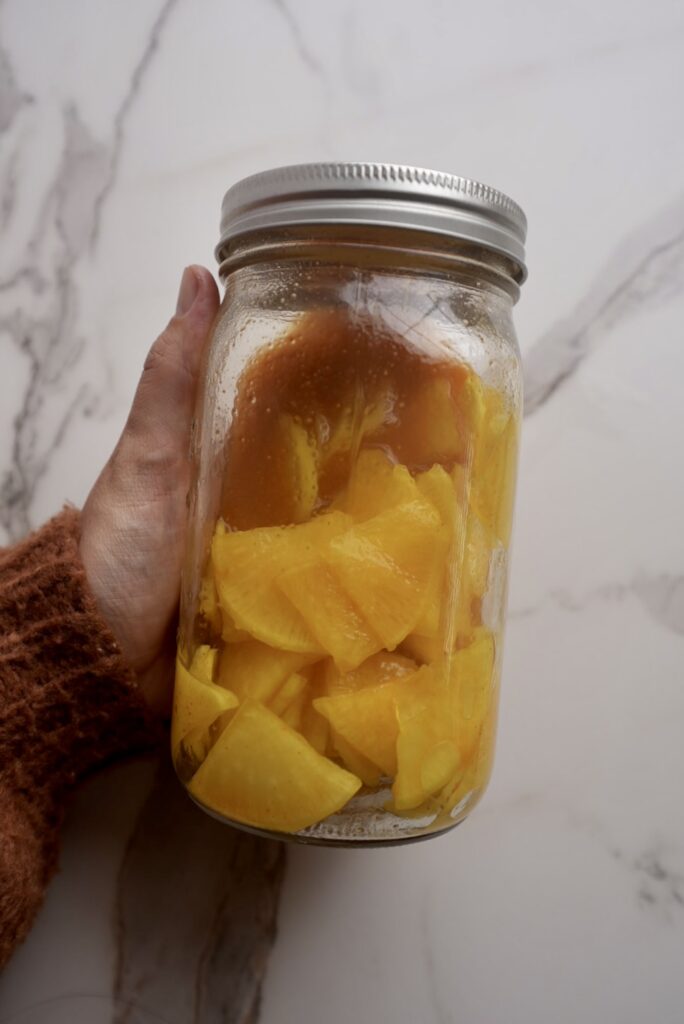
Takuan pairs beautifully with rice, bento boxes, and even sandwiches, adding a pop of flavor and a satisfying crunch. The bright yellow color of traditional takuan comes naturally from the drying and pickling process, not from turmeric (although that’s how I do it in my recipe for the sake of avoiding the drying process!). After harvesting, the daikon is usually sun-dried for several days, which slightly changes its color. Then it’s pickled in a mixture of rice bran (nuka), salt, and sometimes sugar, which further enhances the yellow hue.
Whether you enjoy takuan as a snack, a side dish, or part of a larger meal, takuan is a perfect example of how traditional Japanese pickles bring both flavor and culture to the table. Making takuan at home is surprisingly simple, and it allows you to adjust the sweetness, saltiness, and tang to your liking. Let’s learn more about it!
Takuan’s Health Benefits
Takuan isn’t just tasty, it’s also good for you. It’s made from daikon, which is a low-calorie root vegetable. It’s also rich in fiber, which supports digestion and keeps you feeling full. The pickling process introduces beneficial probiotics, especially if you make it with natural fermentation methods, which can help support gut health.
Daikon is also packed with vitamins C and B6, as well as minerals like potassium, which contribute to overall wellness. And because takuan is typically low in calories and fat, it’s an easy way to add flavor and crunch to meals without extra heaviness.
How to Enjoy Takuan
Takuan isn’t just a standalone snack! Although that’s how I find myself eating it whenever I make this. It always goes so fast because I am constantly opening the fridge because I crave its crunch!
Takuan also pairs wonderfully with all kinds of meals. Like I said, it’s popular in Japanese cuisine. Takuan is also enjoyed in Korean cuisine, where it’s known as danmuji. The pickled daikon’s bright yellow hue and crunchy texture make it a staple in Korean lunchboxes and street food. This humble pickle is super versatile across cuisines. Here are some ways to enjoy takuan/danmuji:
- With plain, steamed white rice
- Bento boxes (as a side or garnish)
- In sushi or onigiri
- Grilled fish (like salmon or mackerel)
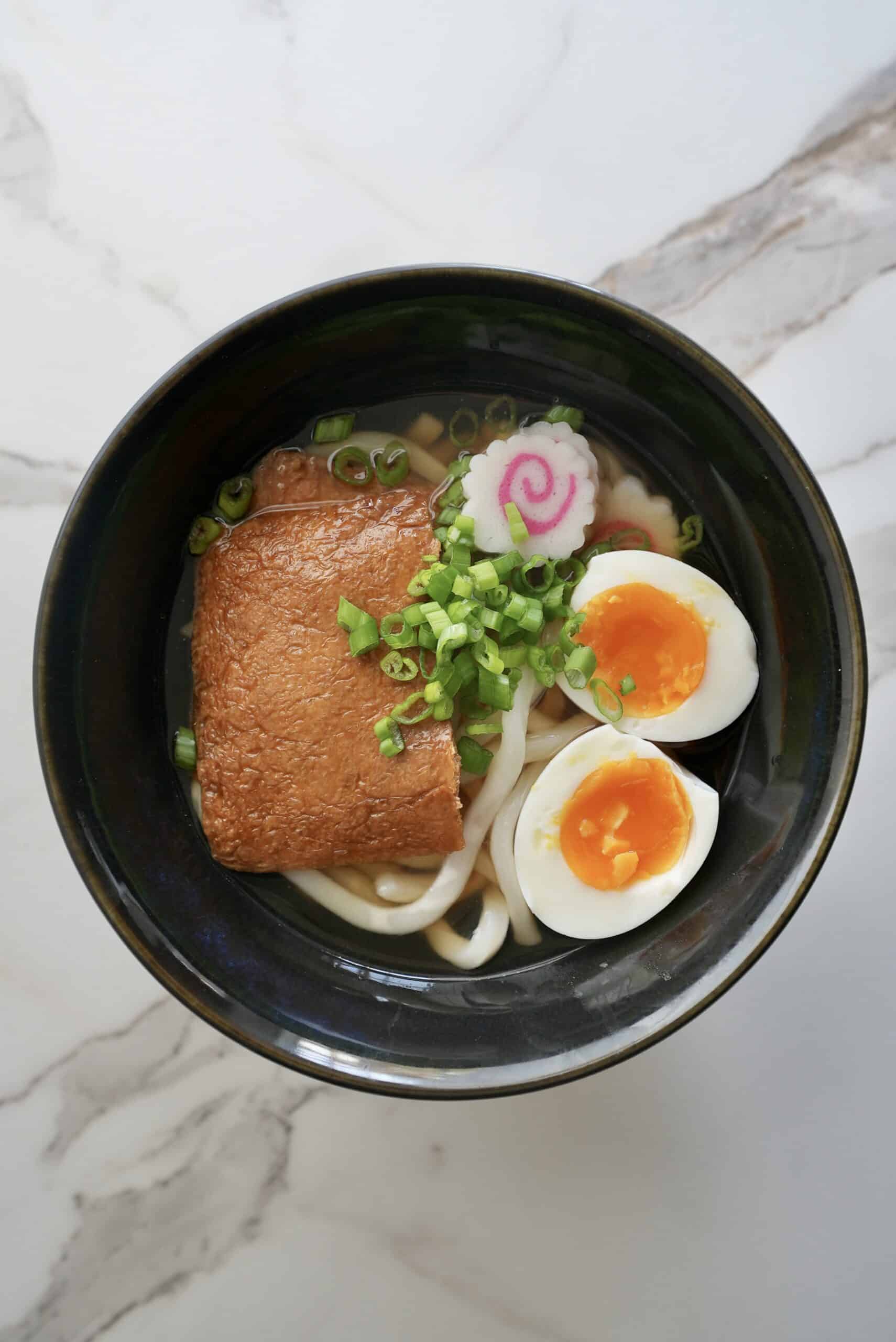
- Noodle bowls (soba, udon, or ramen)
- Kimbap (Korean rice rolls)
- Bibimbap
- Korean fried chicken
- Stir-fried vegetables or rice dishes
- Stews like sundubu-jjigae (soft tofu stew)
Whether you’re enjoying it with Japanese classics or Korean favorites, takuan is a staple!
Enjoy pickled flavors? Try my other recipes!
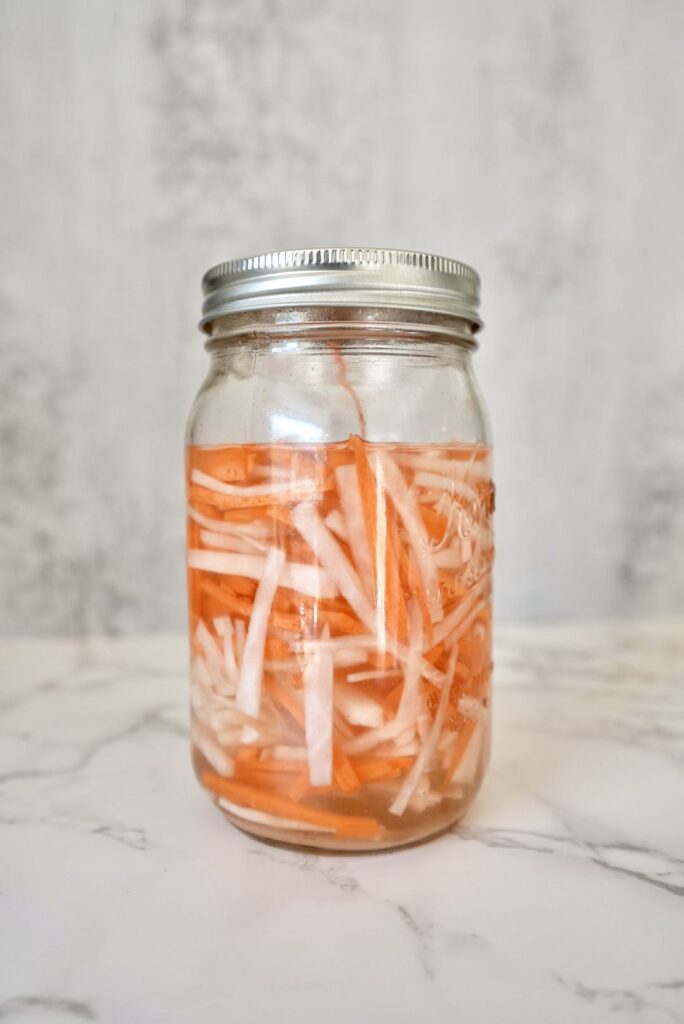
Quick Takuan (Daikon Pickles)
- Total Time: 24 hours 10 minutes
Description
Takuan is a traditional Japanese pickle made from daikon radish, typically bright yellow, sweet, tangy, and slightly salty, with a crisp texture.
These will last you about 2 – 3 weeks in the fridge. See notes below for more info on this.
Ingredients
- 350 g daikon radish
- 1/2 tbsp salt (for salting the daikon)
- 1/4 cup granulated sugar
- 2 tbsp rice vinegar (substitute white vinegar)
- 1/2 tsp turmeric powder (optional; include if you want your takuan to be yellow. Note that turmeric can amplify sulfur-y smells. Omit the turmeric if you are especially sensitive to this!)
Instructions
- Slice the daikon into half-moons about 3 – 4 mm thick, or cut into long strips about ¼ inch thick.
- Place in a colander, rinse briefly under cold water, and drain well.
- Transfer the daikon to a bowl and sprinkle with 1/2 tbsp salt. Toss to coat evenly. Let sit for 30 minutes or until the daikon releases liquid.
- Gently squeeze the daikon to remove excess moisture, and discard the released liquid. This step helps reduce odor and concentrates flavor.
- Add the sugar, rice vinegar, and turmeric powder (if using) to the daikon. Mix thoroughly until everything is evenly coated.
- Transfer to a jar or sealable container or bag large enough to hold everything comfortably. Cover/seal and refrigerate.
- After about 12 hours, shake or stir once to redistribute the seasoning. Refrigerate another 12 hours, then it’s ready to eat.
Notes
Tips to Reduce Daikon Smell:
- Always salt and squeeze first to remove sulfur-rich liquid
- Rinse sliced daikon before salting to wash away surface enzymes
- Use enough acid (2 tbsp vinegar helps stabilize aroma)
- Store in the fridge immediately – don’t leave at room temperature
- Vent once early on (open the container briefly after a few hours)
- Add a small piece of kombu or a bit of grated ginger to absorb sulfur compounds
What Affects Shelf Life:
- Salted and squeezed first: lasts closer to 3 weeks
- Kept cold (≤40°F / 4°C): essential for lasting longer
- Clean utensils every time: prevents contamination
If you want it to last longer:
- Increase vinegar slightly (up to 3 tbsp)
- Store in a glass jar with a tight lid
- Keep it toward the back of the fridge where temps are most stable
- Prep Time: 10 minutes + 24 hours wait time



How long is the shelf life after picking
About 2 – 3 weeks!
Tried this twice – the first time was a little smelly (but still tasted delicious and crunchy!) so I tried it again using your tips to reduce smell and it was AMAZING! Thank you!
Hi Jennifer! I’m glad you gave it another try! The smell definitely can be powerful if you don’t take the precautions haha. Glad you enjoyed it!
Wow! So simple to make, and so delicious too! I am very pleased with this recipe.
I haven’t had good, home style Takuan since I left Japan.
This is the one I remember!
Thank you!
Aww yay! So happy to hear that 🙂 thanks for your kind words!