
Hey all! Real Farmer Jeff here.
I recently added a greenhouse to my backyard, and it’s been so fun to have an experiment with. The challenge, however, is that I live in a region with fairly cold winters. Because of this, maintaining a warm environment inside has become necessary. Along the way, I’ve discovered that keeping a greenhouse cozy doesn’t require costly heaters or complex setups.
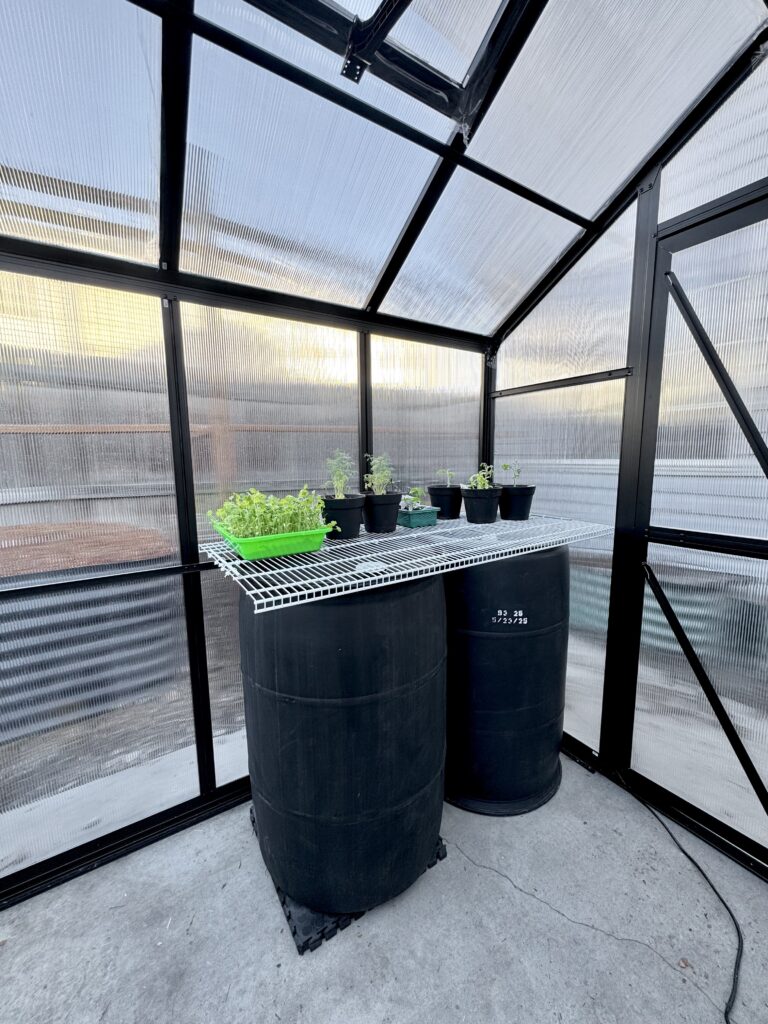
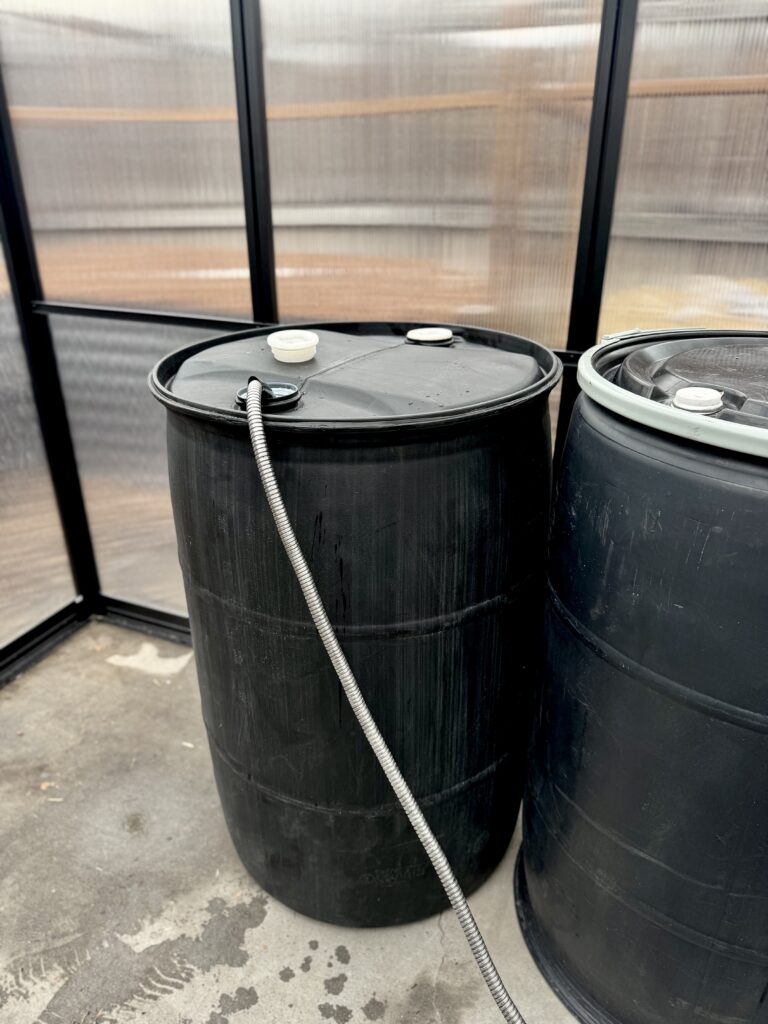
For example, in my greenhouse I recently made a DIY Table from black 55-gallon water drums to capture solar heat during the day and release it slowly at night. In this blog post I will explain why a DIY 55-gallon water drum table works well and I will suggest other bonus greenhouse heating hacks. Let’s get started!
Why Thermal Mass from Water Works Well
Thermal mass is any material that absorbs heat when it’s warm and releases that heat slowly as temperatures cool. Greenhouses are particularly well suited to this strategy because even cold-season sunlight can significantly warm the interior compared to the nighttime temperature.
Water works exceptionally well as thermal mass because it stores a large amount of energy and releases that heat slowly. When multiple drums are used together, they smooth out temperature swings far more effectively than a single container.
Specifically, water excels for the following reasons:
- Has a high heat capacity
- Stores large amounts of energy
- Releases heat slowly over time
- Reduces sharp day-to-night temperature swings
Why Black Drums Are Best
Color plays a major role in how much heat a surface absorbs. Black surfaces absorb the most visible and infrared light and convert it into heat.
In a greenhouse setting, black drums consistently outperform other colors. Dark blues and greens provide moderate performance, while white, light colors, and bare metal reflect much of the available solar energy. If your drums are not already black, painting them with flat or satin black exterior paint is well worth the effort.
Using Drums as a Heat-Radiating Table
Placing water drums beneath a table is far more effective than lining them without tabletops along greenhouse walls. This configuration directs stored heat upward into the plant zone instead of trapping it near the ground or against cold surfaces.
A drum-supported table works well because it:
- Releases heat directly into the plant canopy
- Preserves usable growing space
- Functions as a passive radiant heat source
Best Tabletop Material
The tabletop material is critical. Solid surfaces trap heat below them, while open surfaces allow warmth to move upward.
Wire, mesh, or grated metal tabletops work best because they:
- Allow heat to radiate upward
- Improve airflow around plants
- Reduce moisture buildup
- Keep plants warmer at night
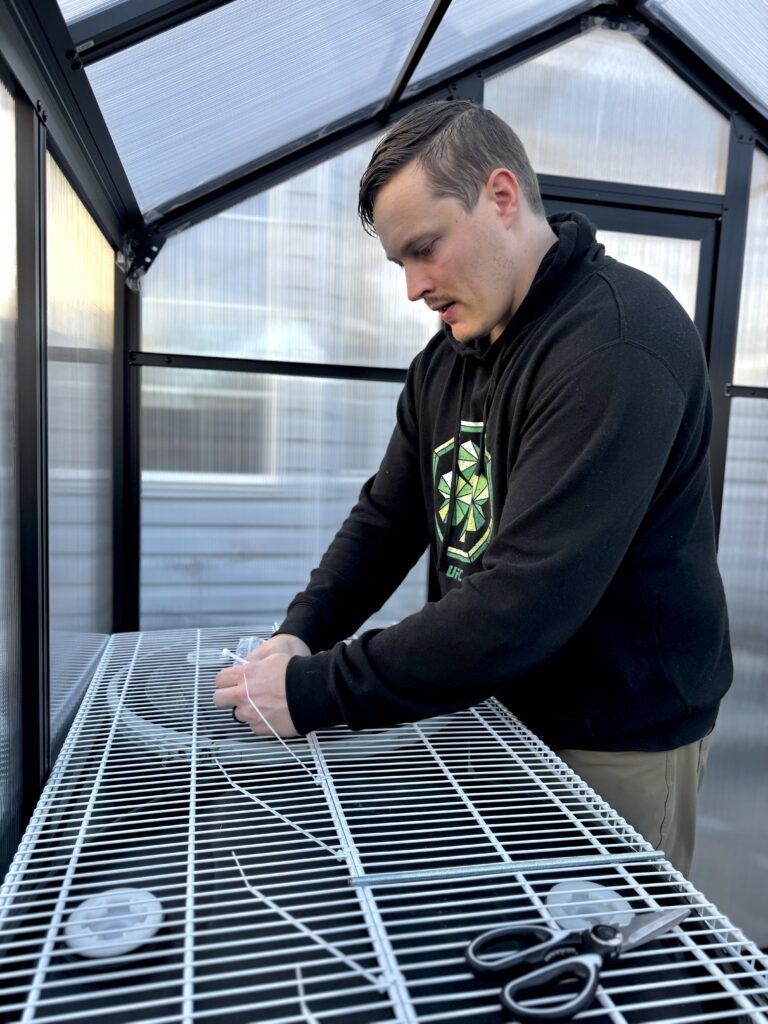
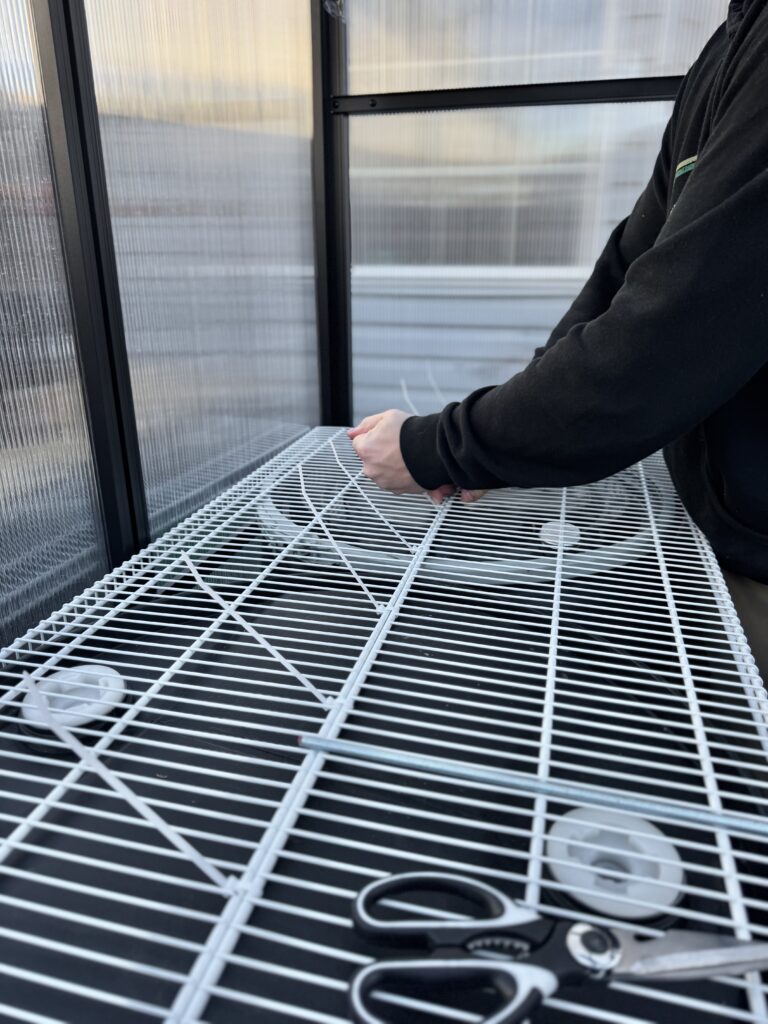
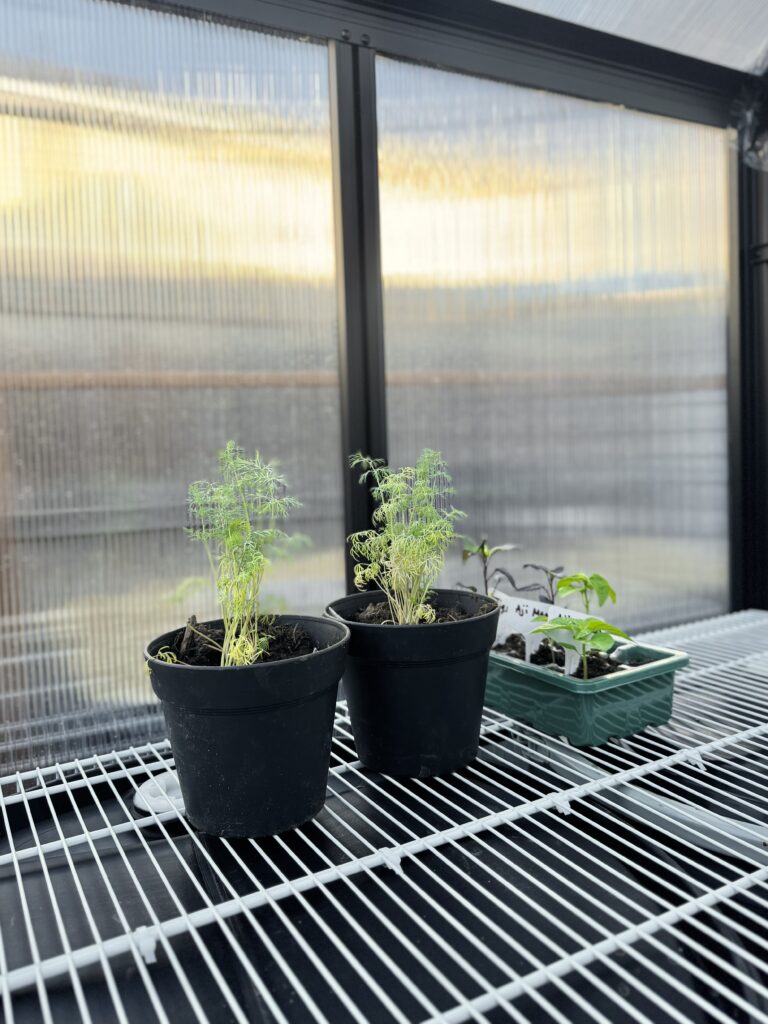
In my setup, I used two wire closet shelving units from Home Depot and zip-tied them together to create a sturdy tabletop. The drums sit directly underneath and release heat upward through the wire shelves. I was happy with this option because the whole tabletop only cost about $25.
How Much Water Is Needed
Thermal mass only works when enough volume is used to make a difference.
A reliable rule of thumb is to plan for 2 to 5 gallons of water per square foot of greenhouse floor space. The exact amount depends on your climate, sun exposure, and how well the greenhouse is sealed.
Typical Examples
| Greenhouse Size | Water Volume | 55-Gallon Drums |
| 80 sq ft | 160–400 gallons | 3–7 drums |
| 120 sq ft | 240–600 gallons | 4–11 drums |
| 200 sq ft | 400–1,000 gallons | 7–18 drums |
Even partial thermal mass slows nighttime temperature drops and improves overall stability.
Expected Temperature Impact
Thermal mass does not eliminate cold weather, but it significantly reduces temperature swings and improves consistency.
Most growers can expect:
- Overnight temperatures 2 to 5°F warmer with a few drums
- Overnight temperatures 5 to 10°F warmer with sufficient water volume and good sun exposure (or internal heating)
- Slower temperature drops after sunset
- Reduced heater runtime
Placement matters. The more direct sunlight the barrels receive, the more heat they will store. However, the way you choose to lay them out can also be balanced by the light you want your plants to receive.
The heat the plants receive from resting on top of the heated table may be double the impact that the drums have on the ambient temperature of the greenhouse.
I personally placed my table on the north side of my greenhouse to not block sun that will shine from the south and western sides for my plants.
Additional Heat-Saving Improvements
Thermal mass is most effective when paired with a few simple efficiency upgrades.
Seal air leaks. Use caulk or weatherproof tape to seal gaps, panel joints, and cracks. Pay close attention to doors and vents, as even small leaks can cause major overnight heat loss.
When to Use Caulk:
- Permanent seams: Where panels meet, or around frames that don’t move
- Small cracks: Tiny gaps in wood, masonry, or metal that let cold air in
- Outdoor-facing edges: Areas exposed to wind or drafts
Tips:
- Use exterior-grade silicone or acrylic latex caulk for durability and weather resistance.
- Combine with tape on flexible areas (like around doors or vents) for maximum efficiency.
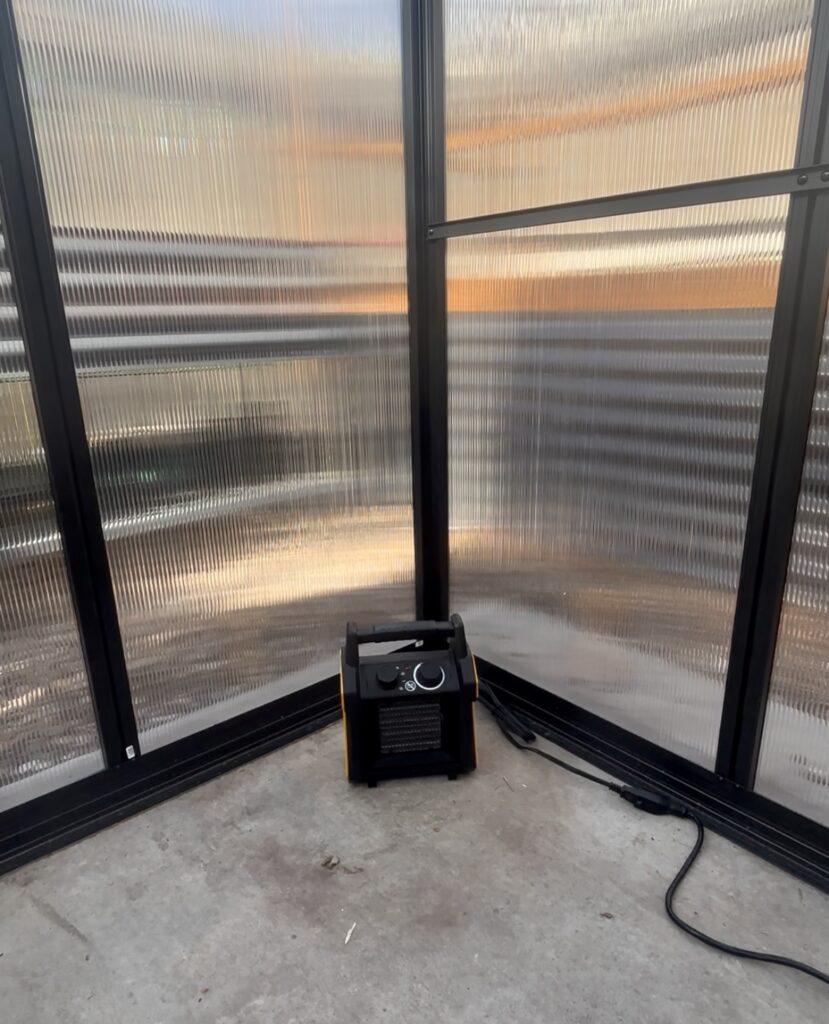
- Use the correct extension cord. If you run an electric heater, use a low-gauge extension cord, ideally 12-gauge or thicker. Thin cords reduce heater output and increase fire risk.
- Insulate the north wall. If your greenhouse has a solid north wall, add foam board or reflective insulation to reduce heat loss where sunlight does not enter.
- Use night covers. Thermal curtains, frost cloth, or moving blankets pulled over plants at night help trap rising heat and add several degrees of protection during cold snaps.
- Elevate plants. Cold air settles near the ground. Keeping plants on tables improves root temperature and overall plant health, especially when combined with heated thermal mass below.
A black 55-gallon drum table is one of the highest-value greenhouse heating upgrades available. I highly recommend trying it out! With as little as 100 to 150 gallons of water, you can see a noticeable improvement. 300-500 gallons provides strong temperature stabilization, while larger volumes offer significant heat buffering.
This approach uses free solar energy, stores heat efficiently, releases warmth at plant level, and scales easily over time without sacrificing growing space. Best of luck!
Thanks for reading along, guys! If you enjoyed this, check out my other gardening blog posts:
- How to Start a Garden on a Budget for Under $100
- 4 Reasons Why Tomatoes Are the Best Vegetable to Grow
- My Garden Setup: 3 Best Garden Containers for Every Gardener
- When to Plant Indoors vs. Outdoors: A Seasonal Guide for Gardeners
- Essential and Nice-to-Have Garden Products for Your Perfect Setup
- Starting Seeds vs. Buying Transplants: How to Decide for Your Garden



0 Comments