
Hey all! Real Farmer Jeff here.
Protecting my garden from freezing temperatures is a constant battle during the spring. I live in a part of Utah (Zone 7A) that is a sub desert, and so even though the days often get warm, the nighttime temperatures can drop by over 20 degrees Fahrenheit. Because of this, figuring out how to protect my garden from potential frosts can be a difficult task, but I’ve figured out a few ways how.

In this post, I’ll share six different ways to protect your garden from the cold and frost – some of which are simpler and more budget-friendly than you might expect! I’ll also wrap things up by highlighting the method that works best for my own garden.
Let’s get started!
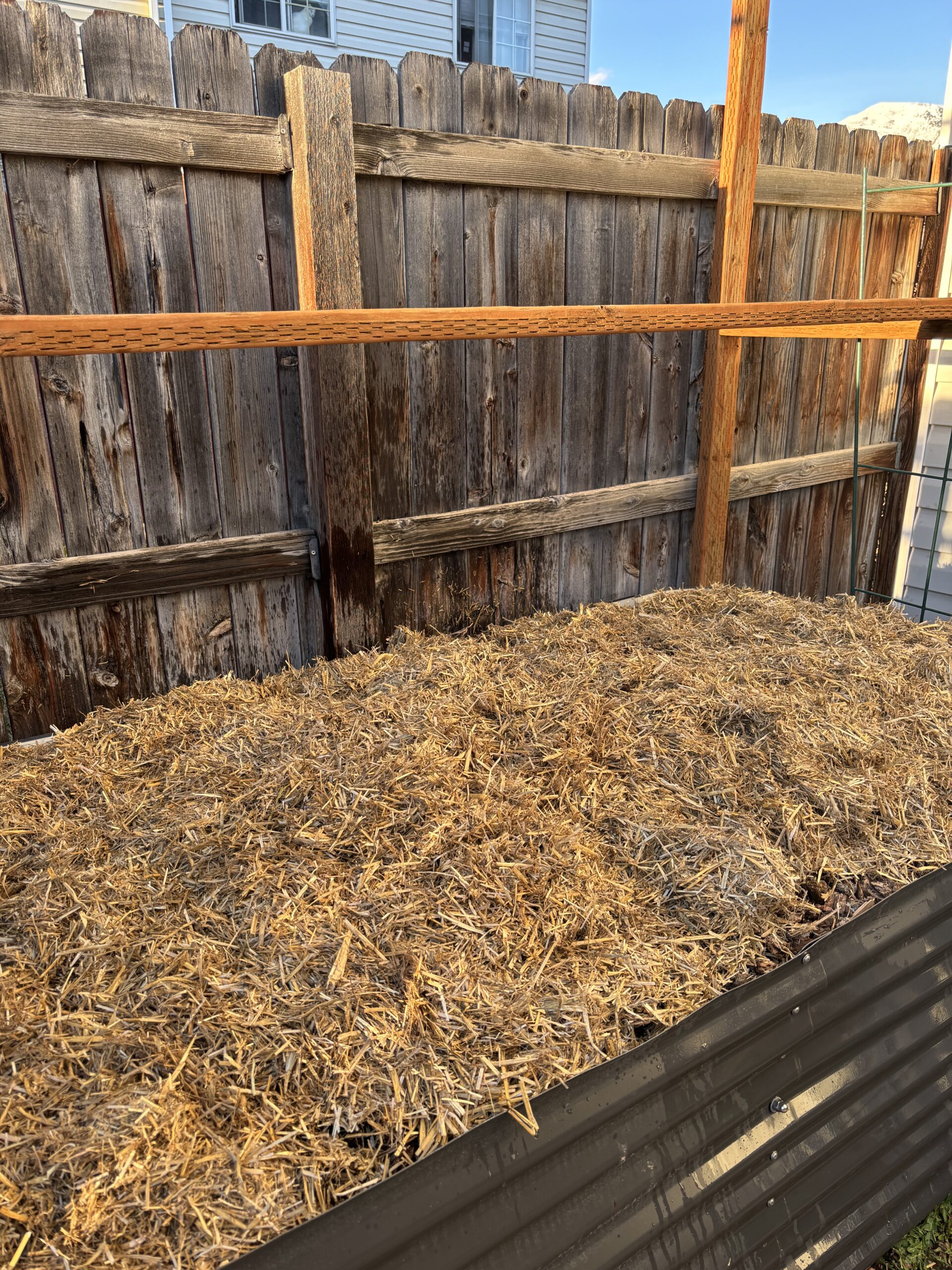
1. Mulching
Description: You can spread a layer of organic material (like straw, leaves, or bark) over the soil to insulate plant roots from cold. Oftentimes plants care more about the soil temperature than the air temperature assuming the air temperature does not drop below freezing.
| Pros | Cons |
|---|---|
| Easy and inexpensive | This method is not sufficient for freezing temperatures |
| Regulates soil temperature and retains moisture | Doesn’t protect above-ground parts from frost |
| Protects against sudden cold weather | — |
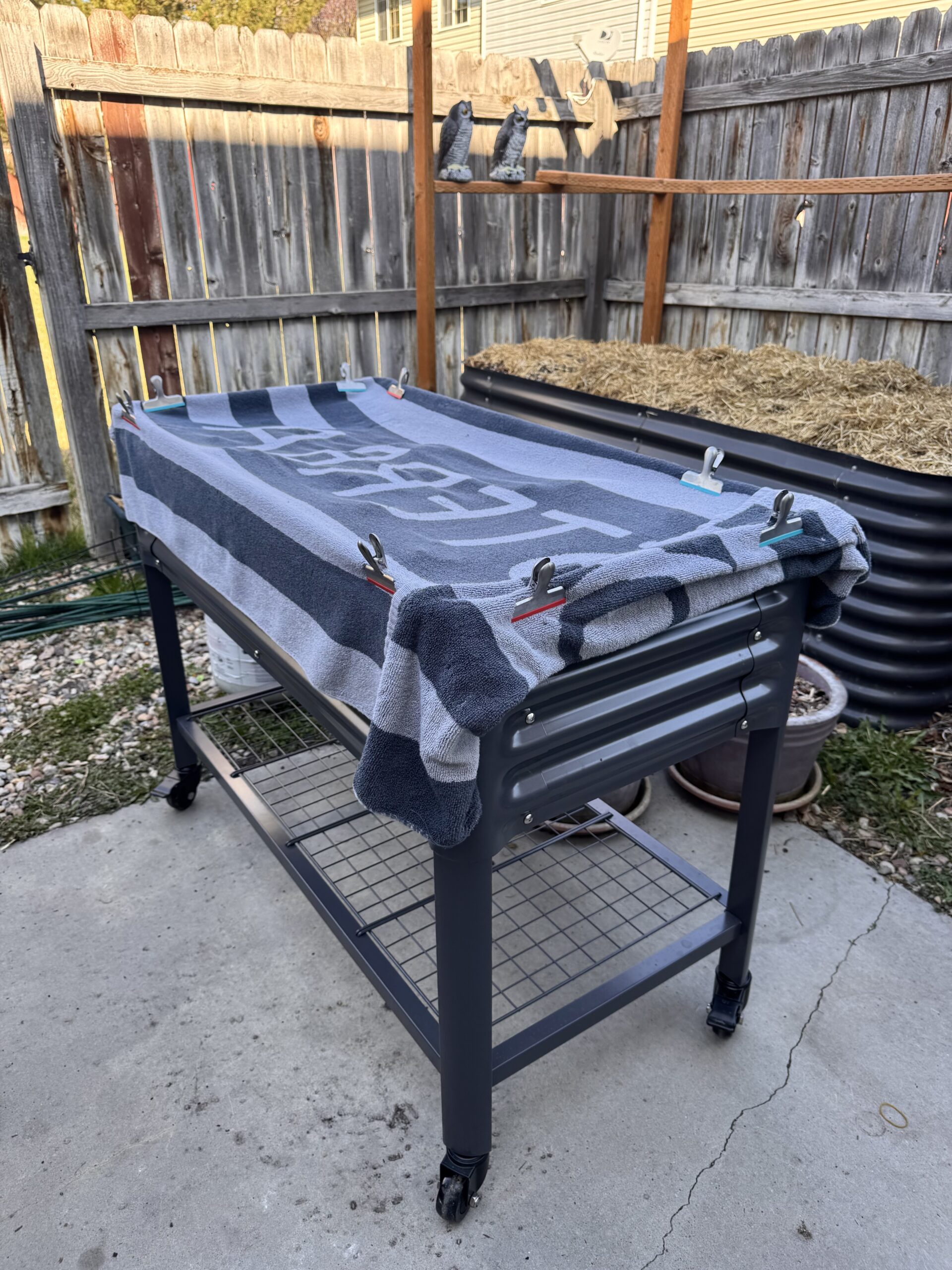
2. Blankets or Towels
Description: Old towels, quilts, or comforters can be draped over plants or garden structures to provide quick, temporary insulation. Simply remove during the day to allow sunlight and airflow. When ready to use, drape over individual plants or row structures before frost, and secure with garden staples, rocks, or clips.
| Pros | Cons |
|---|---|
| Free and readily available | Not very breathable and doesn’t allow sunlight to come through |
| Provides substantial warmth | Heavy fabric may crush tender plants if not propped |
| Great for emergency or short-term use | Needs to be removed daily in sunny or warmer conditions |
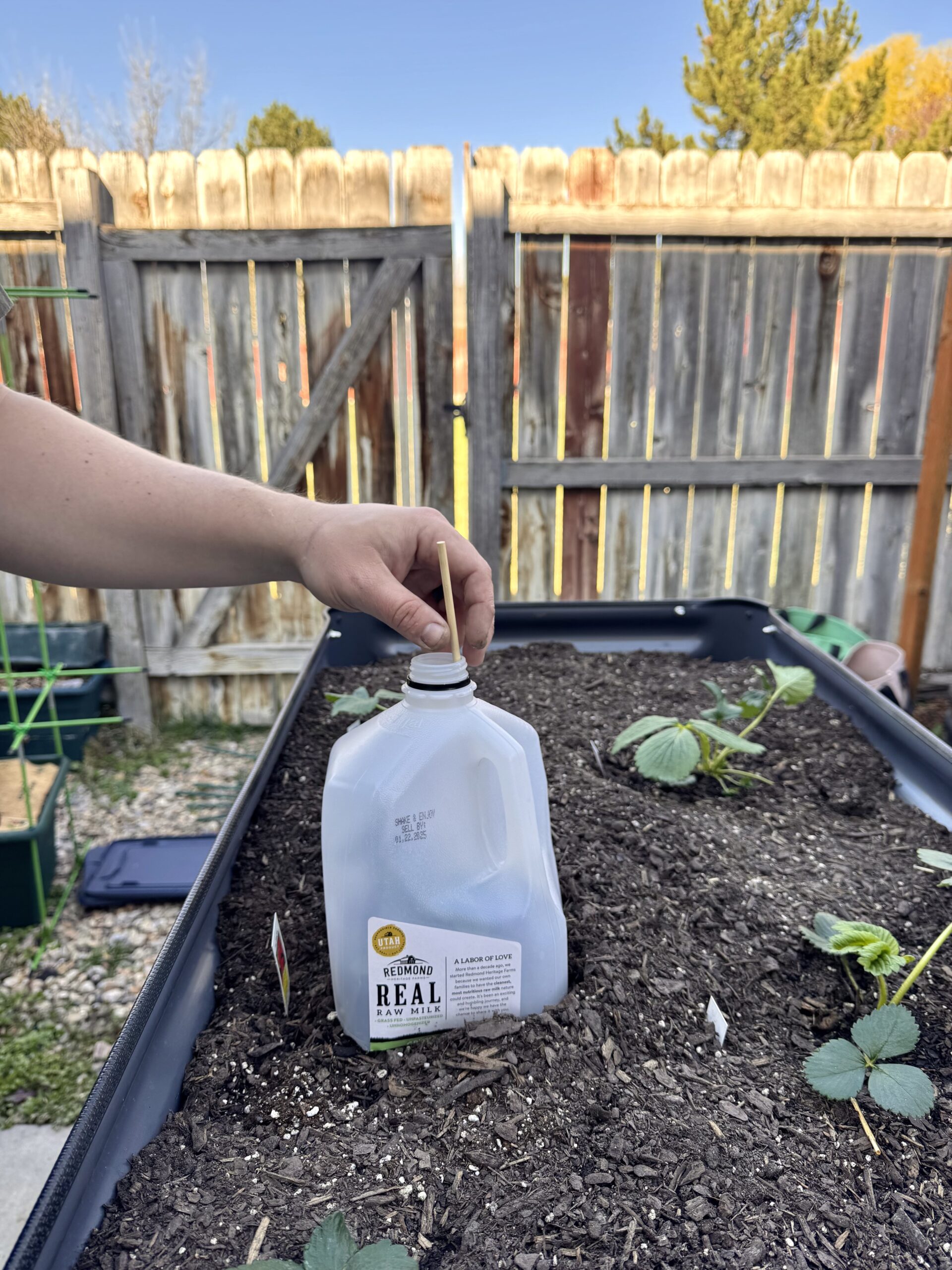
3. Cloches
Description: Small, portable covers (like jars, bottles, or bell-shaped domes) placed over individual plants to create mini-greenhouses.
| Pros | Cons |
|---|---|
| Simple and inexpensive (especially with DIY materials) | Only covers one plant at a time |
| Easy to remove and reposition | Can overheat or trap moisture if not monitored |
| Ideal for protecting young or tender plants | May need securing in windy conditions |
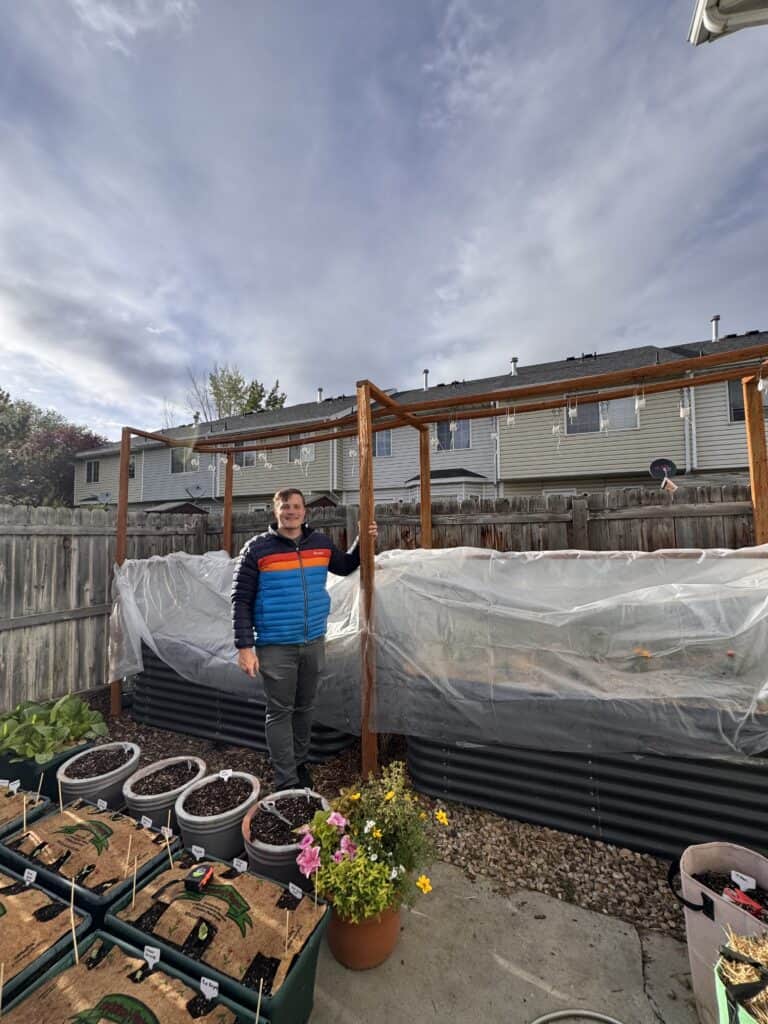
4. Row Covers (Floating Row Covers / Frost Blankets)
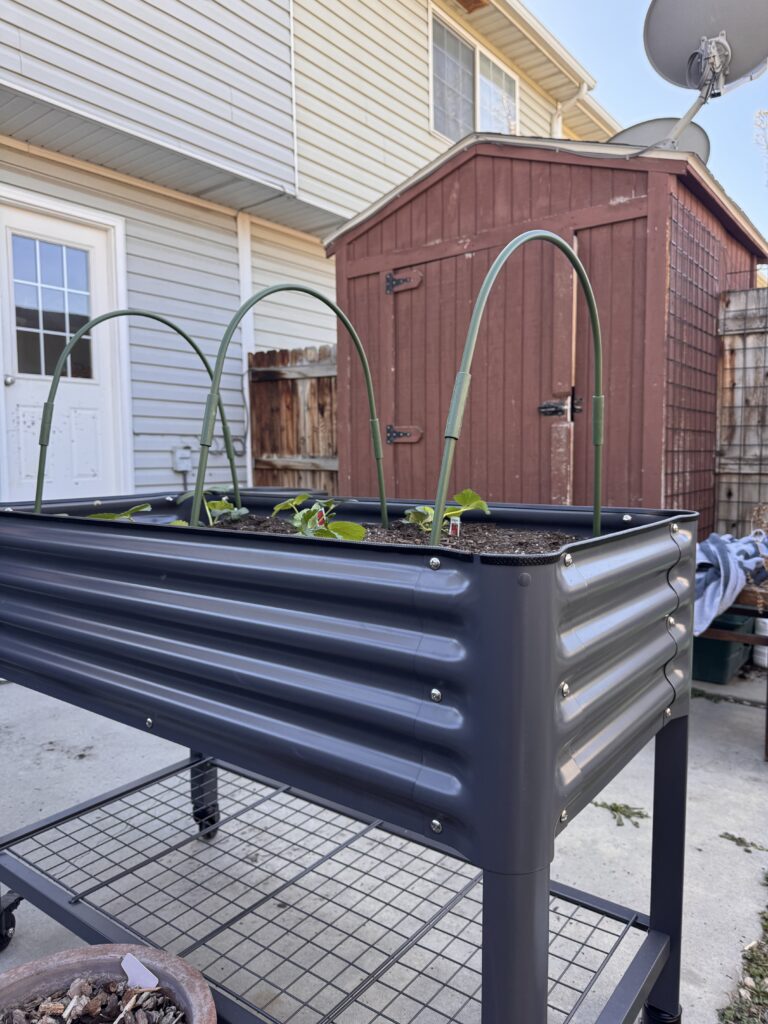
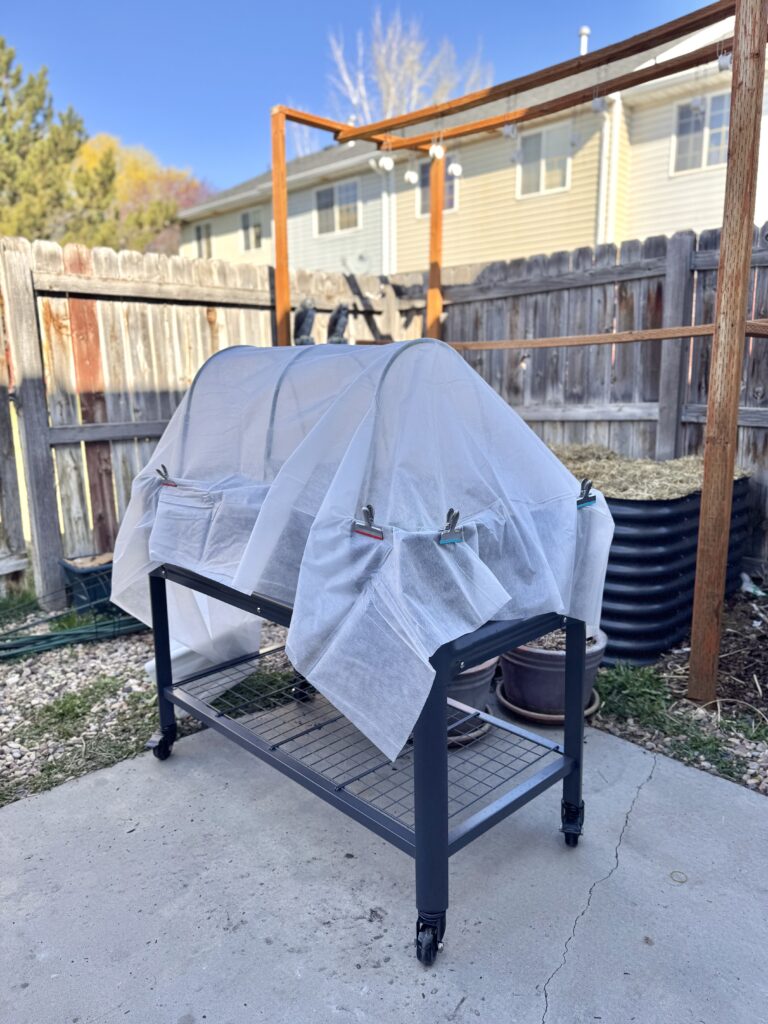
Description: Lightweight, breathable fabric draped directly over crops or suspended with hoops to trap warmth while allowing light and moisture in.
Note the polyethylene (or other plastic) covers may need to be vented or fully removed in the day time to prevent overheating, depending on the outside temperature.
| Pros | Cons |
|---|---|
| Easy to set up and reusable | Needs securing to stay in place |
| Covers large areas | Heavier versions reduce light exposure |
| Can allow sunlight, air, and rain through | — |
5. Cold Frames
Description: Low-profile boxes with transparent lids that trap solar heat and shelter plants from wind and frost – great for seedlings or cold-hardy crops.
| Pros | Cons |
|---|---|
| Excellent frost protection | Limited space inside |
| Helps harden off seedlings | Requires venting to prevent overheating |
| Extends the growing season in cooler months | May be expensive or harder to build |

6. Greenhouses or Hoop Houses
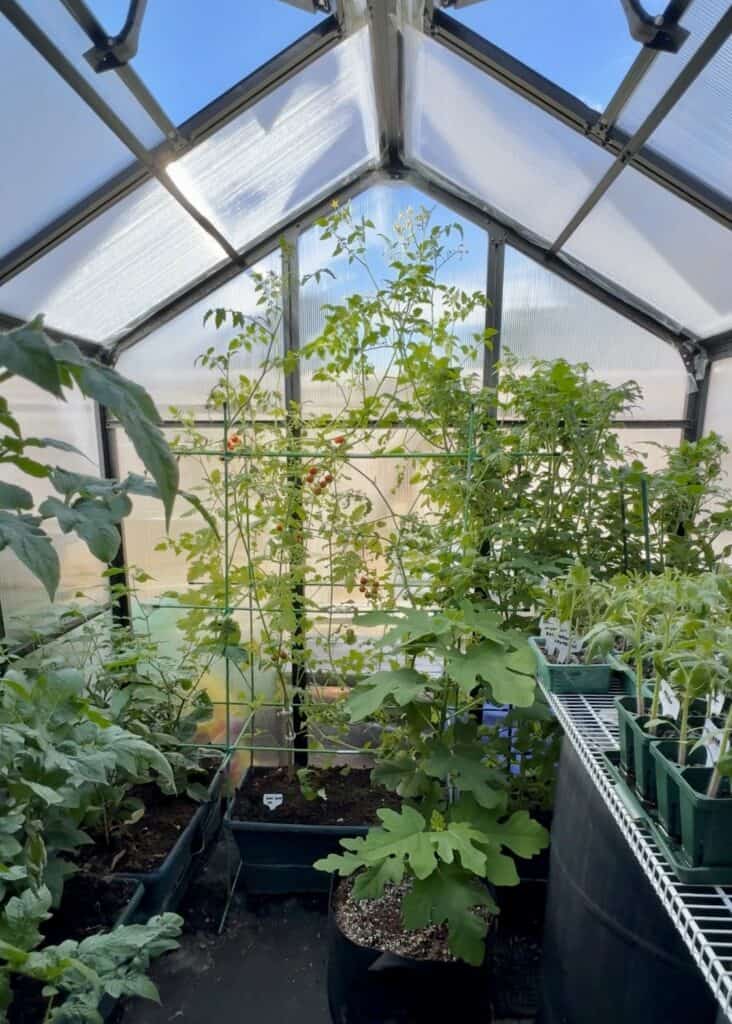
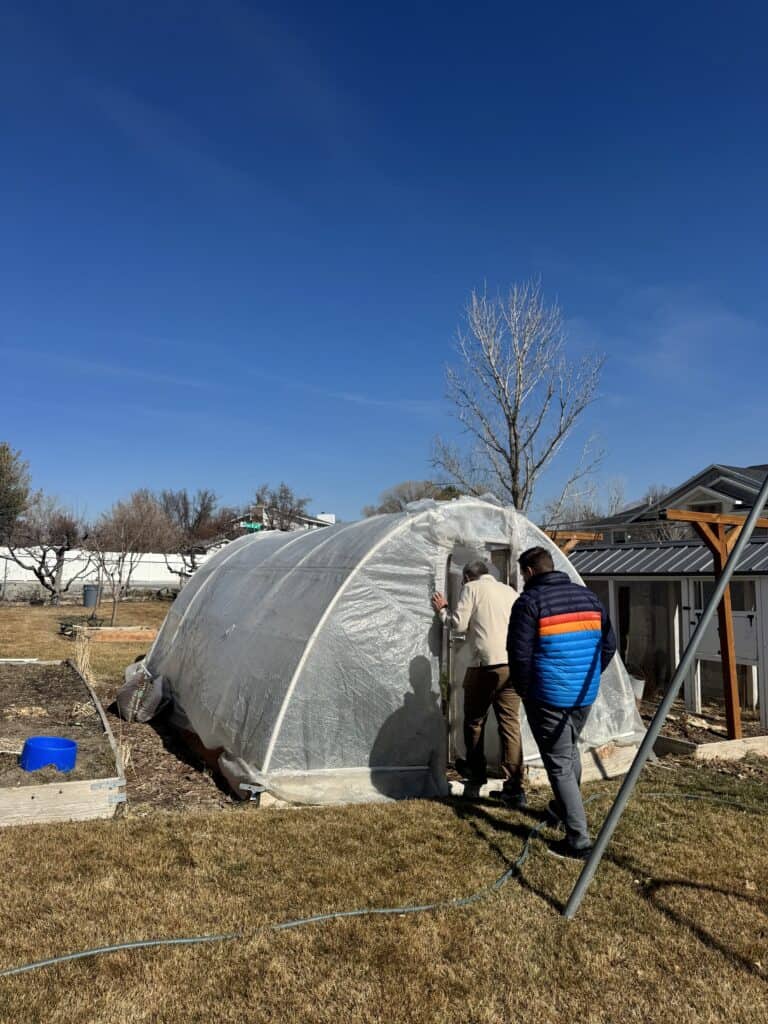
Description: Full or partial structures covered in plastic, polycarbonate, or glass that create a controlled growing environment.
| Pros | Cons |
|---|---|
| Offers year-round protection | High upfront cost and time investment |
| Enables winter gardening with added heat if needed | Requires space and maintenance |
| Highly durable and effective | May need heating or ventilation systems in extreme temps |
My Favorite Materials
I’ve loved using hoops in my garden to hold up frost blankets for light protection and polyethylene covers for heavier needs. The frost blankets are great since they still let some moisture through, but the downside is that they only raise the temperature by ~five degrees.
On the other hand, polyethylene plastic creates a mini greenhouse effect – great for trapping heat, though it doesn’t allow water through. Either way, both options are effective for covering large areas without breaking the bank!




The garden hoops is genius! I have seen people build their own from conduit or UV resistant PVC. I want to do that this year.
I saved a whole bed of greens following your overnight cover technique.