
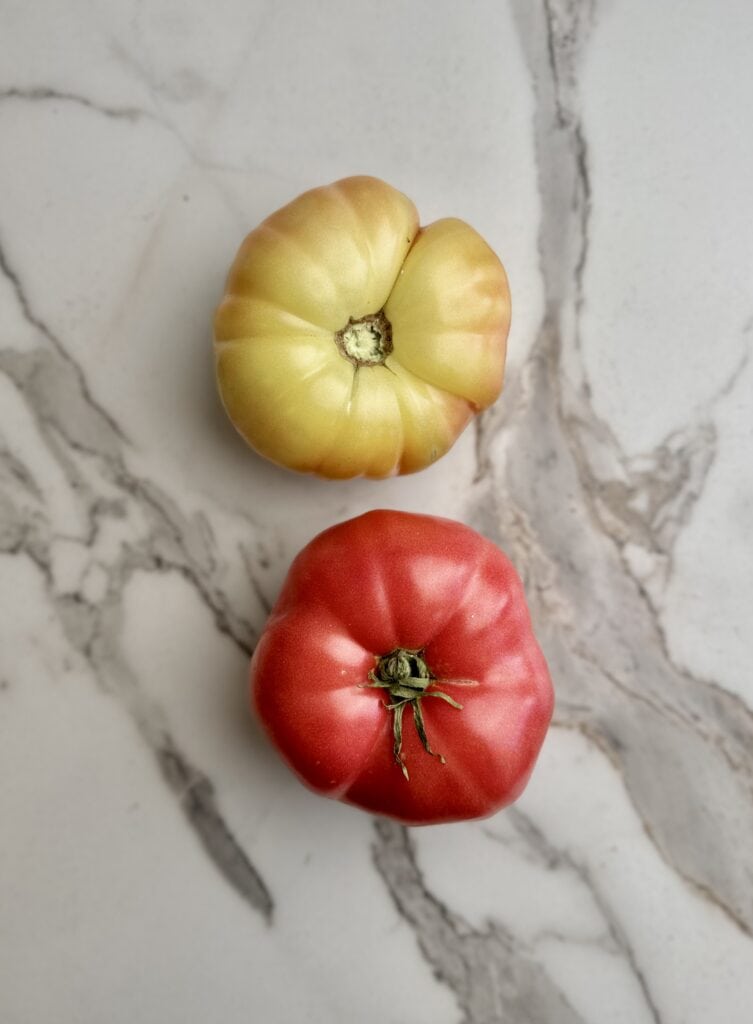
Recently, I harvested two tomatoes from the exact same Granny Cantrell’s tomato plant. One was the beautiful pink color you’d expect from this heirloom variety.
The other was almost completely ivory white.
So… I had to ask the question, did I just harvest an albino tomato? In this blog post I will answer why one of my tomatoes ripened white, and if this has happened to you, how you can avoid it. Let’s get started!
Why is My Tomato White?
This was my biggest question. How could two tomatoes from the same plant look completely different?
To understand what happened, remember that all tomatoes start out green because of chlorophyll, the pigment responsible for their green color (throwback to middle school biology! I knew that info would come in handy). As tomatoes ripen, chlorophyll breaks down and other pigments develop that create the tomato’s final color.
Normally, Granny Cantrell’s tomatoes transition from green to the familiar pink color we expect. In my case, extreme heat interrupted that final color development, leaving me with a tomato that was fully ripe but never developed its normal pink appearance.
What Happens During Extreme Heat?
As tomatoes ripen, they produce pigments like lycopene, which gives red and pink tomatoes their color. When temperatures stay above roughly 85 – 90°F for extended periods, lycopene production slows dramatically.
Interestingly enough, however, the tomato keeps ripening anyway. It can still…
– soften
– develop mature seeds
– become juicy
– reach eating quality
The only thing that doesn’t fully keep up is the color. That explains why when I touched my tomato, it felt perfectly ripe despite it was being completely white.
Other Reasons Your Tomatoes Are White:
Heat isn’t the only reason a tomato might appear white, but in this case it was the most likely explanation. Other possibilities include:
– A Naturally White Tomato Variety: Some heirloom tomatoes are supposed to ripen ivory or pale yellow, like Great White and White Beauty. Since Granny Cantrell’s is a pink tomato, that wasn’t the cause here. Additionally, I had already gotten pink tomatoes from the same plant.
– An Unripe Tomato: An immature tomato can also appear pale, but it is usually firm. Mine was soft, juicy, and fully ripe.
– Sunscald or Other Issues: Sunscald usually creates a white or yellow patch on the side of the fruit facing the sun rather than turning the entire tomato ivory. However, the skin on my white tomato looked and felt normal. It didn’t have the pale, leathery patches or damaged areas that are typically associated with sunscald.
The Taste Test: White Tomato vs. Pink Tomato
Having both tomatoes on my cutting board made for the perfect side-by-side comparison. From the outside, they looked completely different. But once I sliced them open, I was surprised by how similar they actually were.
The texture? Almost identical! Both tomatoes were soft and fully ripe, juicy, and tender. The white tomato wasn’t underripe. It had simply ripened without developing its normal color.
So were there any differences in the two tomatoes besides the color?
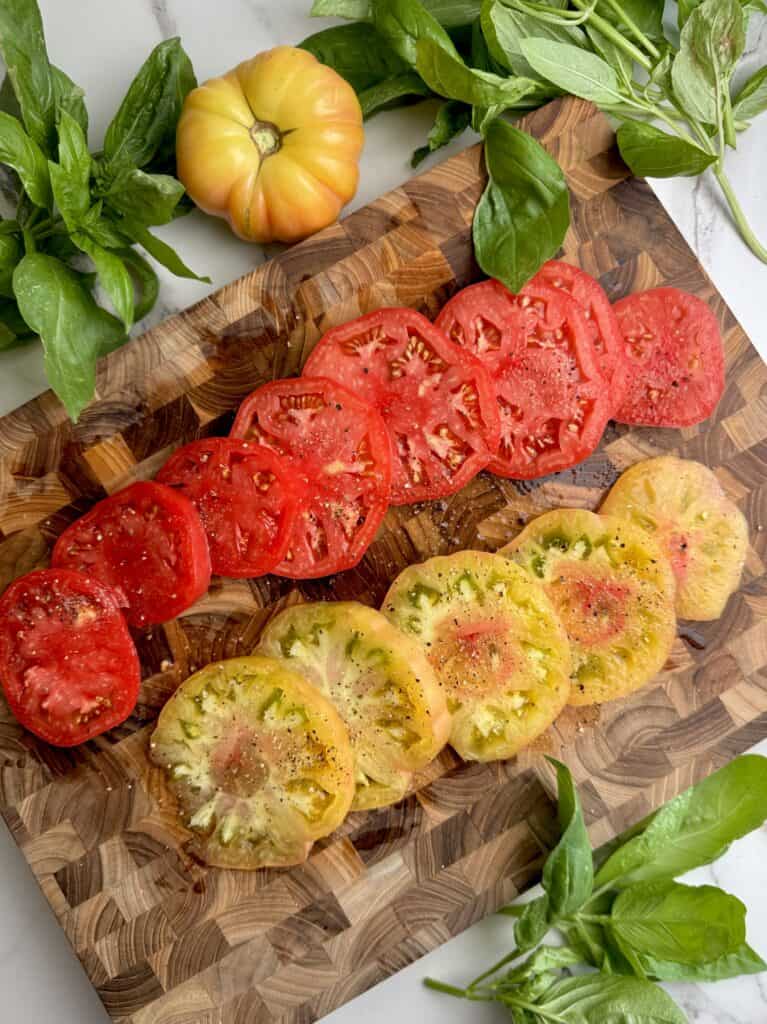
As the tomato was exposed to air, its pigments likely began developing and becoming more visible, causing the flesh to shift from white to creamy yellow with pink streaks. This is a sign that the fruit was still finishing its ripening process internally, and oxidation made the tomato’s natural pigments easier to see after it was cut.
The pink Granny Cantrell’s had a rich flavor that you’d normally expect from a homegrown heirloom tomato. It was sweet, complex, and had the subtle floral notes that make this variety special.
Meanwhile the ivory white Granny Cantrell’s tomato was still delicious, but it was milder and slightly more vegetal, almost reminding me of a green tomato variety. It just didn’t have the same depth of flavor as the pink tomato. Slightly closer to a store-bought tomato. But still delicious and very much homegrown.
The flavor difference was likely due to heat affecting more than just color. Extreme temperatures can reduce the development of sugars and the aromatic compounds that give tomatoes their sweetness, floral notes, and complex heirloom flavor.
If I had eaten the white tomato by itself or in a dish, I probably would have thought it was an excellent homegrown tomato. It was only when I compared the two tomatoes side by side that the difference became obvious.
How to Avoid White Tomatoes Due to Heat Issues
If your summers regularly spend weeks in the mid to upper 90s, shade cloth is worth considering.
A 30 – 40% shade cloth during the hottest part of the afternoon can help:
– Lower fruit temperatures
– Reduce plant stress
– Prevent sunscald
– Improve color development
– Preserve flavor
The goal isn’t necessarily to slow ripening. It’s to help tomatoes finish ripening under conditions that allow them to develop their best color and flavor.
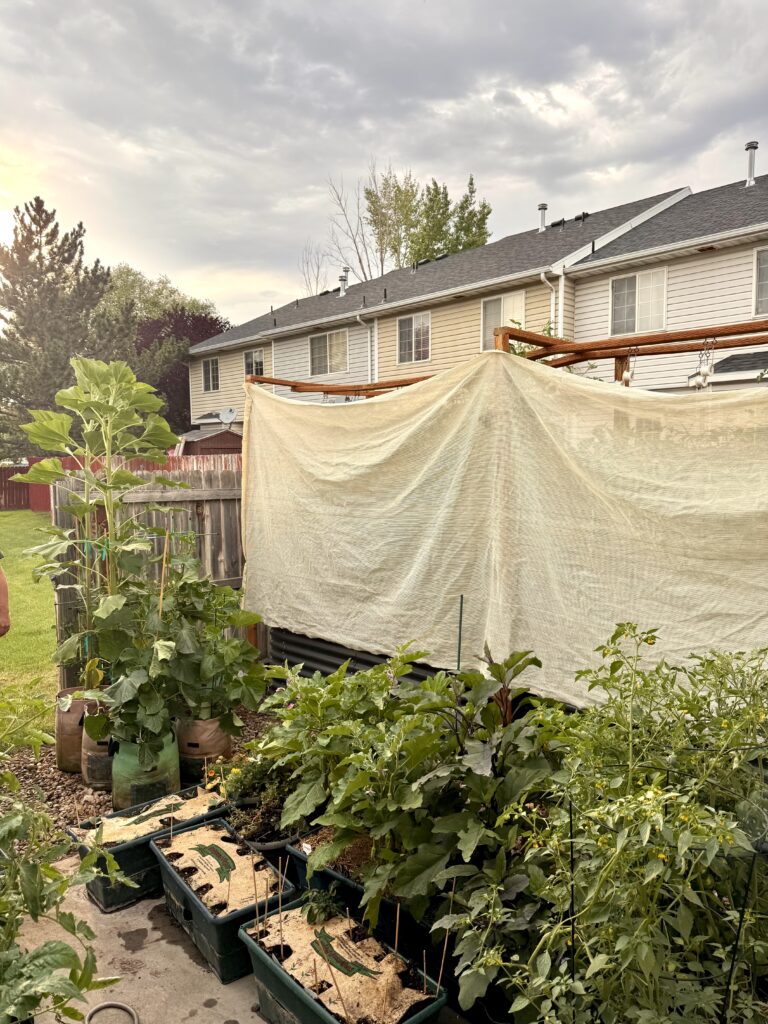
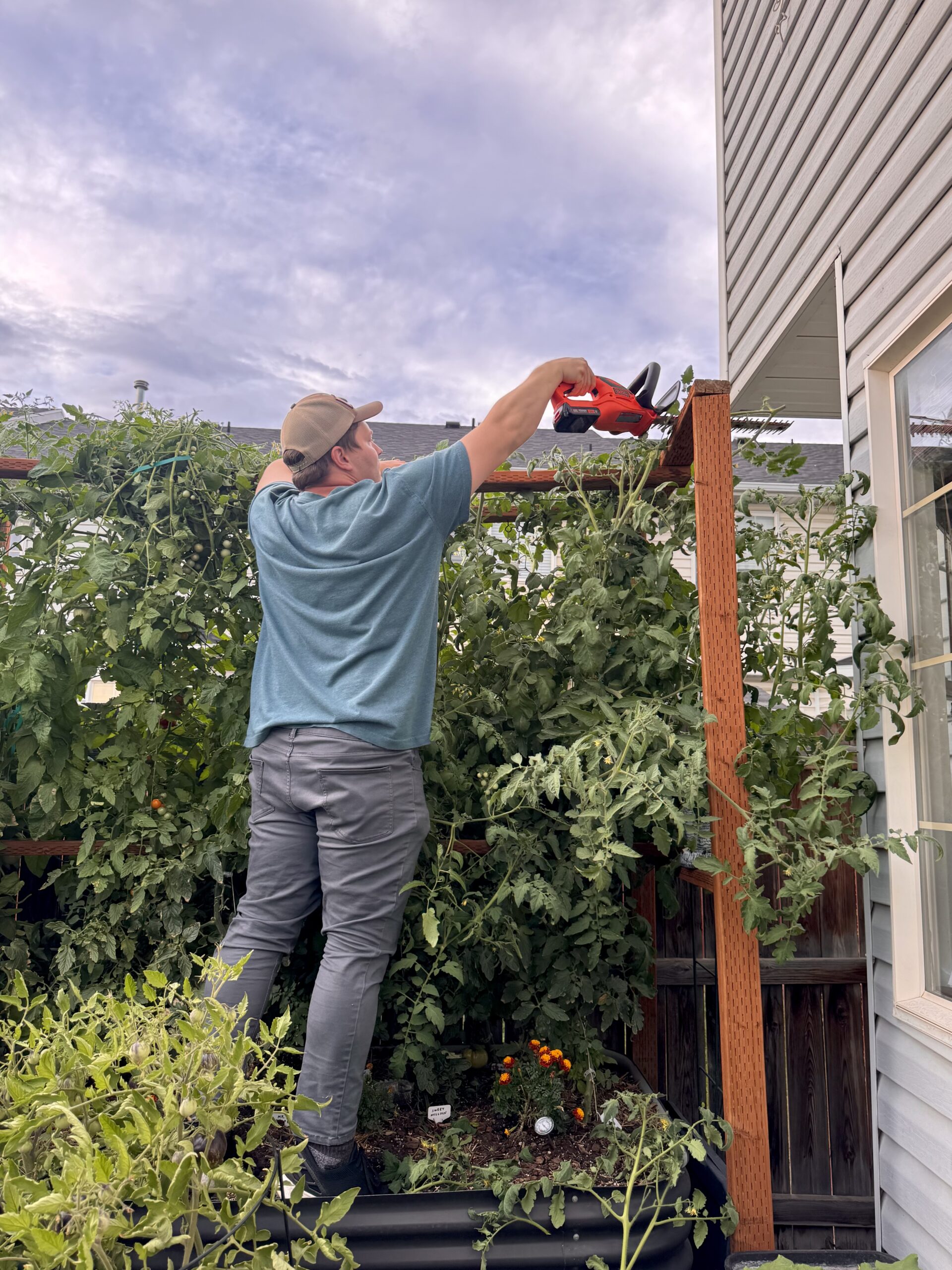
Here’s a link to some shade cloth that works great! I use a stapler to attach it to my wooden trellis.
Should You Harvest Tomatoes Earlier During Extreme Heat?
During extreme heat, harvesting tomatoes at the breaker stage can help them finish ripening under better conditions.
The breaker stage is when a tomato has started the ripening process but has not yet reached its final color. At this point, the fruit can continue ripening indoors where temperatures are cooler.
The challenge is that heat can make color a less reliable indicator of ripeness. A tomato may be ready to finish ripening even if it hasn’t developed much pink or red color yet. Instead of looking only for color, look for:
– Full-size fruit
– A slight color change from bright green
– A little softness when gently squeezed
Harvesting at this stage can help protect the tomato’s final color and flavor during periods of extreme heat.



0 Comments