
Hey all! Real Farmer Jeff here.
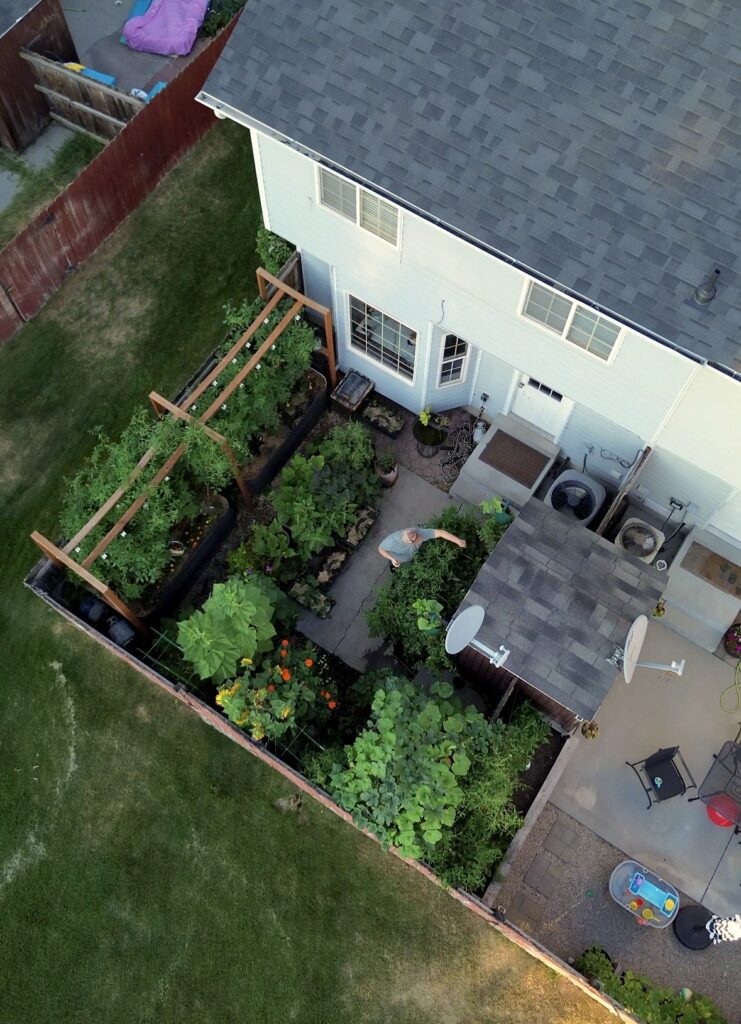
Before planting a garden, one decision matters more than almost anything else: where you put it. Even great soil and fertilizer cannot fully compensate for a poor location. Sunlight, wind exposure, and accessibility all play a huge role in how well your garden will perform. Personally, I got lucky with where my garden ended up, but when helping others decide where to place theirs in their backyard, I like to think through a few helpful considerations I’ll share below.
In this blog post I will walk you through 10 main suggestions that you should consider for your garden’s location. Let’s get started!
1. Sunlight
Sunlight is the most important factor for most vegetable gardens.
Most vegetables need 6 to 8 hours of direct sunlight, while many fruiting crops perform best with 8 to 10 hours. Plants that produce fruit, such as tomatoes, peppers, squash, and cucumbers, especially depend on strong sunlight. Too little sun often leads to slower growth, weaker plants, smaller harvests, and delayed ripening.
Morning sunlight can be helpful because it dries moisture off leaves early, which can reduce fungal diseases. If you have flexibility, the direction your garden faces can influence how much sunlight it receives:
- South-facing areas: Typically receive the most consistent sunlight throughout the day and are often considered the best garden orientation. However, you may need shade cloth if you live somewhere with hot, intense summers.
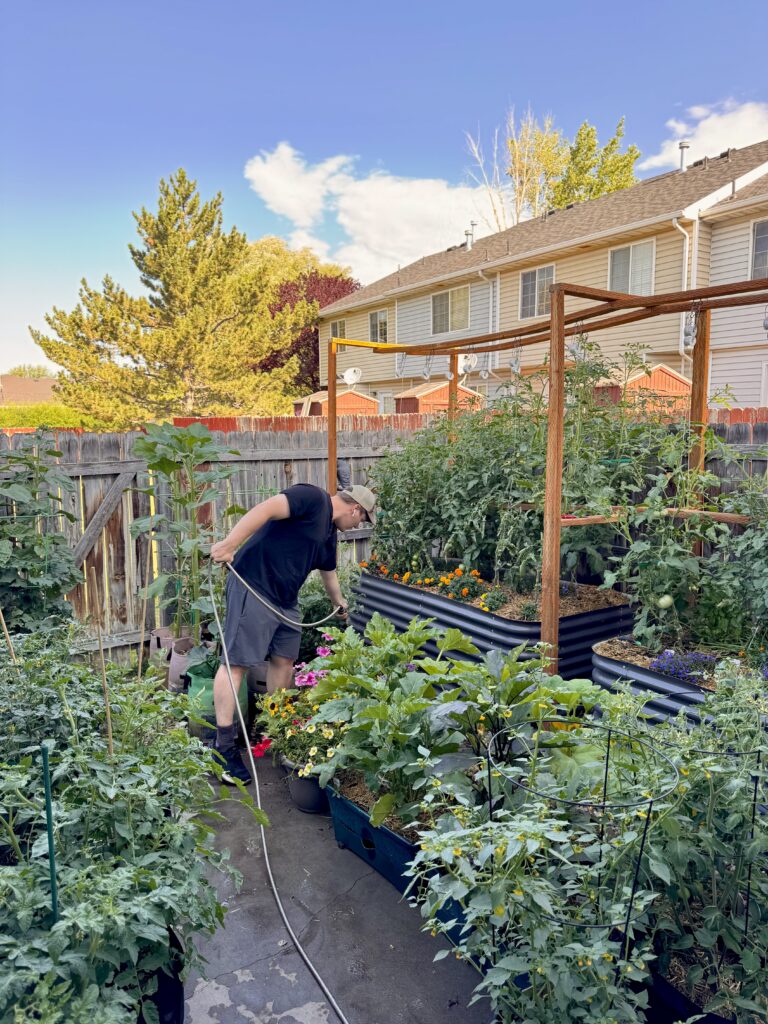
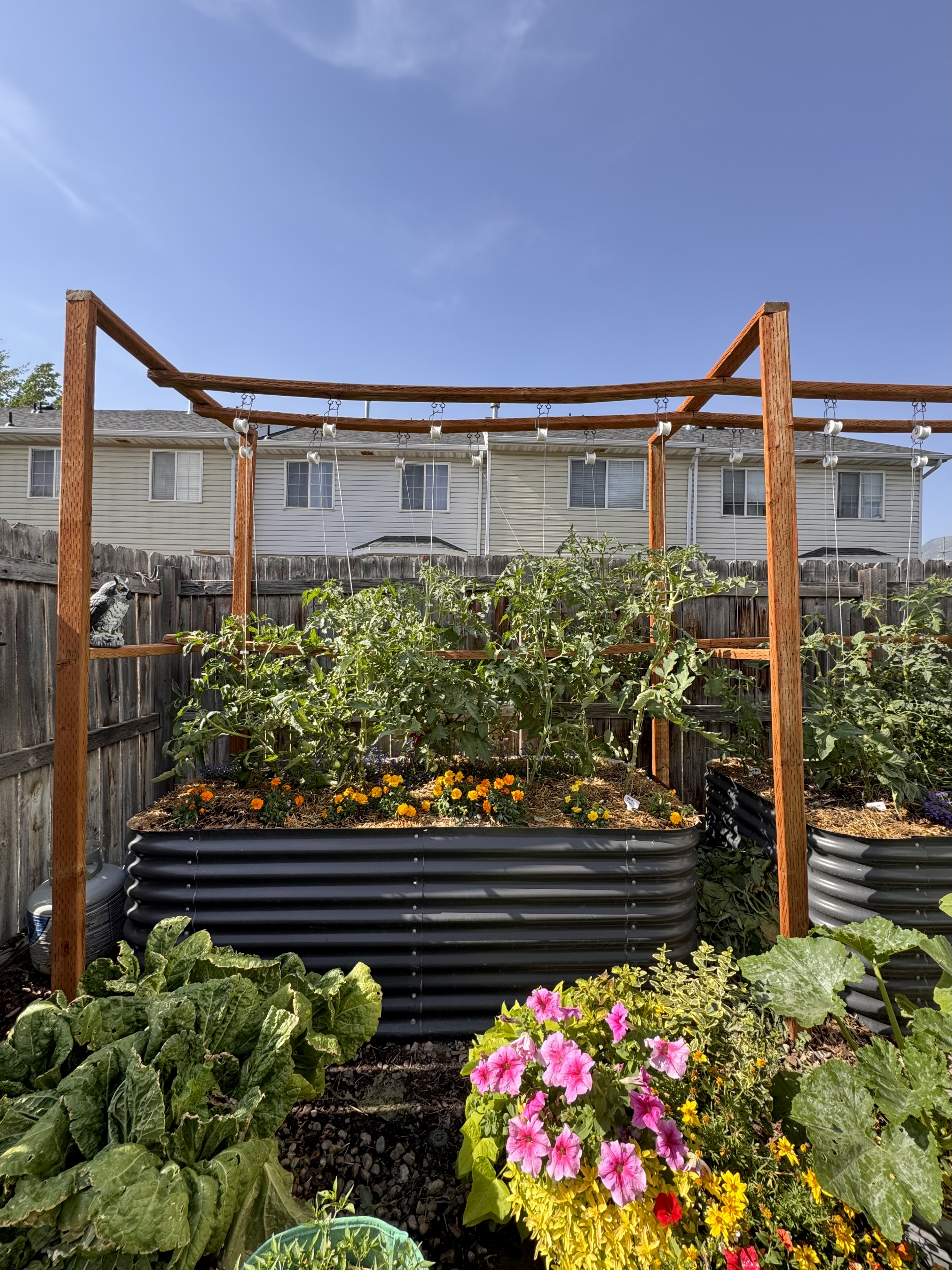
- West-facing areas: Receive strong afternoon and evening sun. This works very well for heat-loving vegetables like tomatoes and peppers. (this is the orientation that I’m very lucky to have in my small townhouse backyard)
- East-facing areas: Receive morning sun but less afternoon heat. These locations can still work well, especially in hotter climates. East facing gardens are generally ideal for crops that prefer cooler temperatures and less intense sunlight.
- North-facing areas: Usually receive the least direct sunlight and are often the most difficult locations for vegetables.
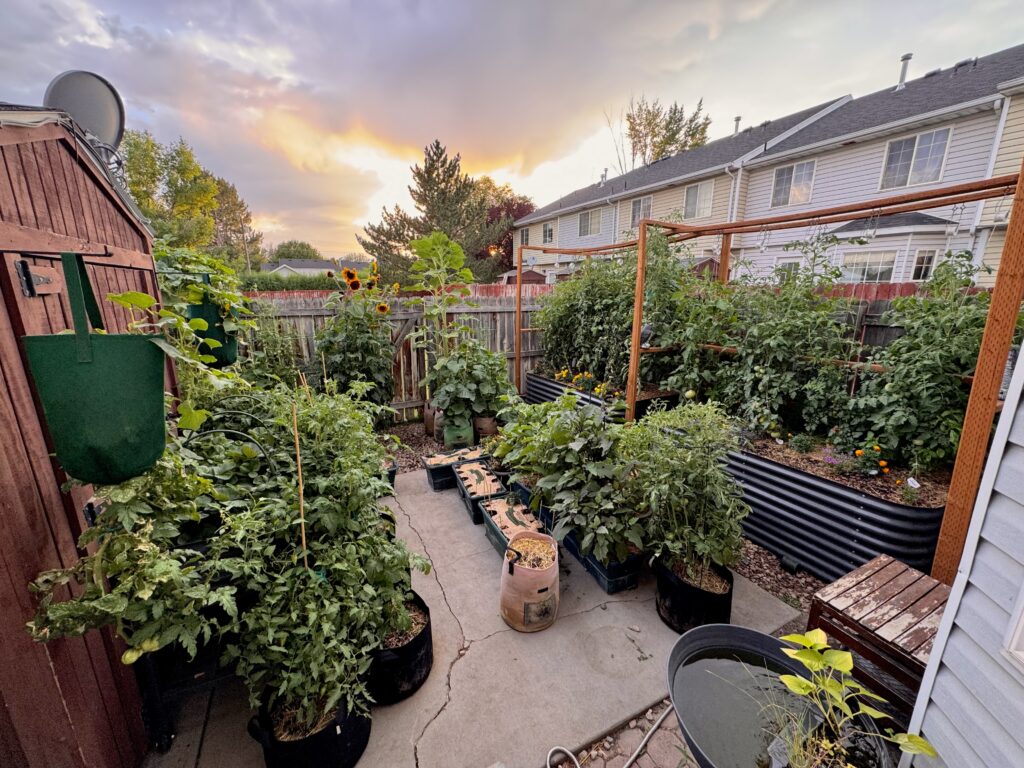
Trees, fences, and buildings can change these patterns significantly, so the best approach is to observe how sunlight moves across your yard during the day. I recommend using this free Shade Map tool online to understand the sunlight in your yard. Note that you can have the visual show sunlight above the tree canopy if trees are messing up your readings.
2. Wind
Wind is one of the most overlooked factors when choosing a garden location. Strong wind can stress plants, break stems, dry out soil faster, and knock over trellises or cages. Young seedlings are especially vulnerable.
If possible, choose a location that has some natural wind protection. Good wind buffers can include:
- Fences
- Hedges or shrubs
- Buildings
- Existing landscaping
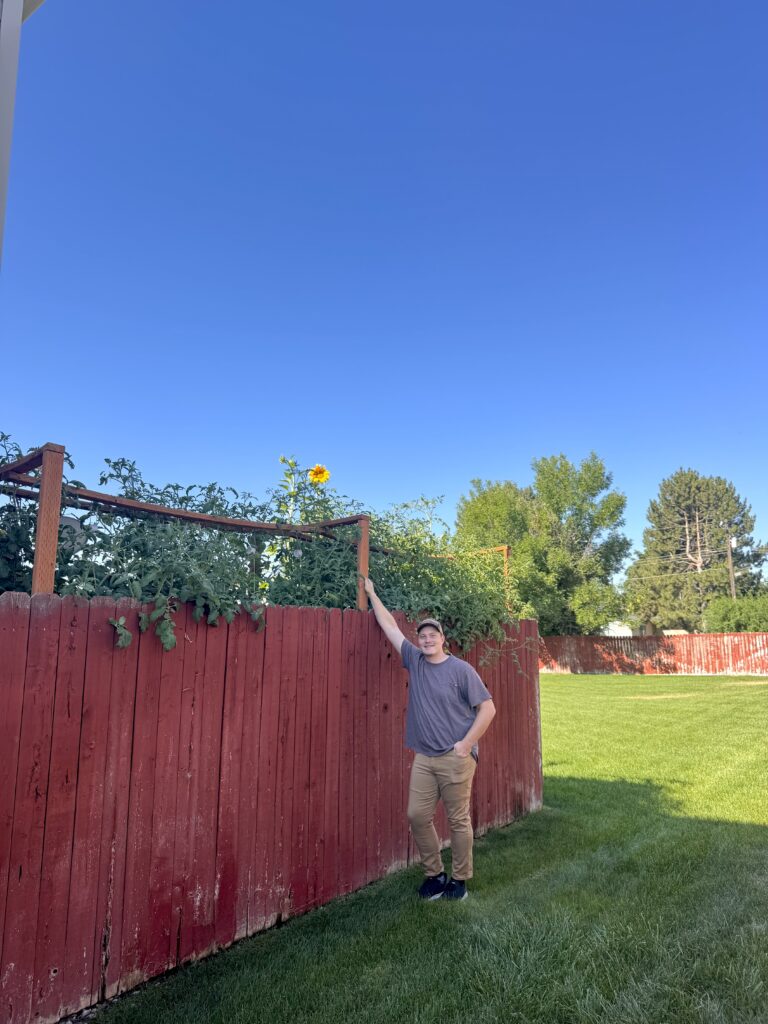
You do not want your garden completely enclosed, but protection from excessive wind can make a big difference. Some wind can notably strengthen plants and provide strengthened stems, reduced fungal disease, and help with pollination. Avoid a location with frequent winds that exceed 15 mph (24 km/h).
3. Keep the Garden Close to Your House
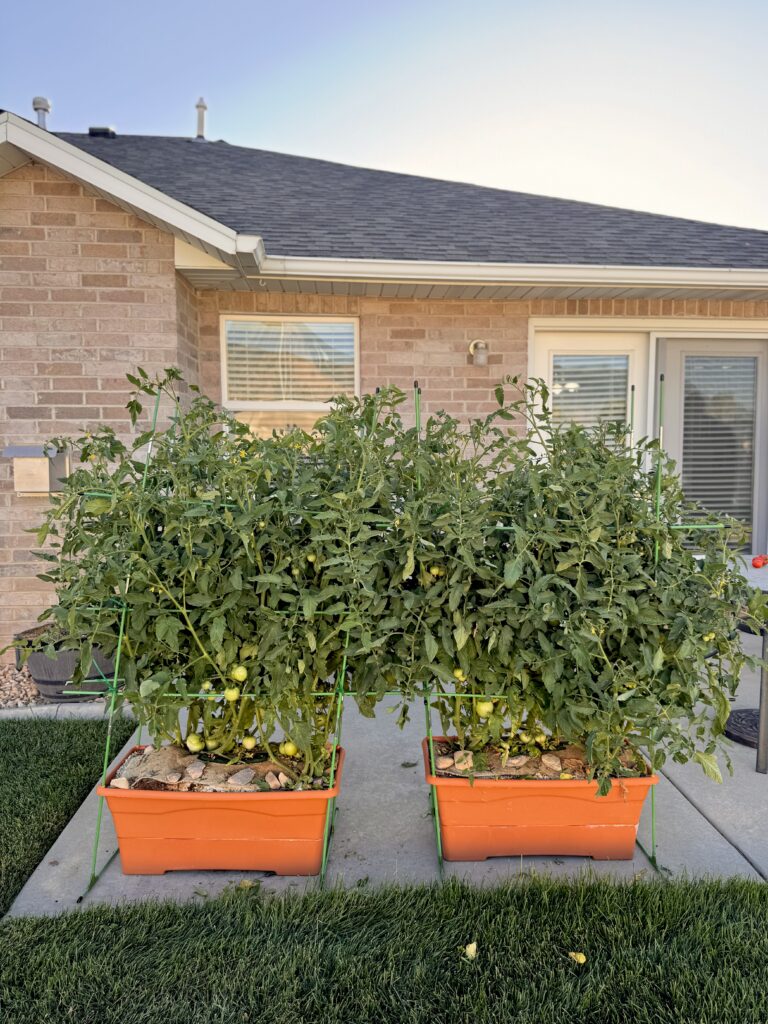
Convenience plays a bigger role in gardening success than many people realize. For me, this isn’t necessarily an option since my backyard space is pretty small, but if you have a bigger backyard, I recommend keeping your garden as close to your door to the yard as possible. Gardens that are close to the house tend to be:
- Watered more consistently
- Checked more often for pests and disease
- Harvested more frequently
- Simply more enjoyable to interact with because of being easy
A garden tucked into a far corner of the yard often receives less attention simply because it is out of sight. Out of sight, out of mind! Many gardeners say the best garden location is simply the one you walk past every day. You’re bound to notice it.
4. Make Water Access Easy
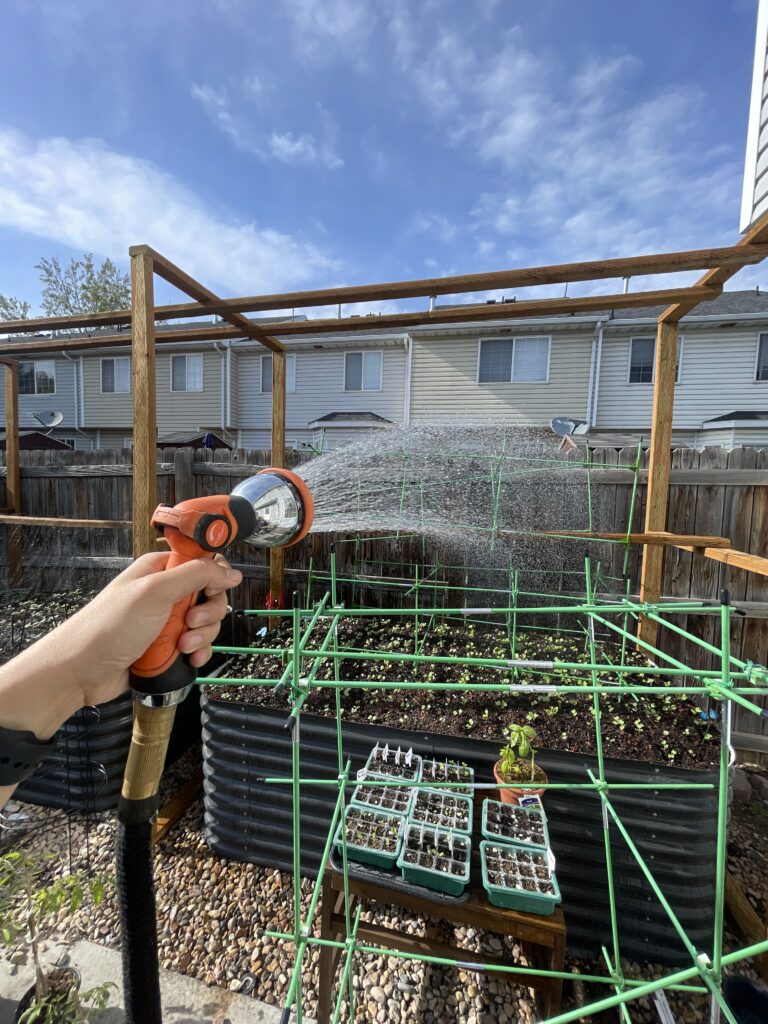
Vegetable gardens need consistent watering, especially during the heat of summer. Choosing a location close to a hose spigot or irrigation line can save a lot of effort. If watering requires dragging a hose across the entire yard, it can quickly become a chore. During hot weather this sometimes leads to gardens being underwatered.
Ideally your garden should allow you to easily:
- Connect a hose
- Set up drip irrigation
- Adjust watering as needed
Irrigation lines are a great option, but I have never used those in my time gardening for reverence. In part because my garden is so small and so watering doesn’t take that long (I have a blog post explaining how I water if you’re interested). However, my hose has always been close to all of my containers, which has made a big difference.
5. Ease of Maintenance
A garden is more likely to succeed if it’s easy to maintain. Consider things like proximity to compost bins, paths for harvesting, or space for tools. Even a sunny, well-watered location can fail if it’s awkward to reach. Consider these questions:
- Can you access all beds without stepping on plants?
- Is there room to maneuver hoses or wheelbarrows?
- Are tools and compost nearby?
6. Avoid Tree Root Competition
Large trees compete heavily with garden plants for water and nutrients. Their roots often spread far beyond the visible canopy. If possible, keep gardens 10 to 20 feet away from large trees.
7. Look for Good Drainage
Some areas of a yard naturally collect water after rain or irrigation. Poor drainage can lead to:
- Root rot
- Fungal diseases
- Weak plant growth
Raised beds can often solve drainage problems if the location otherwise receives good sunlight.
8. Plan for Future Expansion
Many gardeners start small but quickly want to grow more food. Choosing a location with room to expand makes it easier to add additional beds later.
9. Consider Wildlife Pressure
In some yards, certain areas attract more animals.
- Gardens near open fields, dense shrubs, or fence lines may experience more visits from rabbits or deer
- Gardens closer to the house sometimes experience less animal damage because of regular human activity
10. Watch for Frost Pockets
Cold air sinks and settles in low areas. These spots can remain colder at night and may experience late spring frosts longer than higher parts of the yard. If your yard has noticeable low spots, they may not be the best location for early-season crops.
Even a little space can grow a thriving garden if you focus on sunlight, wind protection, water, and easy access. Small adjustments, like raised beds or wind barriers, make a big difference. The best garden location is the one you can enjoy and maintain consistently.



0 Comments