
Hey all! Real Farmer Jeff here.
You may have seen gardeners pinching flowers off their tomato plants and wondered why they would remove something that eventually becomes a tomato.
The reason is simple: when a tomato plant starts producing fruit, it diverts energy away from growing roots, stems, and leaves. On a small plant, this can slow overall growth. By removing early flowers, you can potentially encourage a bigger long-term harvest. That said, it can be difficult to know when it’s optimal to remove them and when it’s not.
In this blog post I will explain just that. Let’s get started!
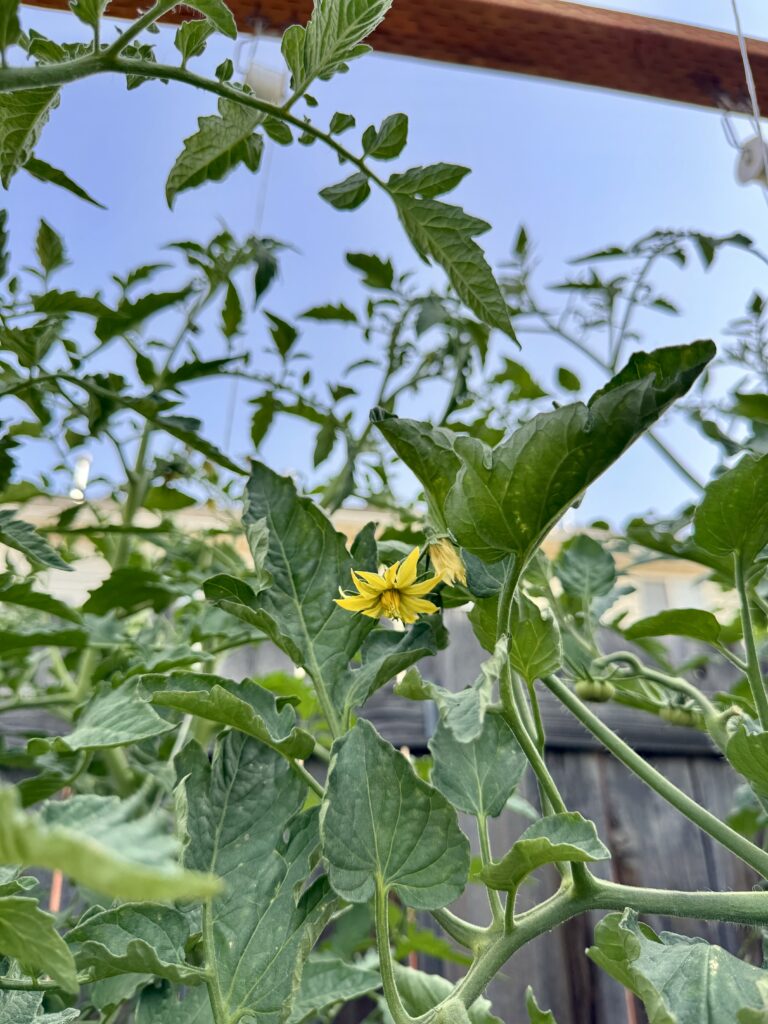
Why Remove Early Flowers
Once a tomato plant begins setting fruit, it starts using energy to develop tomatoes instead of focusing entirely on vegetative growth.
For a tiny or newly transplanted plant, early fruit production can slow development because it has limited energy to support both growth and fruiting.
The goal of removing flowers is to help the tomato plant become large enough to support more tomatoes later on Additionally, very early flowering is not always a sign that the plant is thriving.
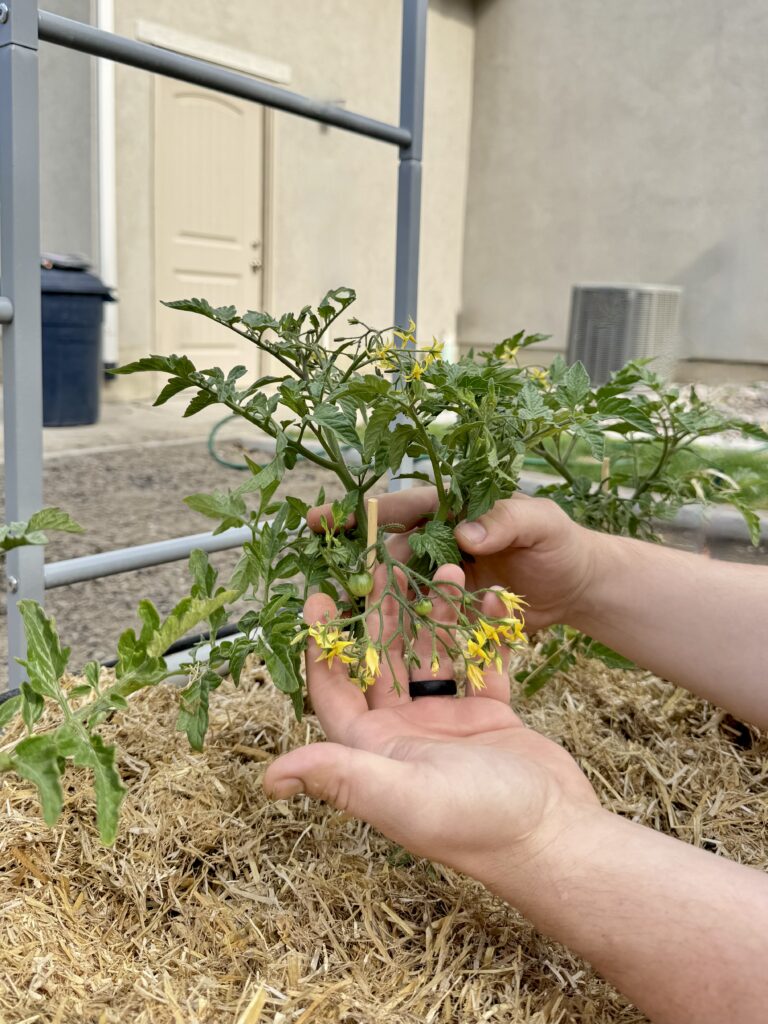
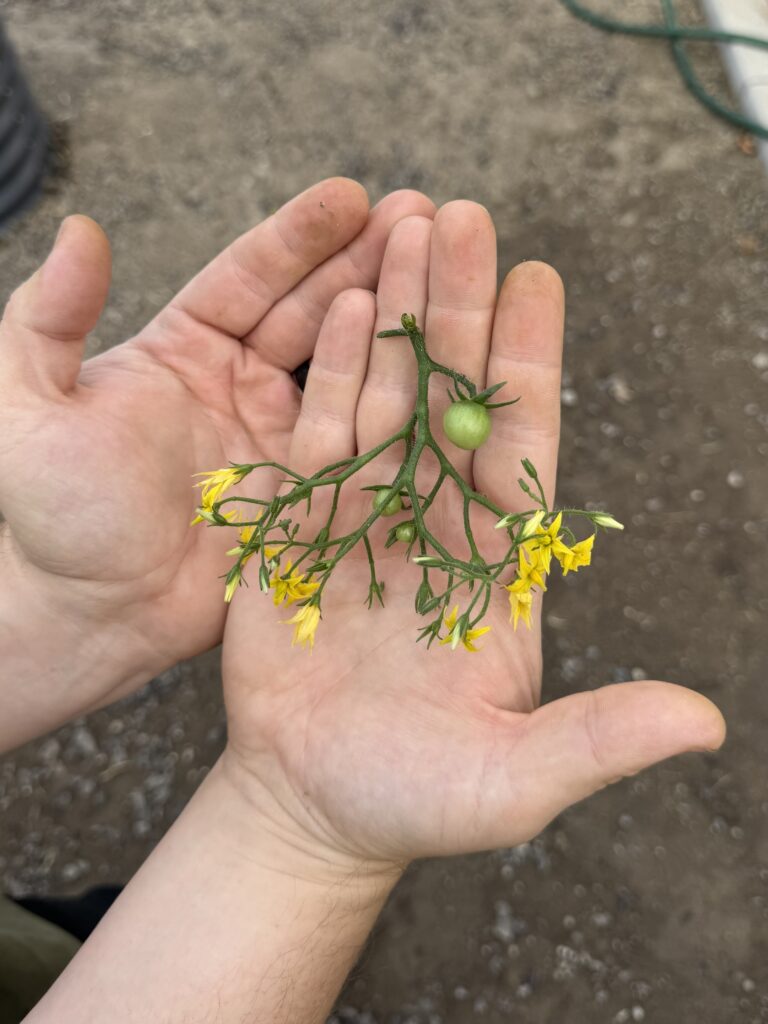
Small nursery tomatoes often begin flowering because they are stressed or rootbound in small containers. In these cases, the plant may shift toward reproduction early rather than continuing vegetative growth. That’s why those plants often benefit from having early flowers removed after transplanting so they can focus on:
• root growth,
• stem development,
• and overall plant size first.
I almost always remove flowers from newly transplanted tomatoes since establishing roots is usually more important than getting a few early tomatoes.
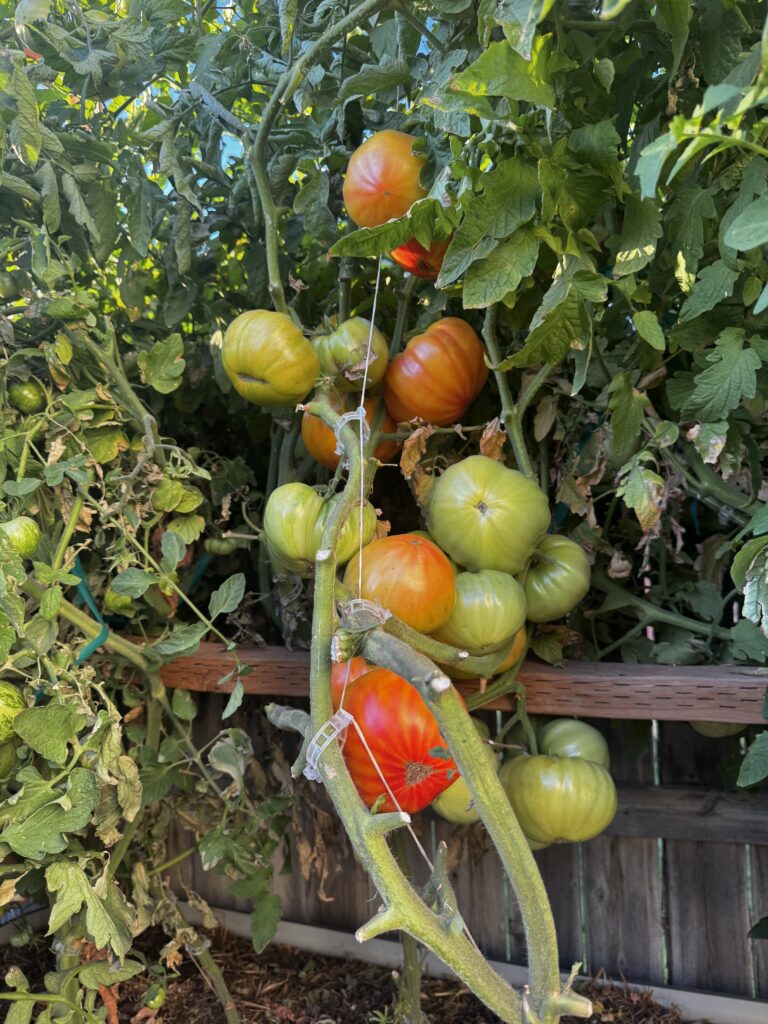
My Rule of Thumb
Personally, I usually remove flowers until my tomato plants are around 12–18 inches tall and look well established. This also depends on the variety of tomato plant (see below). I mainly look for:
• sturdy stems
• healthy leaves
• active upward growth
Once the plant reaches that point, I usually let it flower naturally. Note that how many flowers I remove, however, largely depends on the type of tomato plant: whether it’s indeterminate, determinate, or a dwarf tomato.
Indeterminate Tomatoes
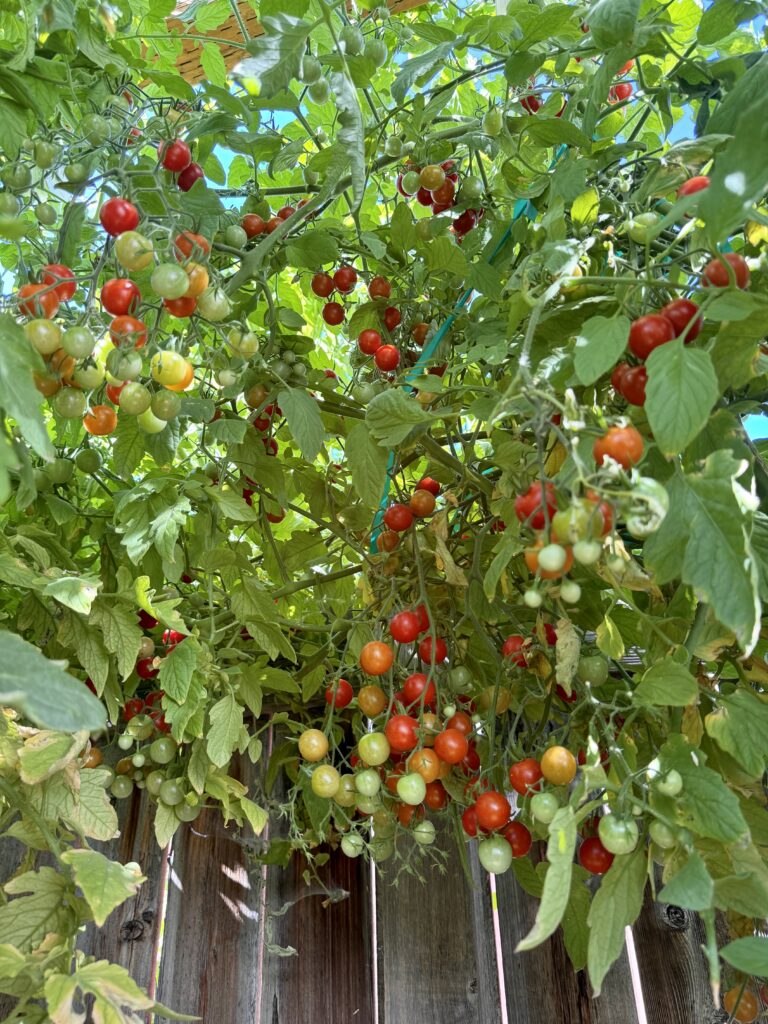
Indeterminate tomatoes continue growing all season long, so removing early flowers often makes the most sense with these varieties. Allowing them to establish roots and foliage first can lead to:
• larger plants
• thicker stems
• more branching
• higher overall yields later in the season
Determinate and Dwarf Tomatoes
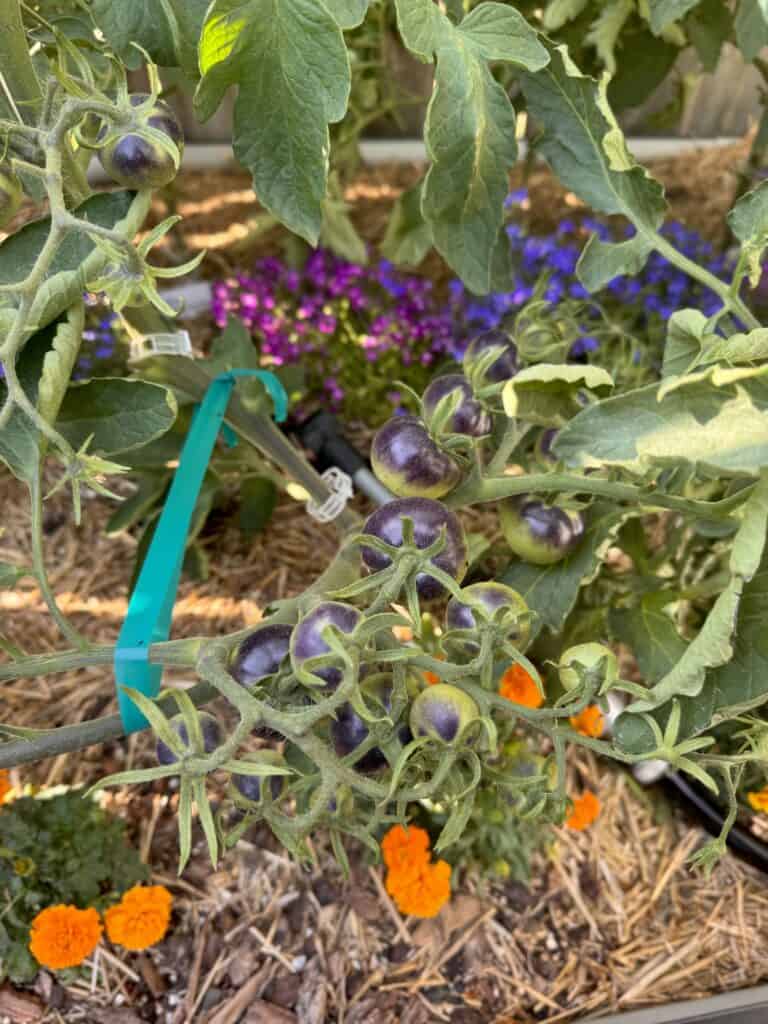
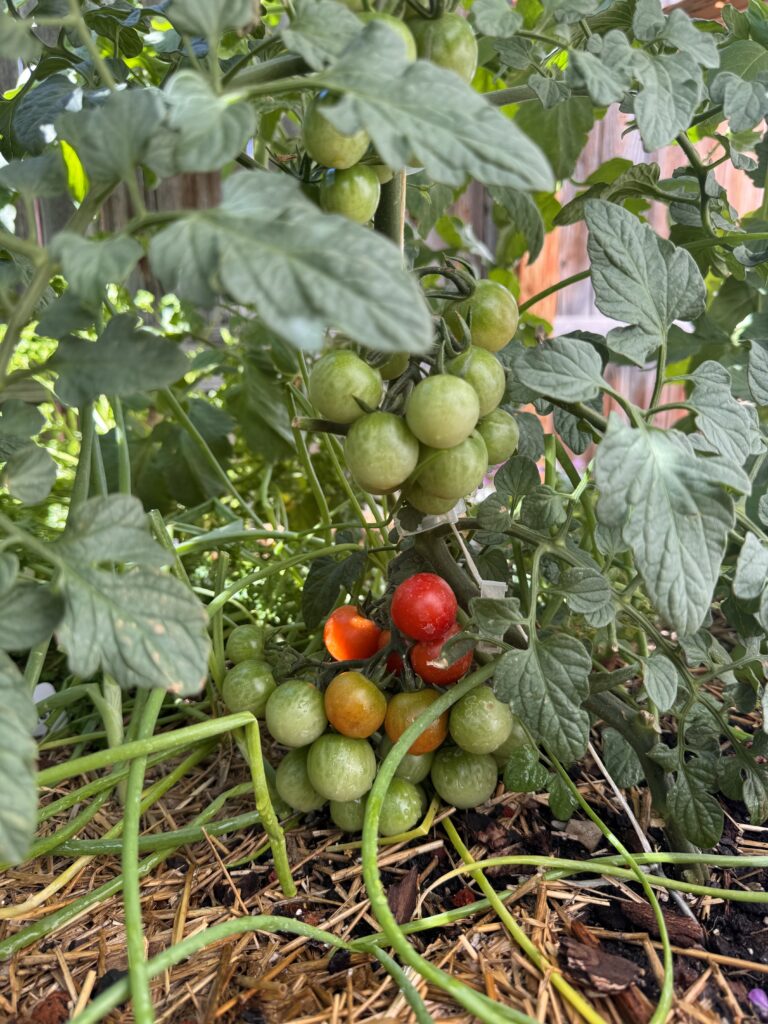
Determinate and dwarf tomatoes grow to smaller, predetermined sizes, so I’m usually more conservative about removing flowers from them.
For these varieties, I only remove flowers if the plants produce them while still very small or newly transplanted.
Is Removing Flowers Necessary?
Many gardeners never remove flowers and still grow excellent tomatoes. Removing flowers is simply a technique that can encourage stronger early growth, especially on small or stressed plants.
Potential Benefits:
• Larger plants (especially indeterminate varieties)
• Stronger roots and stems
• Potentially higher yields later
Potential Downsides
• Delays the first harvest
• Less useful in short growing seasons
• Over-pruning can stress the plant
For indeterminate tomatoes, I usually remove flowers while the plants are still small so they can focus on growing first. Once they look established (around 12 – 18 inches tall), I let them fruit naturally.
As I mentioned, for determinate and dwarf tomatoes, I’m more conservative (and definitely recommend that!) and only remove flowers if the plants seem undersized or stressed.
Even though removing flowers isn’t necessary, I think it’s a useful practice if your plant is tiny, weak, rootbound, or freshly transplanted.



0 Comments