
Hey all! Real Farmer Jeff here.
I recently did a poll on my Instagram to learn how you water your garden. With over 1,000 votes, I learned that two-thirds of you mostly hand water!
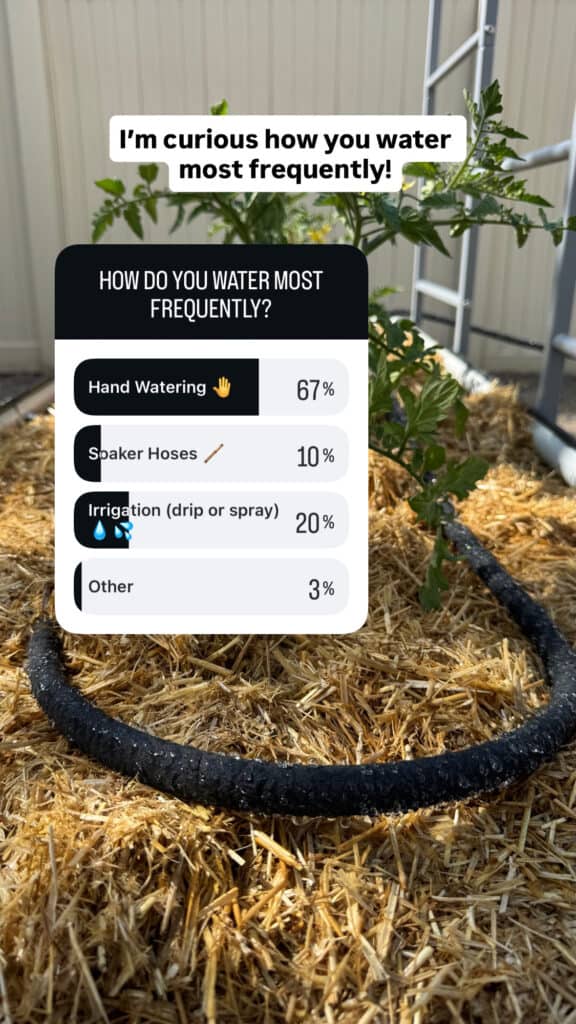
Honestly, I understand why. Hand watering can be peaceful, relaxing, and one of the best ways to stay connected to your garden. However, in this blog post I want to explore how soaker hoses or even irrigation lines can be a useful addition to your watering setup.
Why Hand Watering Is Great for Beginners
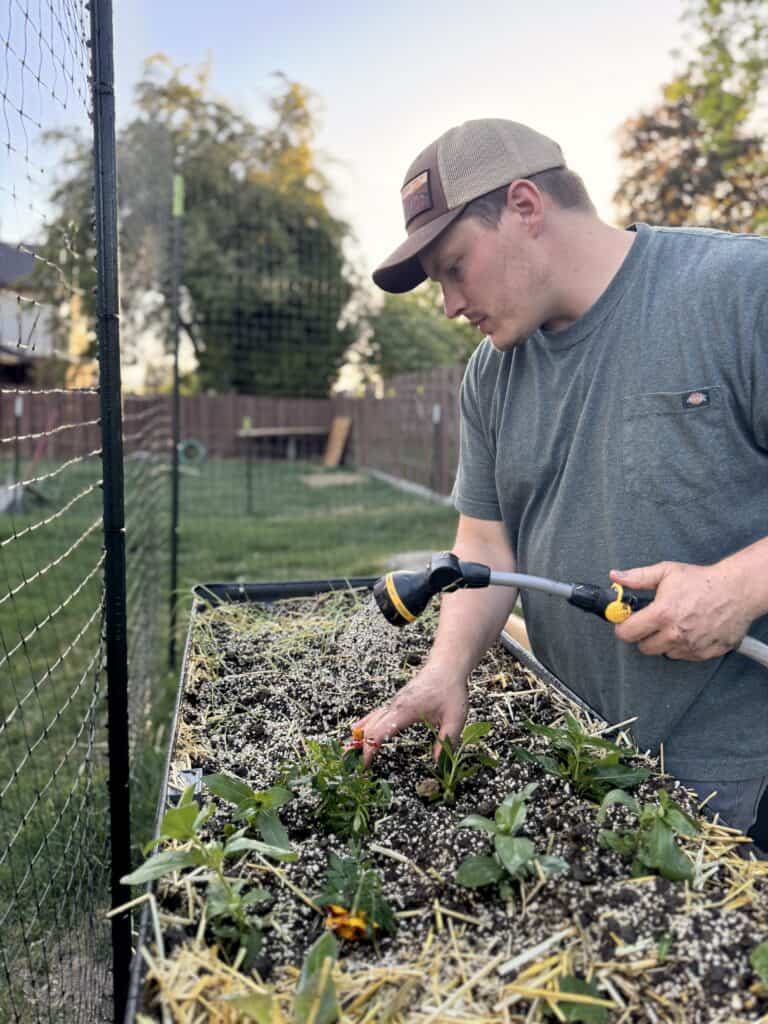
I think hand watering is one of the best ways for new gardeners to start. It can of course be great for experienced gardeners as well. When you water by hand, you naturally begin learning:
• How quickly soil dries out
• Which plants need more water
• What wilted plants look like
• How weather changes watering needs
• How different soil types hold moisture
That hands-on experience teaches the fundamentals of watering much faster than simply turning on an automated system. Hand watering also forces you to spend time observing your plants closely, which helps you spot:
• Pests
• Disease
• Heat stress
• Nutrient deficiencies
• Animal damage
In my experience, I’ve found that many gardening problems are much easier to solve when caught early.
How to Make Hand Watering Easier
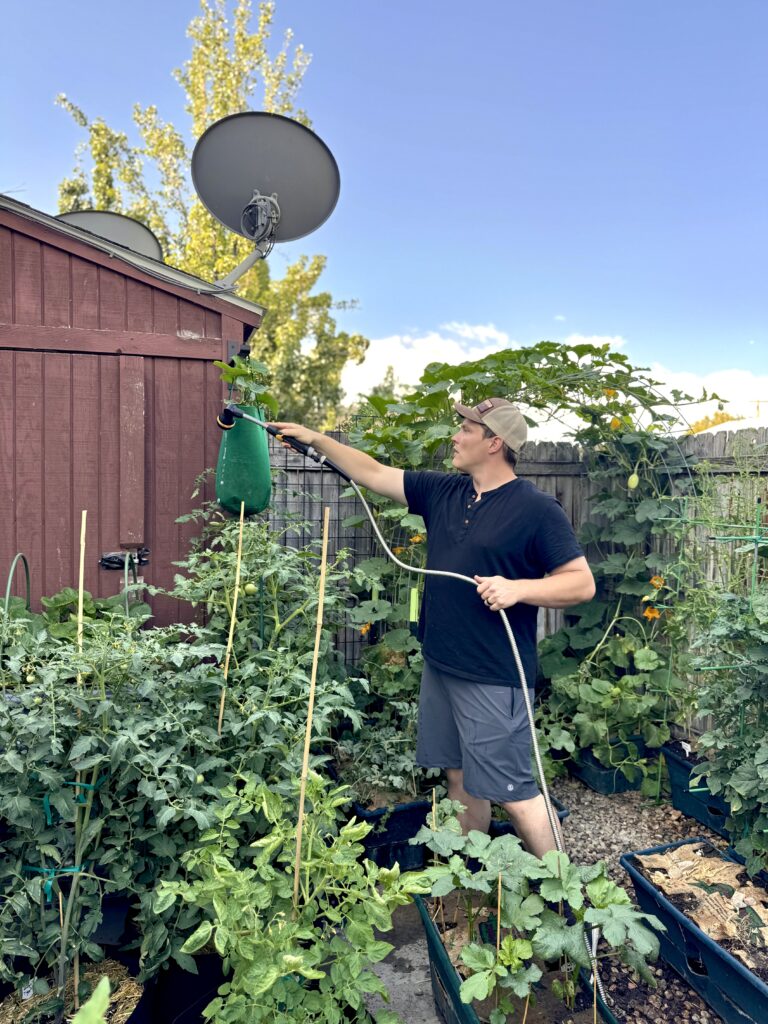
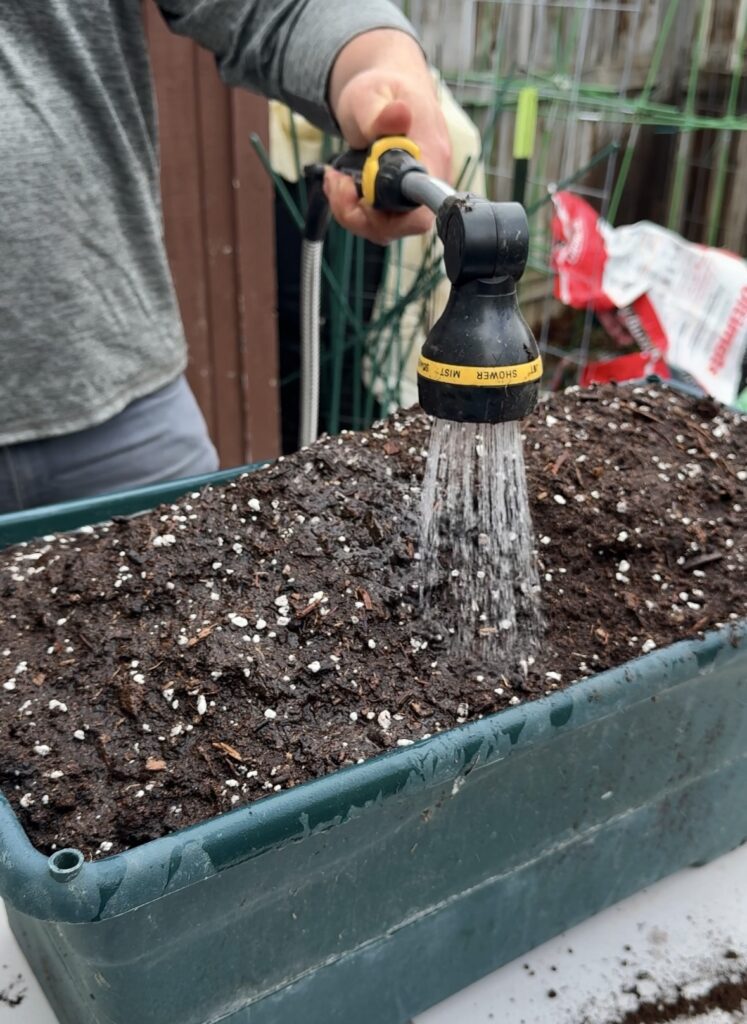
If you hand water regularly, one thing I highly recommend is getting a watering wand for your hose. A watering wand:
• Makes it easier to water the base of plants
• Helps avoid spraying leaves unnecessarily, which can promote disease
• Reduces bending over
• Gives gentler water pressure for seedlings and containers
A good nozzle or watering wand can make hand watering much more enjoyable, especially during peak summer heat.
Why Soaker Hoses Are a Good Middle Ground
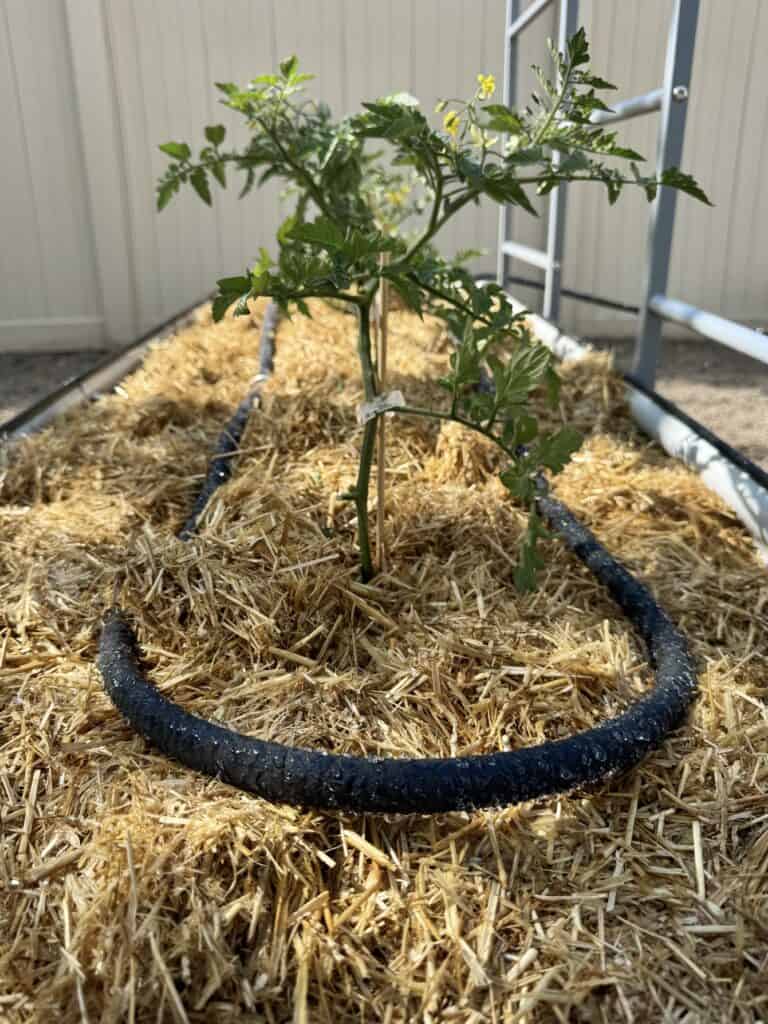
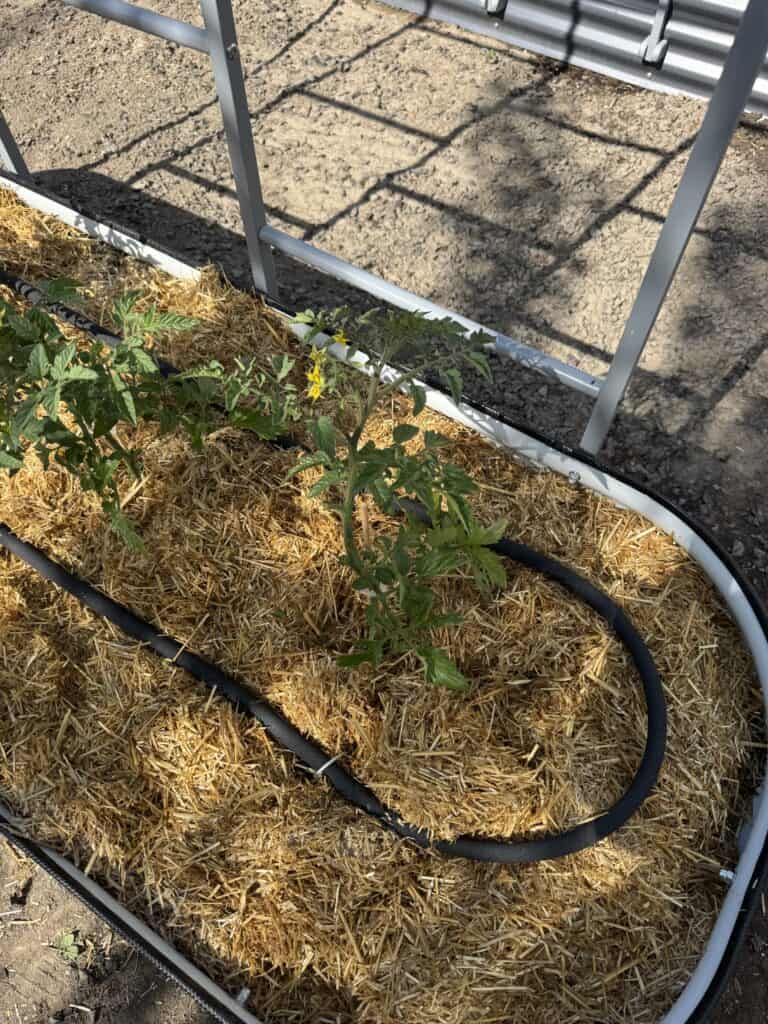
First, if you don’t know what a soaker hose is, it’s a porous garden hose that slowly releases water directly into the soil along its length, helping deeply water plants with less evaporation and runoff.
As gardens get larger, hand watering can start to take a lot of time. That’s where soaker hoses can potentially provide a lot of value. Soaker hoses slowly release water directly into the soil along the length of the hose. They’re much simpler than a full drip irrigation system but still provide many of the same benefits.
For many home gardeners, I honestly think soaker hoses are one of the most underrated irrigation options. Here are some benefits:
• Easier and cheaper to set up than drip irrigation
• Great for deep watering
• Reduce evaporation
• Keep foliage drier than sprinklers
• Easy to connect to a timer
• Excellent for raised beds and row gardening
Because the water slowly soaks into the soil, it encourages deeper root growth and wastes less water to evaporation compared to overhead watering methods. You may only need to use a soaker hose 1-2 times per week to deeply water your garden bed depending on your climate.
Tips for Using Soaker Hoses
One thing that helps tremendously is using garden staples or landscape pins to hold the hose exactly where you want it. Otherwise, the hose tends to shift around a little bit because it comes curled in it’s packaging.
I also think soaker hoses work best in garden layouts where beds are connected or planted in long rows. If your garden has lots of separated containers or isolated beds, you can end up with sections of hose dripping water onto pathways or unused areas.
In that case, you could potentially get a shorter soaker hose and rotate it around the garden, which still may be much quicker than hand watering. Soakers hoses work especially well for:
• Raised beds
• In-ground row gardens
• Long connected planting areas
Drip Irrigation vs. Sprinklers and Spray Irrigation
Incase you aren’t familiar, drip irrigation is a watering system that delivers small amounts of water slowly and directly to the base of plants through tubes, emitters, or drip lines to reduce water waste. It delivers water directly near plant roots through tubing and emitters. Alternatively, sprinkler systems spray water over a larger area.
Drip irrigation is probably the most efficient watering method overall, especially for vegetable gardens, raised beds, and containers. It’s also one of the easiest systems to automate. Personally, it’s still something I haven’t fully explored in my own garden yet, although it’s definitely something I’d like to experiment with more in the future.
| Feature | Drip Irrigation | Sprinkler/Spray Irrigation |
| Water Efficiency | Very high | Lower |
| Where Water Goes | Directly to roots | Over entire area |
| Evaporation Loss | Low | Higher |
| Foliage Gets Wet | Usually no | Yes |
| Disease Risk | Lower | Higher |
| Setup Difficulty | More complicated | Simple |
| Best For | Vegetable gardens, raised beds, containers | Lawns, large dense plantings |
| Automation | Easy | Easy |
| Main Downsides | Higher cost and maintenance | Wastes more water and can spread disease |
Sprinkler and spray systems include oscillating sprinklers, lawn sprinklers, micro-sprayers, and other overhead watering systems. While they’re simple and effective for covering large areas, watering at the soil level is usually preferred for vegetable gardens because it reduces evaporation and helps keep foliage dry.
There’s No “Correct” Way to Water a Garden
At the end of the day, the best watering system is the one that works for your garden and your lifestyle.
Some gardeners genuinely enjoy walking through their garden every evening with a hose and others prefer fully automated drip systems. Ultimately, you should choose what helps you to find that balance between connecting with your garden and efficiency.
However, if you happen to be one of the two-thirds who typically hand waters, it could be worth your while to try out soaker hoses this season.



0 Comments