
Hey all! Real Farmer Jeff here.
This year I tried what I consider to be a true garden delicacy: garlic scapes.
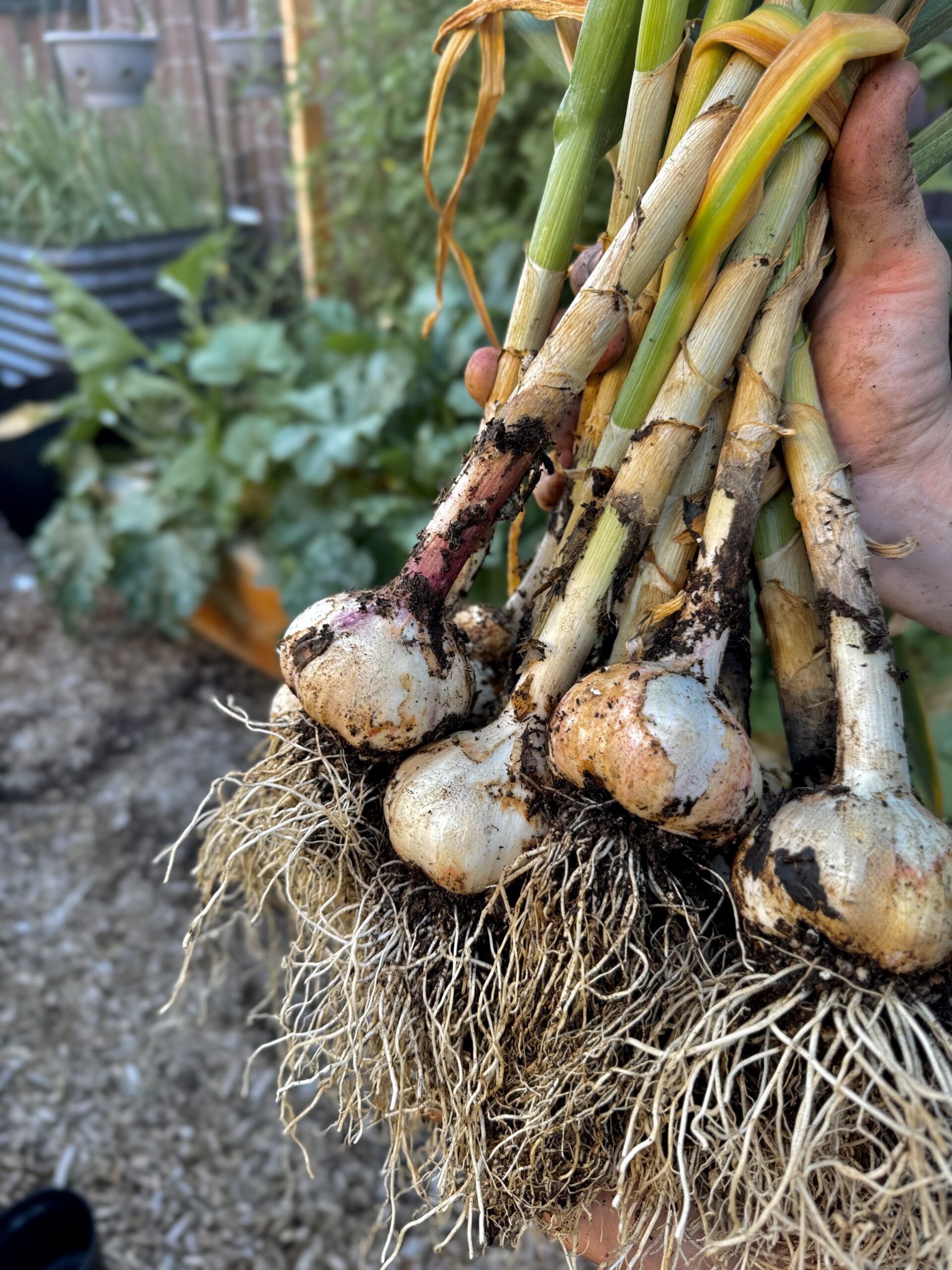
Before growing garlic myself, I had never even heard of garlic scapes. They’re something you almost never see in grocery stores, and even many gardeners don’t realize they’re edible. In fact, for most people, the only way to enjoy garlic scapes is to grow your own hardneck garlic.
That’s part of what makes them so special. They’re available for only a short window each year, making them one of those unique garden harvests that you simply can’t find year-round.
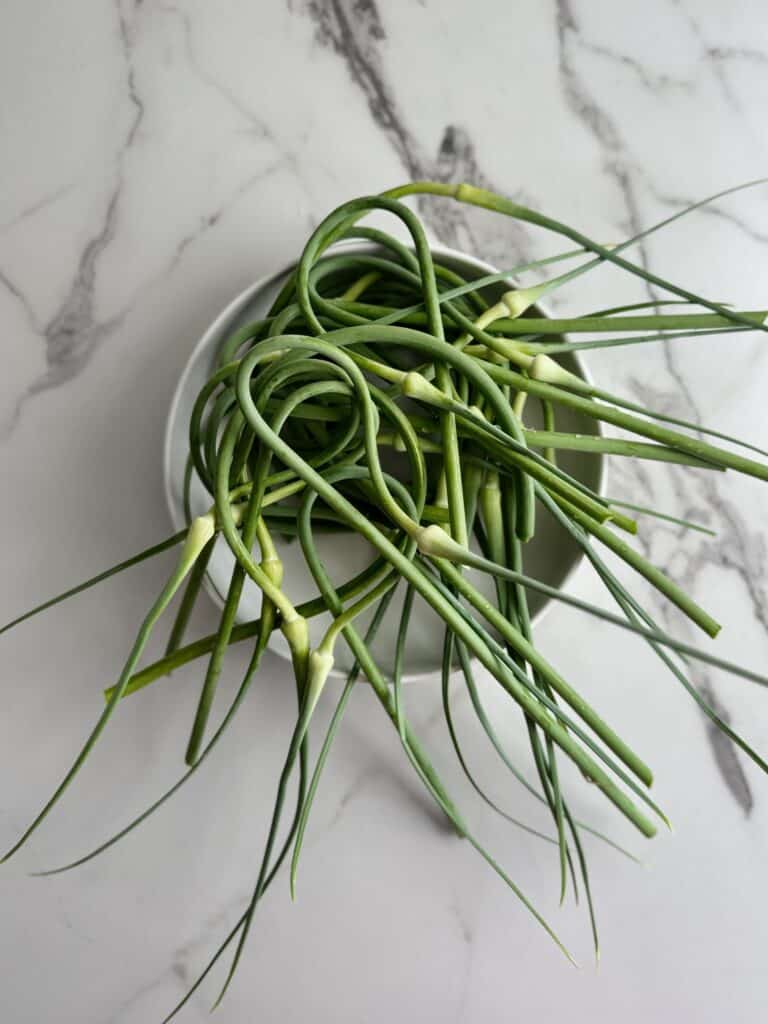
What Are Garlic Scapes?
Garlic scapes are the flower stalks produced by hardneck garlic varieties.
Several weeks before the garlic bulbs are ready to harvest, the plant sends up a long green stalk that eventually curls into a loop. If you’ve never seen one before, they almost look like a giant curly green onion growing from the center of the plant. Before getting into gardening, I had never even heard of a garlic scape!
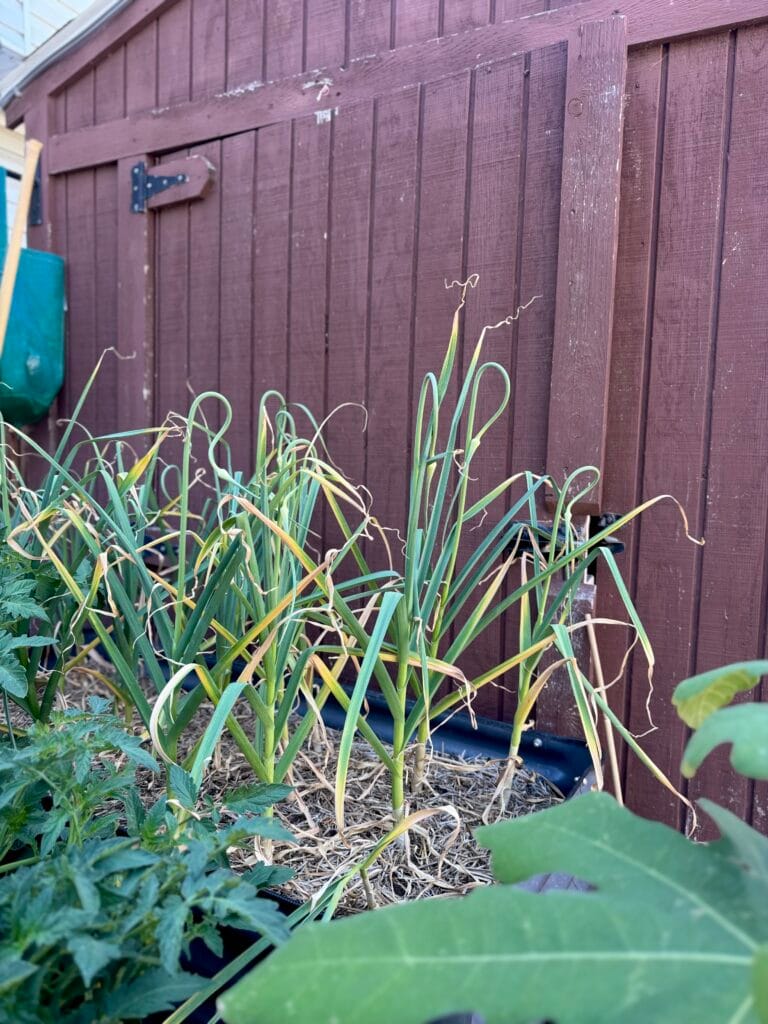
The ideal time to harvest them is when they’ve formed one curl but before they begin to straighten back out. This is important, because if you harvest them a little too late, they can become fibrous and not-so-pleasant to eat!
If you’ve never tried a garlic scape, you are in for a treat (assuming you go buy some or try growing garlic yourself, of course)! Garlic scapes have a fresh, mild garlic flavor that’s much less intense than a garlic clove. The taste reminds me a little of a green onion, while the texture is more similar to asparagus or a tender green bean.
Because the flavor is milder, garlic scapes work well in a wide variety of recipes without overpowering the dish.
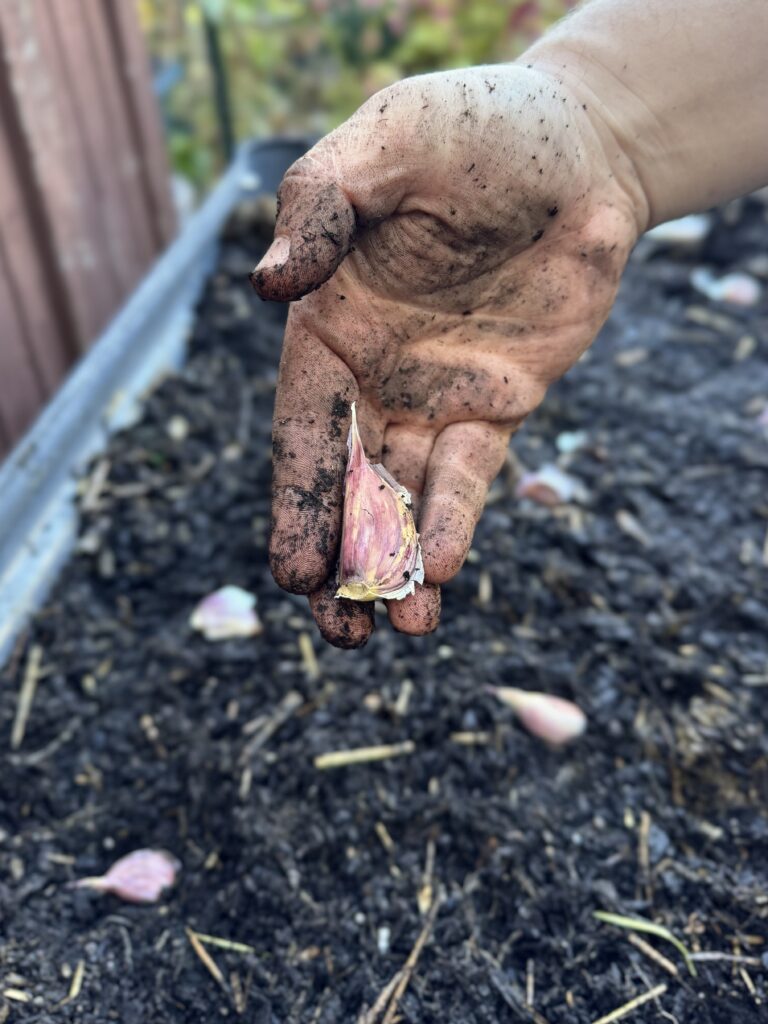
There’s a short window of time in which you can plant garlic, so just make sure you are ready and prepared when the time comes.
Why Do Gardeners Remove Garlic Scapes?
Harvesting garlic scapes isn’t just about getting an extra crop. When garlic plants begin producing a flower stalk, they start directing energy toward flowering instead of bulb development. By removing the scape, the plant can focus more of its energy on growing larger garlic bulbs underground.
It’s one of the few garden tasks where you get an immediate harvest while also improving the final crop.
When Garlic Scapes Are Ready to Harvest
In most gardens, garlic scapes are ready to harvest about 3 – 4 weeks before the garlic bulbs are ready to be dug up.
Harvesting garlic scapes always feels like an early reward after months of waiting for my garlic crop to mature. It’s exciting, and a fun way to minimize garden waste!
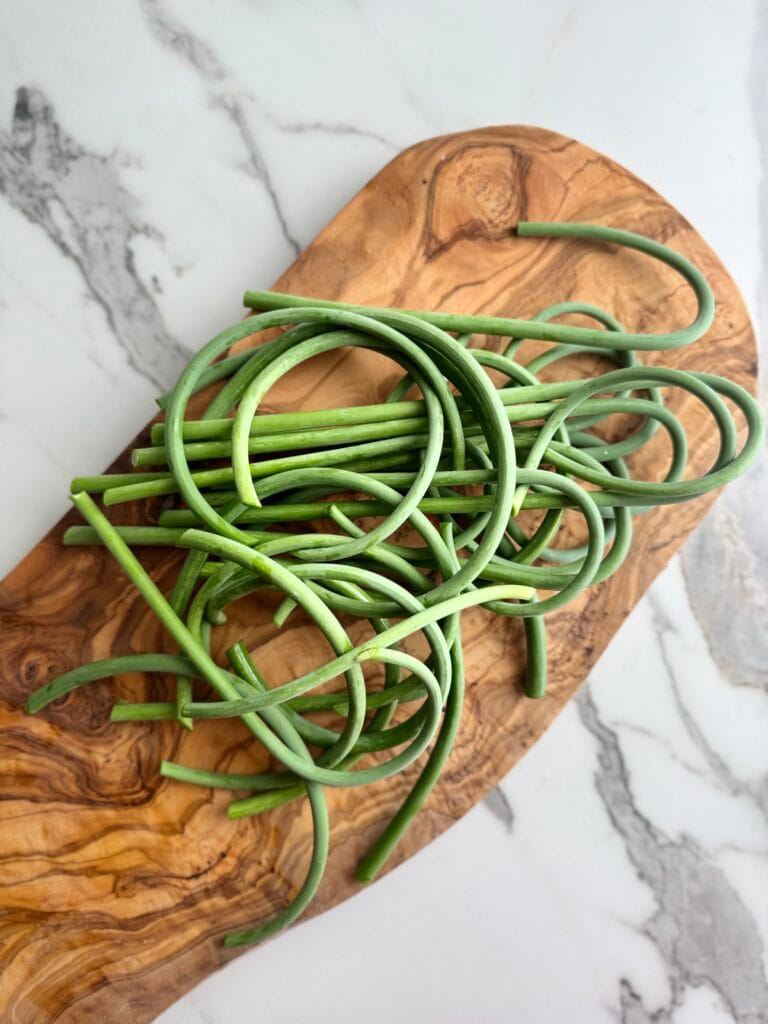
Some popular ways to use garlic scapes include:
- Garlic scape pesto
- Stir-fries
- Soups
- Roasted vegetables
- Compound butter
- Pasta dishes
- Egg dishes
- Pizza toppings
- Grilled garlic scapes
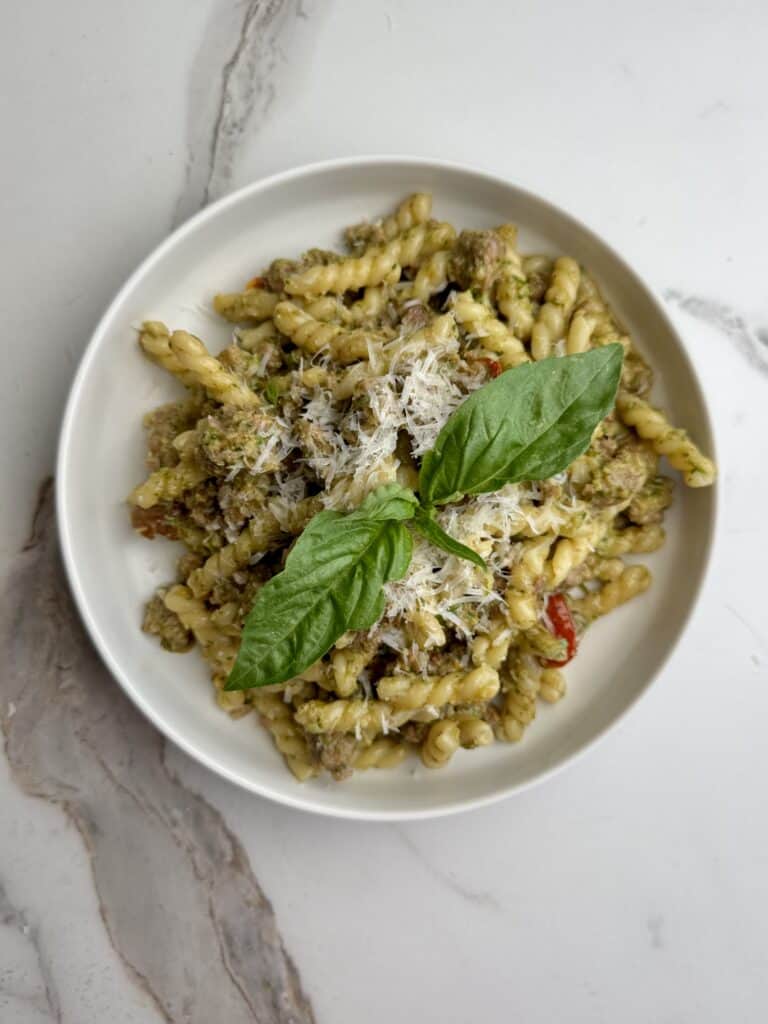
Their mild garlic flavor works well in almost any savory recipe and the flavor becomes more subtle when cooked. This year, I decided to make garlic scape pesto because I love Italian food. Pesto seemed like the perfect recipe because it allows the flavor of the garlic scapes to really shine. Instead of overpowering the dish like traditional garlic sometimes can, the scapes create a fresh, bright pesto with just the right amount of garlic flavor. Check out my recipe below!
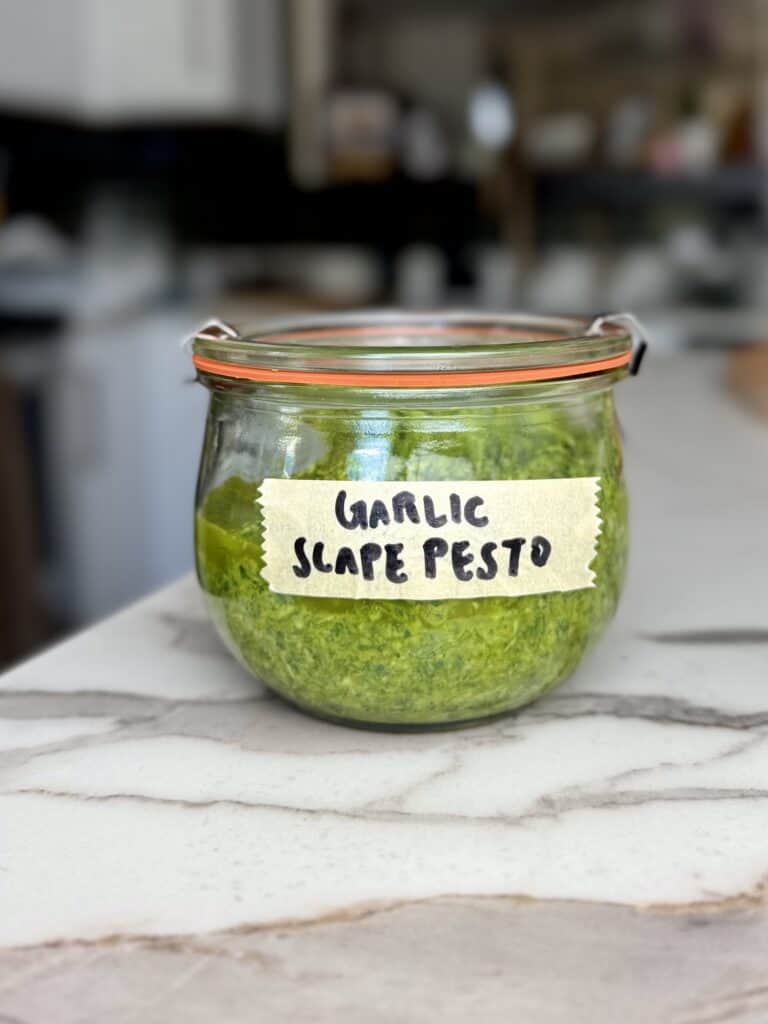
Garlic Scape Pesto
- Total Time: 10 minutes
Description
A vibrant garlic scape pesto with bright citrus notes, blending fresh herbaceous flavor, mellow garlic warmth, and a zesty finish.
This recipe is very forgiving and customizable, so feel free to measure everything with your heart.
Ingredients
- 170 g garlic scapes
- 30 g basil
- 2 lemons – zest of one lemon, and the jucie from both. If you want yours extra citrusy you can use the zest from both as well
- Start with 1/4 cup olive oil and keep blending and adding olive oil until you reach your desired consistency
- 3/4 cup walnuts
- Salt and pepper to taste
- Optional: add parmesan
Instructions
- To a food processor, add the garlic scapes, basil, lemon zest, lemon juice, and walnuts.
- Pour in 1/4 cup olive oil and blend until the mixture begins to break down.
- With the food processor running, slowly drizzle in additional olive oil until the pesto reaches your desired consistency. Feel free to use more than what’s in the recipe card depending on your preferred pesto consistency.
- Season with salt and pepper to taste. If using parmesan, add it and pulse a few times to combine.
- Serve immediately or store in an airtight container in the refrigerator. Enjoy tossed with pasta, spread on sandwiches, spooned over grilled meats, or drizzled onto roasted vegetables.
Notes
- Garlic scapes have a milder, fresher flavor than garlic cloves, making them perfect for pesto.
- The lemon brightens the pesto and balances the natural pungency of the scapes.
- For a creamier pesto, add parmesan cheese to taste.
- Walnuts provide a rich, earthy flavor, but you can substitute pine nuts, almonds, or pecans if preferred.
- If the garlic scape flavor feels too strong, try cooking the pesto in a skillet over low heat for 2 – 3 minutes before serving. This mellows the sharpness and creates a more balanced, less intensely garlicky flavor. Sometimes I also like to mix it with a little heavy cream or Greek yogurt + extra pasta water to mellow the sharpness as well.
- This pesto freezes well. Store it in an airtight container or freeze in ice cube trays for easy portioning. It will maintain its best quality for up to 3 months in the freezer.
- Prep Time: 10 minutes



0 Comments