
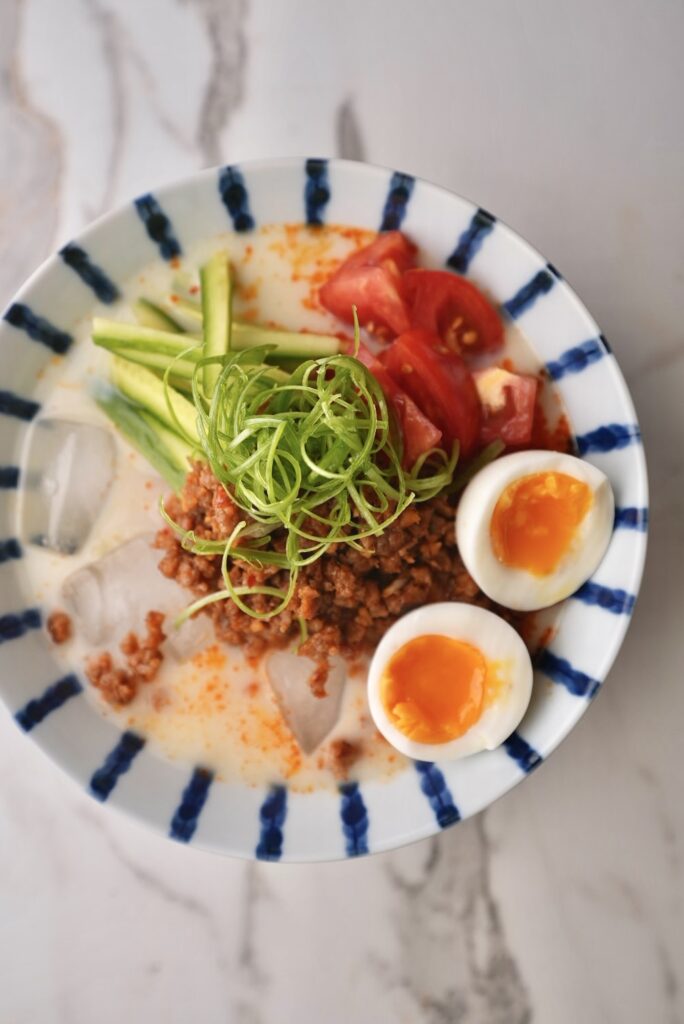
Hiyashi tantanmen (冷やし担々麺) can be broken down in Japanese like this:
– Hiyashi (冷やし): Chilled or cold
– Tantanmen (担々麺): The Japanese version of Chinese dan dan noodles
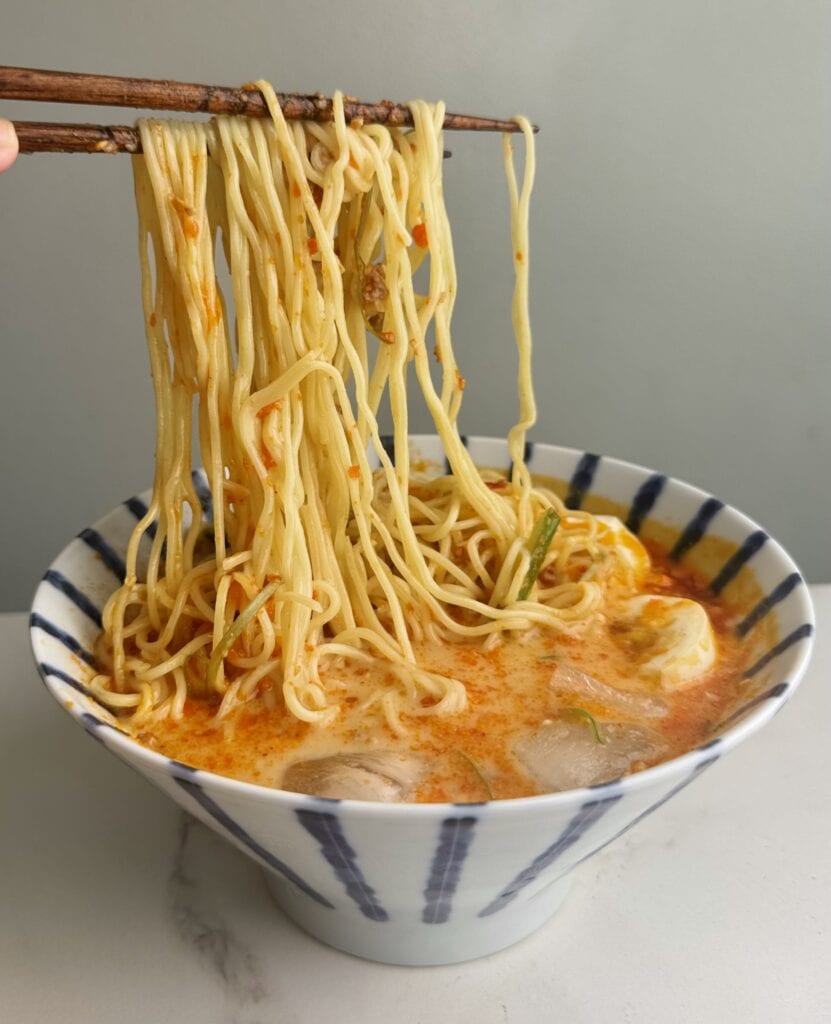
So hiyashi tantanmen essentially means “chilled tantanmen” or “cold dan dan-style noodles.” Yep, cold! And it’s so good (don’t knock it till you try it!). It’s essentially a cold version of the spicy, sesame-forward noodle dish dan-dan noodles, typically served with a creamy chilled broth and toppings like seasoned ground pork and fresh vegetables.
Growing up (especially during the hot, humid summers when we lived in Japan), my mom would often make cold noodle dishes to help us beat the heat. There’s always something so refreshing about a bowl of chilled noodles on a hot day! Whether they were served with a light dipping sauce or topped with fresh vegetables – it always hit the spot! Hiyashi tantanmen wasn’t something we typically ate, since it’s not a particularly common Japanese home-style dish, but it’s one that I think deserves a lot more attention.
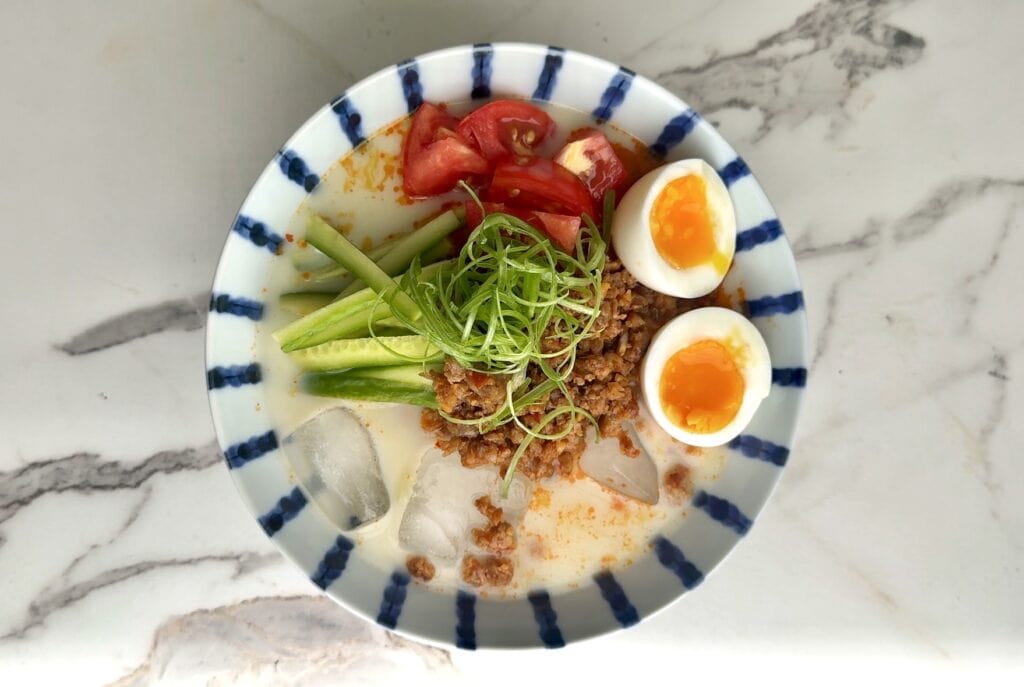
This version is topped with savory ground pork, a boiled egg, crunchy peanuts, fresh tomato, cucumber, and green onions, but feel free to customize the toppings!. The creamy soy milk and chicken broth balance the spice, while the sesame and chili oil give every bite plenty of richness and flavor. It’s spicy, nutty, refreshing, and incredibly satisfying all at the same time.
Ingredients:
- Ground Pork: Adds savory, meaty flavor and a hearty texture to the cold noodles.
- Soy Sauce: Brings salty, umami-rich flavor to both the pork and the tare.
- Doubanjiang: Adds spicy, fermented depth and a subtle savory richness to the pork.
- Garlic: Adds pungent, aromatic flavor.
- Ginger: Adds warmth and freshness that balances the richness of the pork.
- Toasted Sesame Seeds: Give the tare a nutty, creamy flavor and help create its signature sesame taste.
- Chili Oil or Chili Crisp: Adds heat and a fragrant, savory spice.
- Sugar: Balances the saltiness, spice, and savory flavors in the tare.
- Chicken Broth: Creates a savory base for the chilled broth.
- Soy Milk: Adds creaminess and a subtle sweetness while complementing the sesame flavor.
- Boiled Egg: Adds richness and a soft, creamy texture.
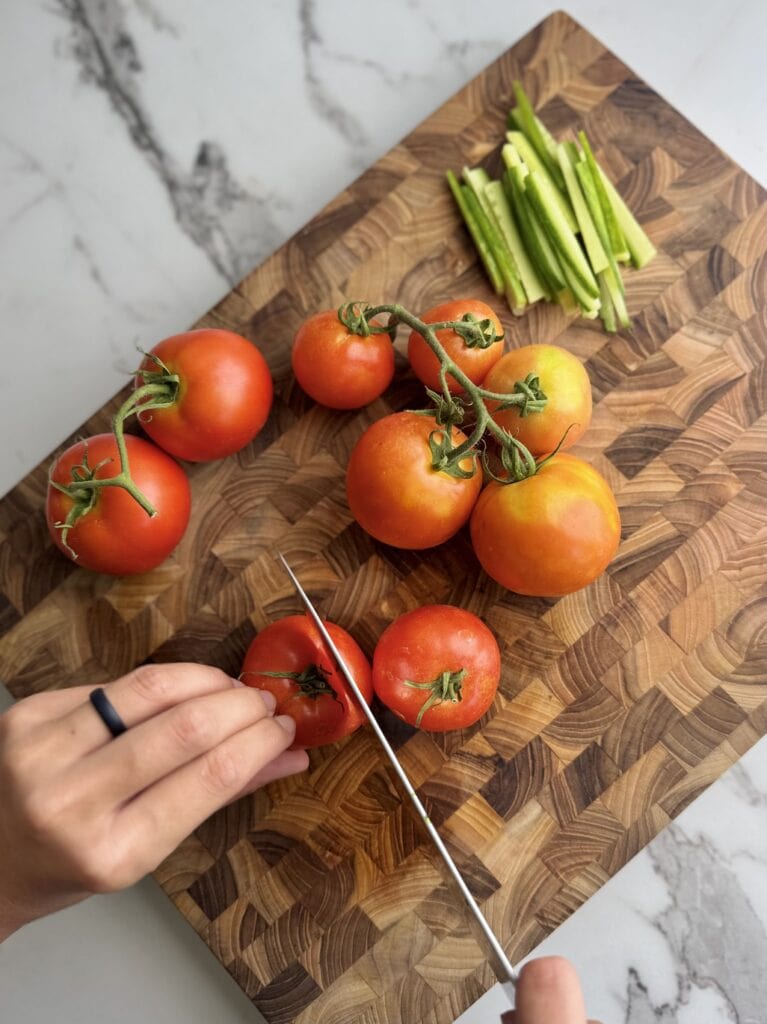
- Tomato: I love using our garden-fresh tomatoes here during the summer! Adds juicy freshness and a slight acidity that cuts through the richness.
- Cucumber: Adds cool, crisp texture that makes the dish especially refreshing.
- Green onions: Optional! Adds a fresh, sharp flavor and a pop of color.
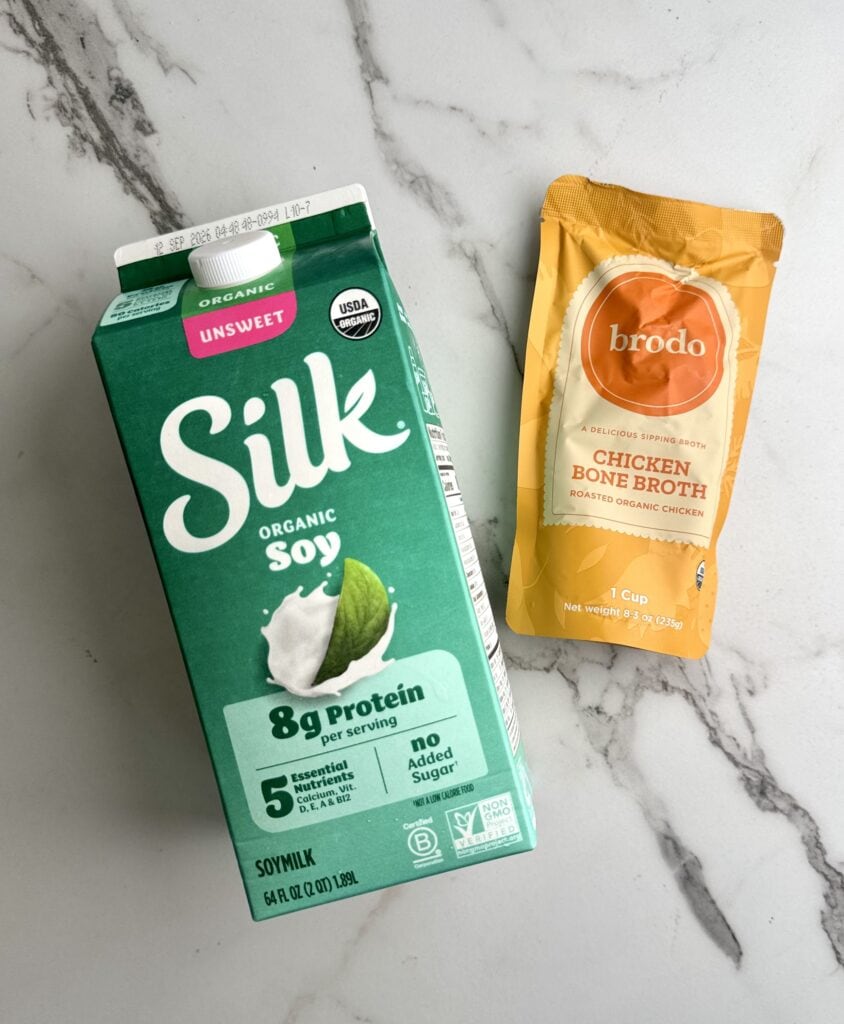
Just don’t make the mistake that I’ve made before of accidentally getting vanilla soy milk… (I mixed it in with the noodles before I realized. Ugh)
How to Make Hiyashi Tantanmen
- Combine the chicken broth and soy milk, then chill until cold.
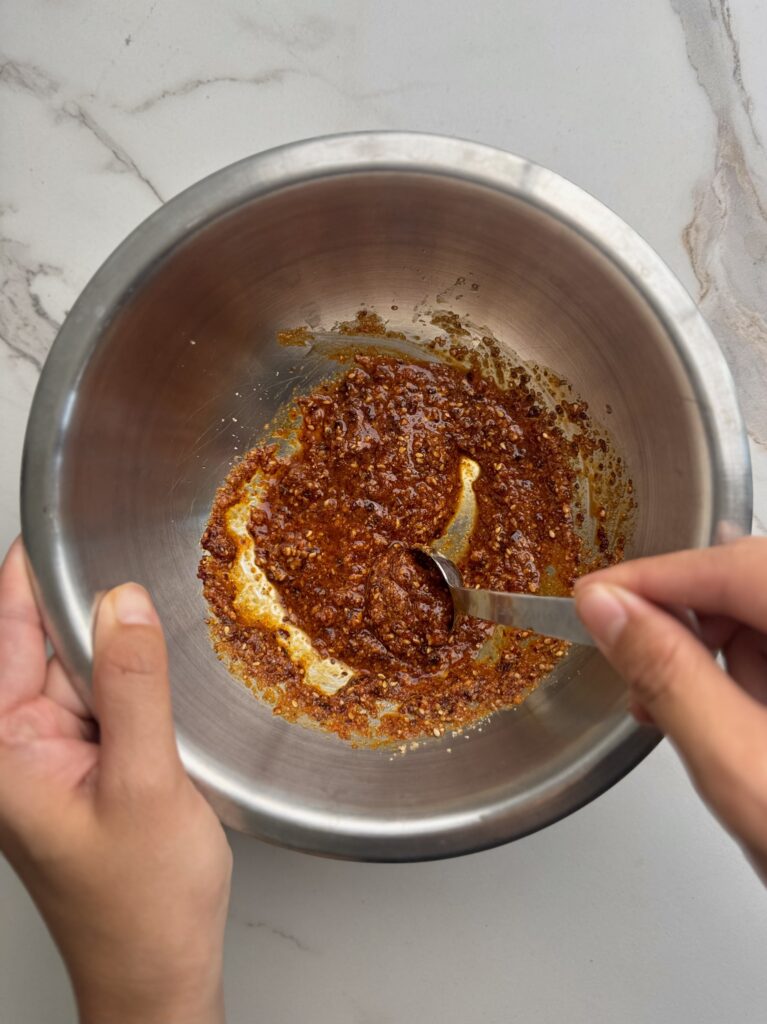
- Mix together the ground sesame seeds, soy sauce, chili oil or chili crisp, and sugar to make the tare.
- Cook the noodles and rinse well under cold water.
- Cook the ground pork with the soy sauce, doubanjiang, garlic, and ginger until browned and fragrant.
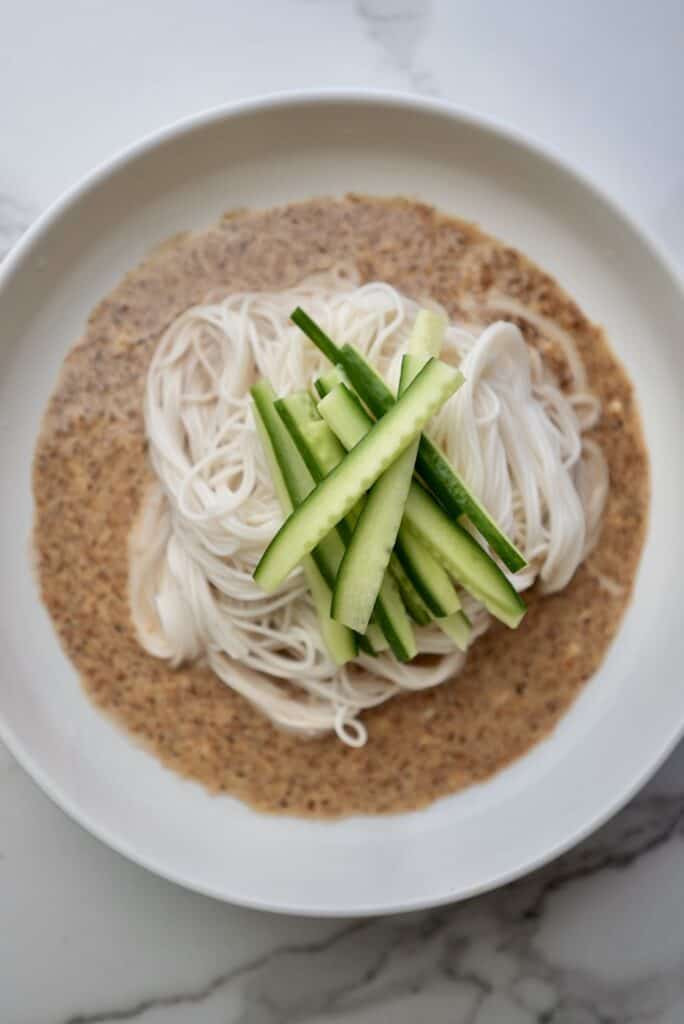
- Divide the tare between serving bowls, then add the noodles and pour the chilled broth over the top.
- Finish with the ground pork, egg, peanuts, tomato, cucumber, and green onions.
How to Grind the Sesame Seeds
For this dish, you will need to grind sesame seeds. In Japan, traditionally a suribachi and surikogi are used for this. A suribachi is a Japanese mortar with ridged, textured walls designed specifically for grinding ingredients like sesame seeds into a paste. The surikogi is the accompanying wooden pestle, which gently presses and crushes ingredients without damaging the mortar’s grooves.
No, you don’t need a suribachi and surikogi – They’re wonderful tools, but totally optional. You can also crush toasted sesame seeds using:
- A mortar and pestle
- A spice grinder or coffee grinder (pulse lightly)
- A zip-top bag + rolling pin
The goal is just to break the seeds open to release their oils and flavor, and any of these methods will get you there.
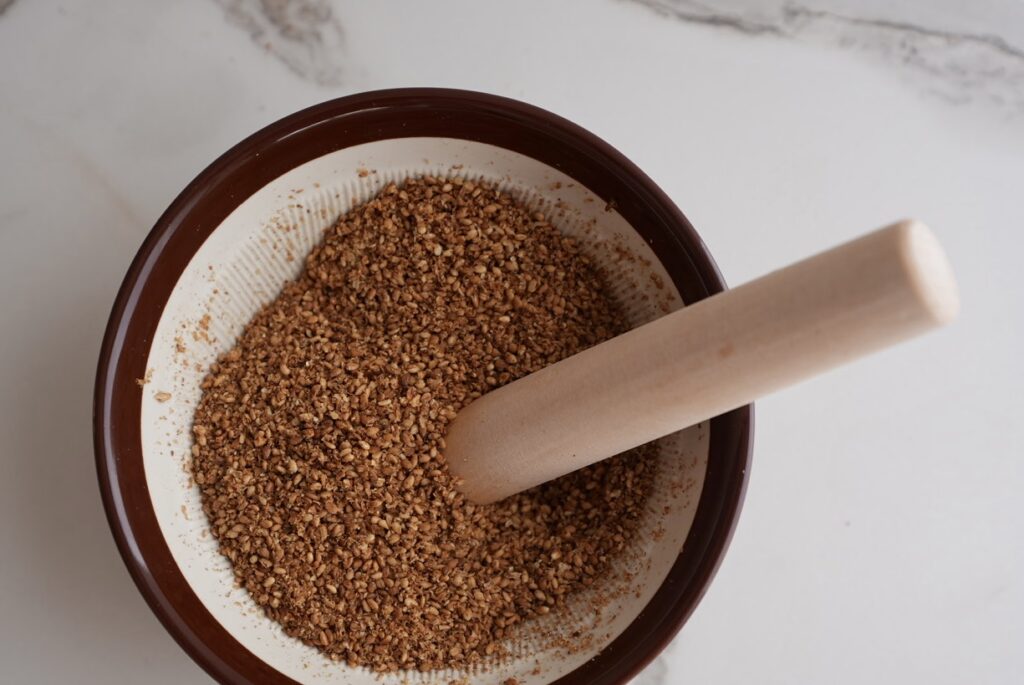
Beyond crushing sesame seeds for goma dressing, a suribachi and surikogi are used in many traditional Japanese cooking techniques:
- Grinding Spices: They’re perfect for grinding seeds like poppy, mustard, or shiso seeds to release their oils and aroma.
- Making Pastes: You can turn garlic, ginger, or miso into smooth pastes for sauces, marinades, or soups.
- Mixing Dressings and Sauces: The textured bowl helps emulsify ingredients like miso, vinegar, soy sauce, and oils for dressings or dipping sauces.
- Traditional Japanese Sweets: Some wagashi recipes use the suribachi to grind beans or seeds into fine pastes.
The ridges of the suribachi make it uniquely effective at grinding and emulsifying without overworking the ingredients, which is why it’s such a staple in Japanese kitchens.
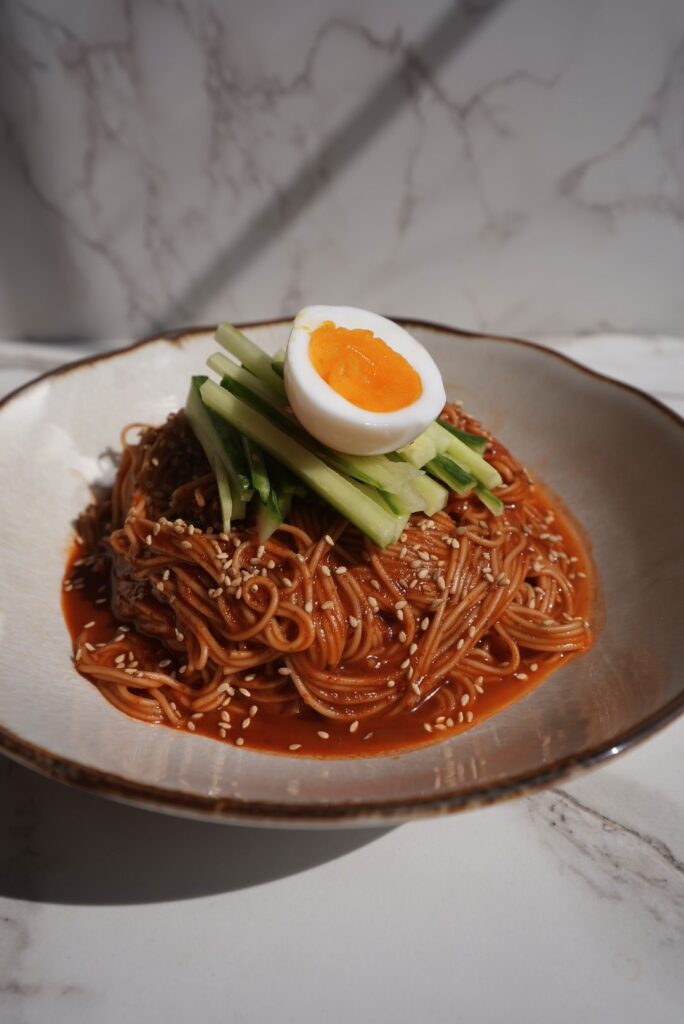
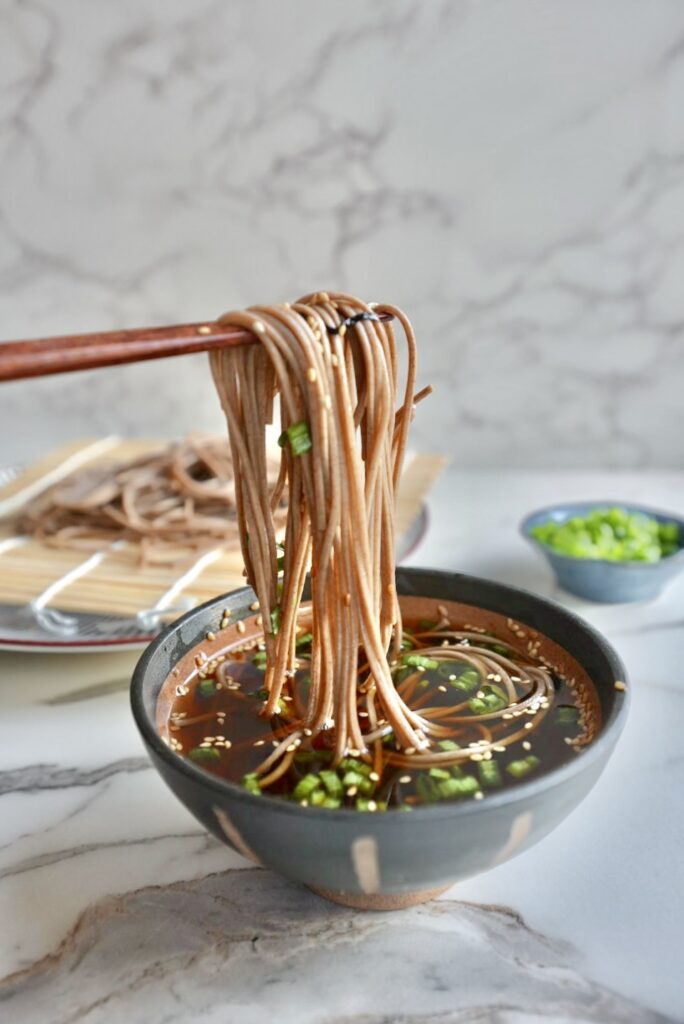
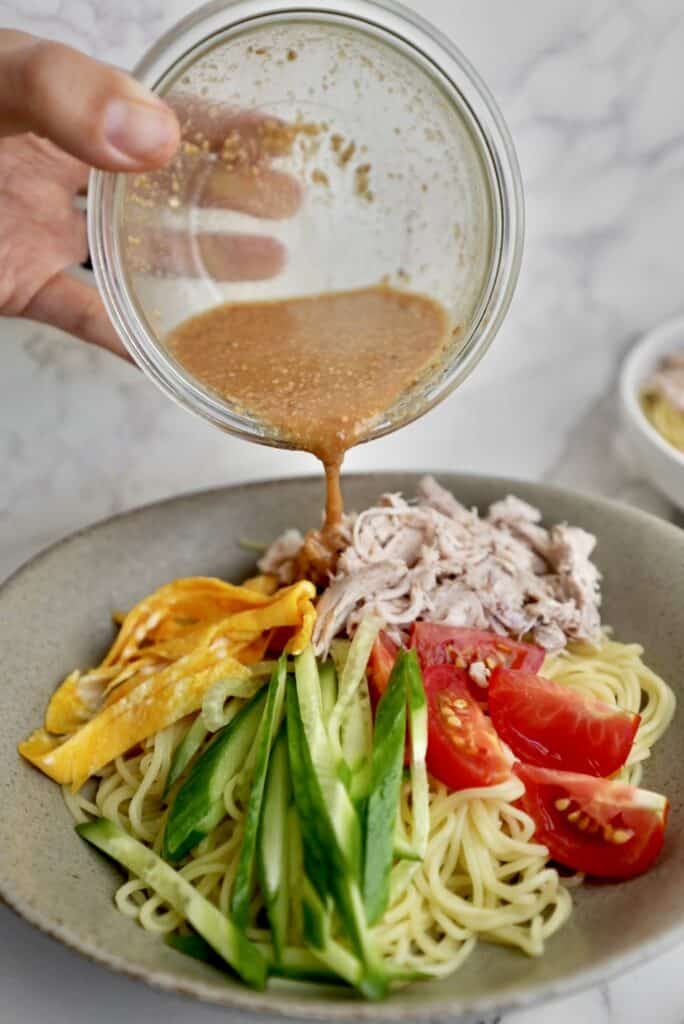
Enjoy cold noodles? Try my other recipes:
Hiyashi Tantanmen
- Total Time: 30 minutes
Description
A refreshing cold noodle dish with a creamy, nutty sesame broth, spicy savory pork, and fresh, crunchy toppings.
Ingredients
For the Pork Mixture:
- 1/2 lb ground pork
- 1 tbsp soy sauce
- 1 tbsp doubanjiang
- 3 cloves garlic, minced
- 1 tbsp ginger, grated
For the Tare:
- 2 tbsp toasted sesame seeds, ground (I use a suribachi and surikogi to grind them!)
- 2 tbsp soy sauce
- 2 tbsp chili crisp
- 1 tsp sugar
For the Broth:
- 2 cups chicken broth
- 2 cups soy milk
For the Toppings:
- Boiled eggs
- Peanuts
- Tomato
- Cucumber
- Green onions: Chopped
Instructions
- In a large bowl, pour in the chicken broth and soy milk. Keep it in the fridge while you’re cooking everything else.
- In another medium-sized bowl, make the tare by combining the ground toasted sesame seeds (I use a suribachi and surikogi to grind them), soy sauce, chili oil or chili crisp, and sugar.
- Cook your preferred noodles according to the package instructions. Drain and rinse thoroughly under cold water.
- In a large pan over medium heat, cook the ground pork, breaking it apart as it cooks.
- Add the soy sauce, doubanjiang, garlic, and ginger, and cook until the pork is fully cooked and fragrant. Set aside.
- Divide the tare between serving bowls. Add the noodles, then pour the cold broth over the top. If you want the broth even colder, you can optionally add ice cubes. Finish with the toppings: ground pork, boiled egg, peanuts, tomato, cucumber, and green onions. Serve immediately.
- Prep Time: 15 minutes
- Cook Time: 15 minutes



0 Comments