
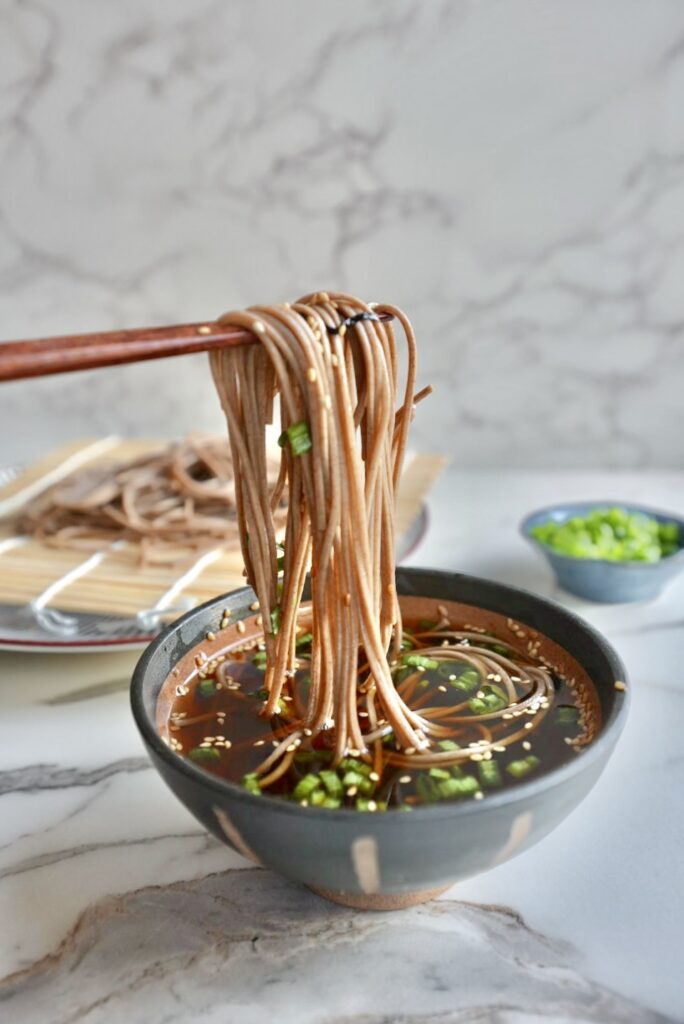
Zaru Soba is one of those deceptively simple Japanese dishes that is so incredibly refreshing, especially on a hot summer day. At its core, it’s chilled buckwheat noodles served with a dipping sauce, usually made from a mix of soy sauce, mirin, and dashi, and topped with nori or green onions.
The beauty of Zaru Soba is in its minimalism. The noodles themselves are nutty and earthy, and the dipping sauce adds just the right balance of saltiness and umami. Each component truly shines in this dish! The cold, firm texture of the noodles makes every bite satisfying, and it’s a dish that’s both light and filling.
Even though I’m part Japanese, Zaru Soba wasn’t something I grew up eating often. My mom is allergic to buckwheat, which is the main ingredient in soba noodles, so it wasn’t a regular part of our meals at home. Eating it more frequently as an adult made me appreciate just how simple, versatile, and refreshing it can be – perfect for a quick lunch or a light dinner.
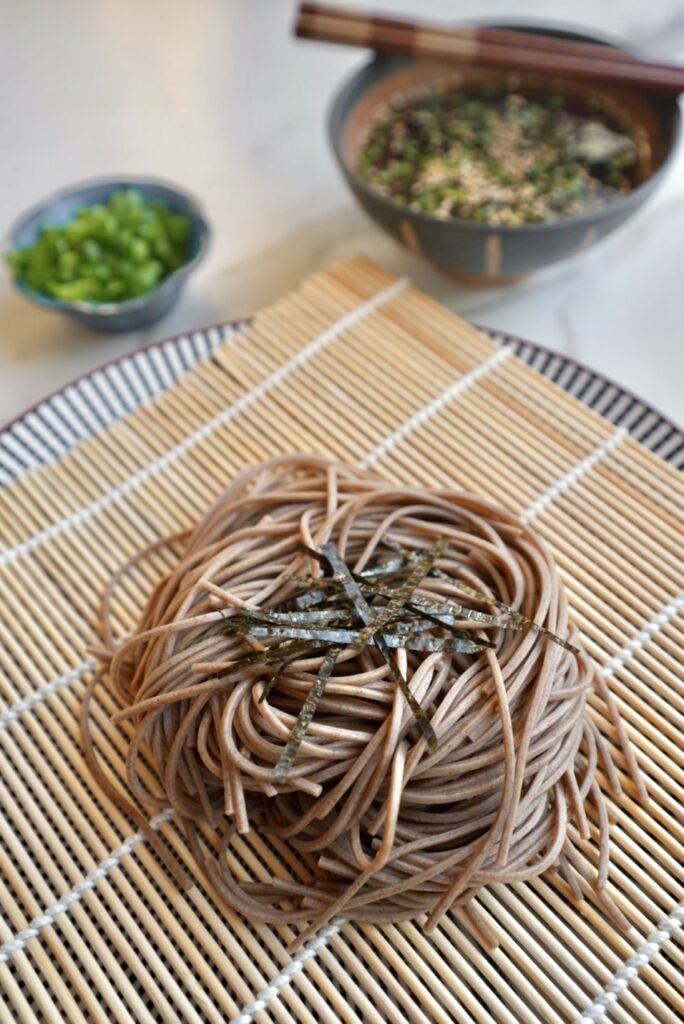
Now, when I make zaru soba, I love playing with the traditional toppings and dipping sauces, adding things like fresh scallions, shredded nori, shrimp tempura, or a soft-boiled egg to add a little extra oomph.
It’s a dish that’s easy to prepare but feels thoughtful and deliberate, which is part of what makes it so special. Even though it wasn’t a childhood staple for me, Zaru Soba has become one of those meals I reach for when I want something light, refreshing, and deeply satisfying.
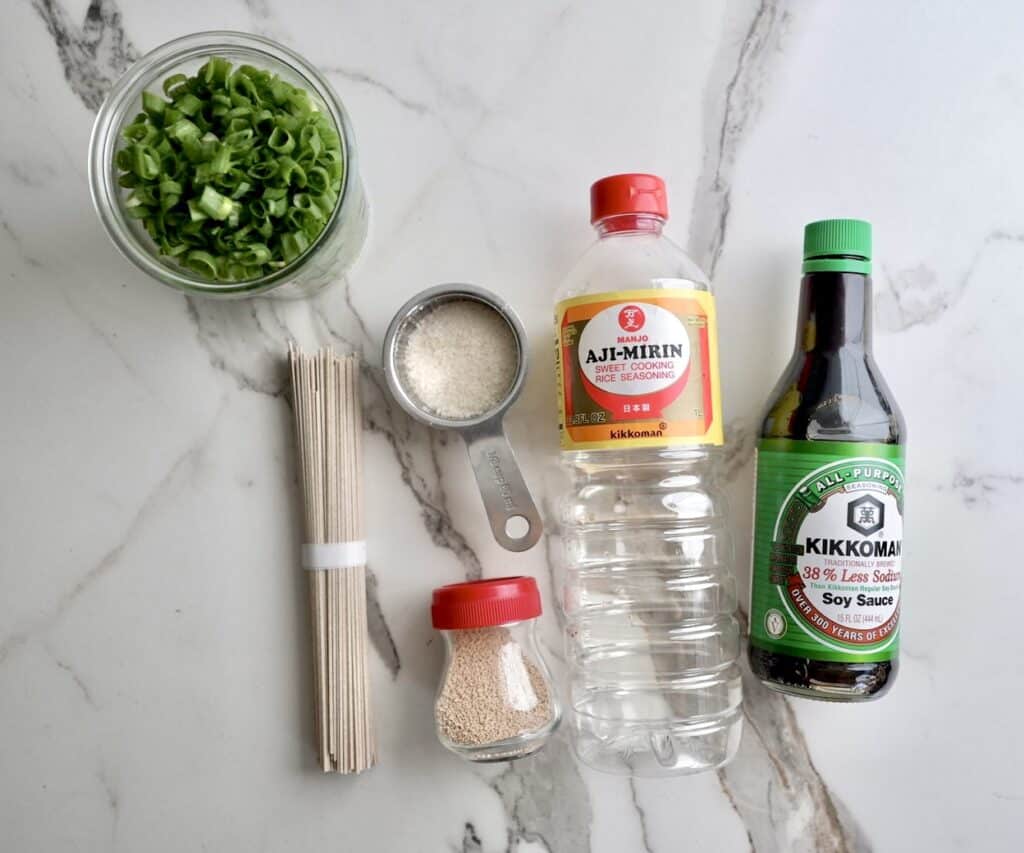
Ingredients
- Soba Noodles: Made from buckwheat flour, soba noodles have a delicate nutty flavor and chewy texture. They are served chilled in zaru soba, making them a refreshing choice for warm weather meals.
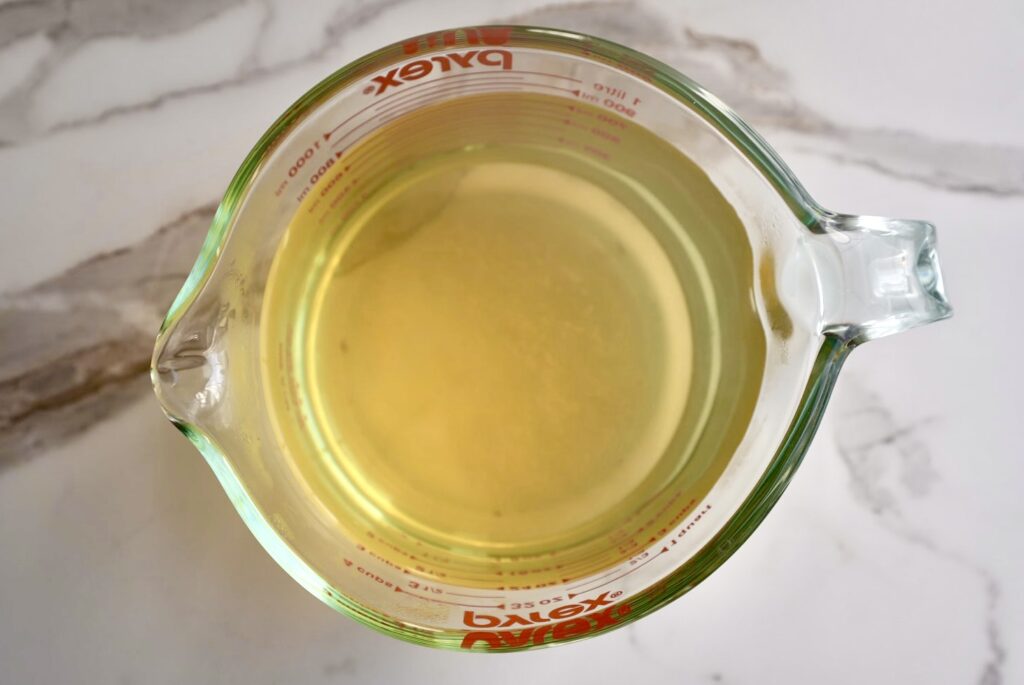
- Dashi: Dashi is a traditional Japanese soup stock that forms the foundation of the dipping sauce. It provides a light yet deeply savory umami flavor that complements the soba noodles without overpowering them. I explain more in-depth how to make dashi below, as well as a shortcut you can use.
- Soy Sauce: Soy sauce adds saltiness, depth, and richness to the dipping sauce.
- Mirin: Mirin is a sweet Japanese rice wine that adds subtle sweetness and a glossy finish to the sauce. It also helps round out the saltiness of the soy sauce.
- Sugar (Optional): A small amount of sugar can be added for extra sweetness and balance. Whether or not you use it comes down to personal preference, as mirin already contributes some natural sweetness to the sauce.
- Green Onions: Chopped green onions add a fresh, mild onion flavor that brightens the dipping sauce. Their crisp texture and subtle sharpness provide a nice contrast to the cool noodles and savory broth. Use plenty of green onions, don’t skimp!
- Wasabi (Optional): Wasabi adds a clean, pungent heat that enhances the flavor of the noodles without overwhelming them. A small amount stirred into the dipping sauce goes a long way.
- Nori (Optional): Thin strips of roasted seaweed add a subtle touch of umami that pairs well with the noodles.
What Type of Noodles to Use
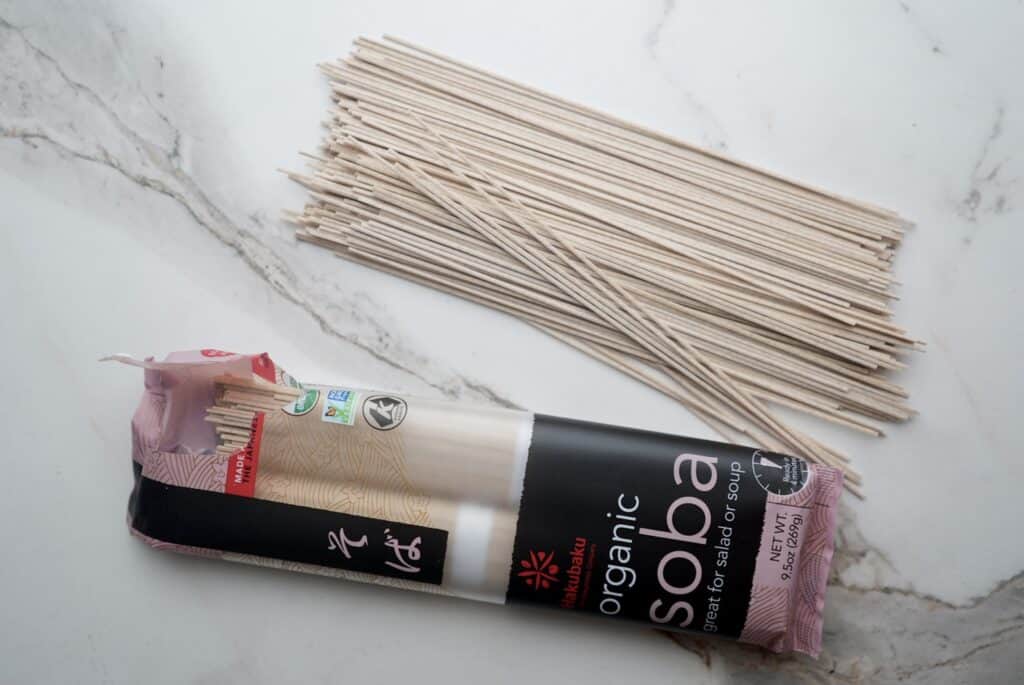
When making Zaru Soba, the noodles you’ll want to use are traditional Japanese soba noodles, which are made primarily from buckwheat flour.
Authentic soba has a slightly nutty flavor and a firm, chewy texture that pairs perfectly with the chilled dipping sauce. In Japan, you can find variations that range from 100% buckwheat to blends that include wheat flour for elasticity (pure buckwheat noodles tend to be more brittle, while blended versions hold together better and are more common in everyday cooking).
How to Make Dashi: Japanese Cooking Stock
There are three main ways to make dashi, each with its own advantages in terms of flavor, ease, and time. I ordered them from most complex to simplest:
- Dashi from Scratch: Traditional dashi, made by simmering kombu (dried kelp) and katsuobushi (dried bonito flakes), is considered the best method. Soak the kombu in water, heat just below boiling, and add katsuobushi. This method is ideal for dishes with the purest flavor.
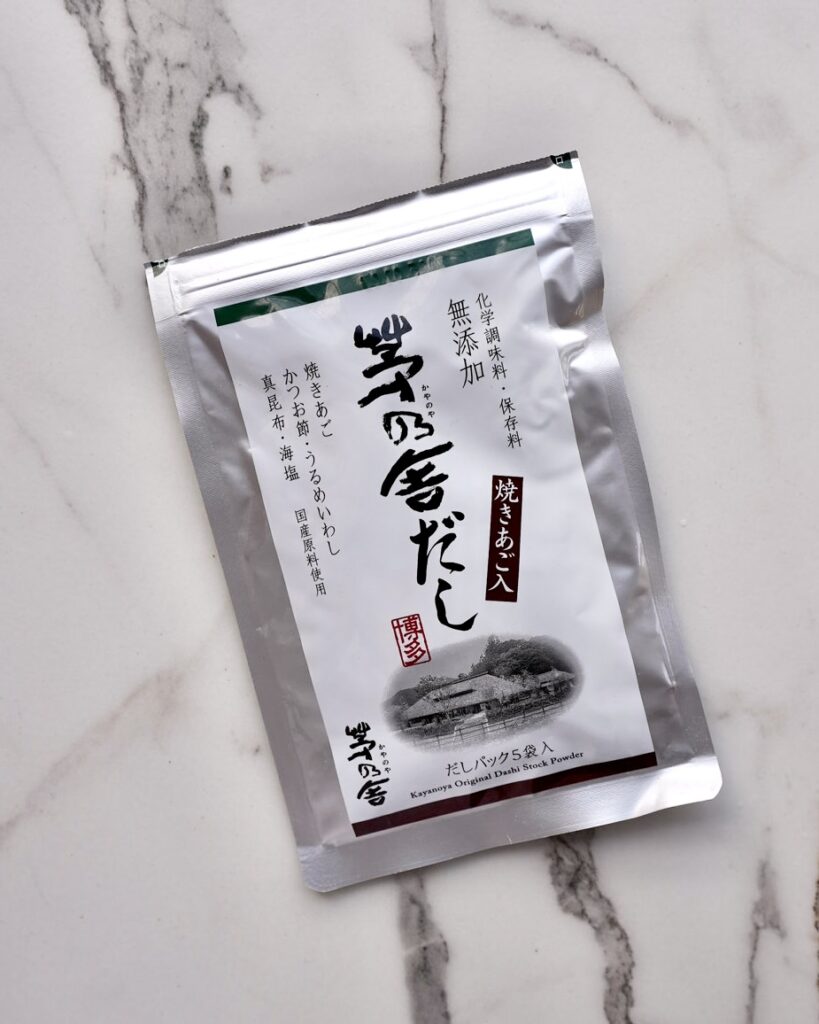
- Dashi Packets: Dashi packets, resembling tea bags, contain dried kombu, katsuobushi, and sometimes shiitake mushrooms or dried sardines. Just simmer the packet in water for a few minutes for a quick and flavorful broth. Buy dashi packets here from one of my most recommended dashi brands, Kayanoya.
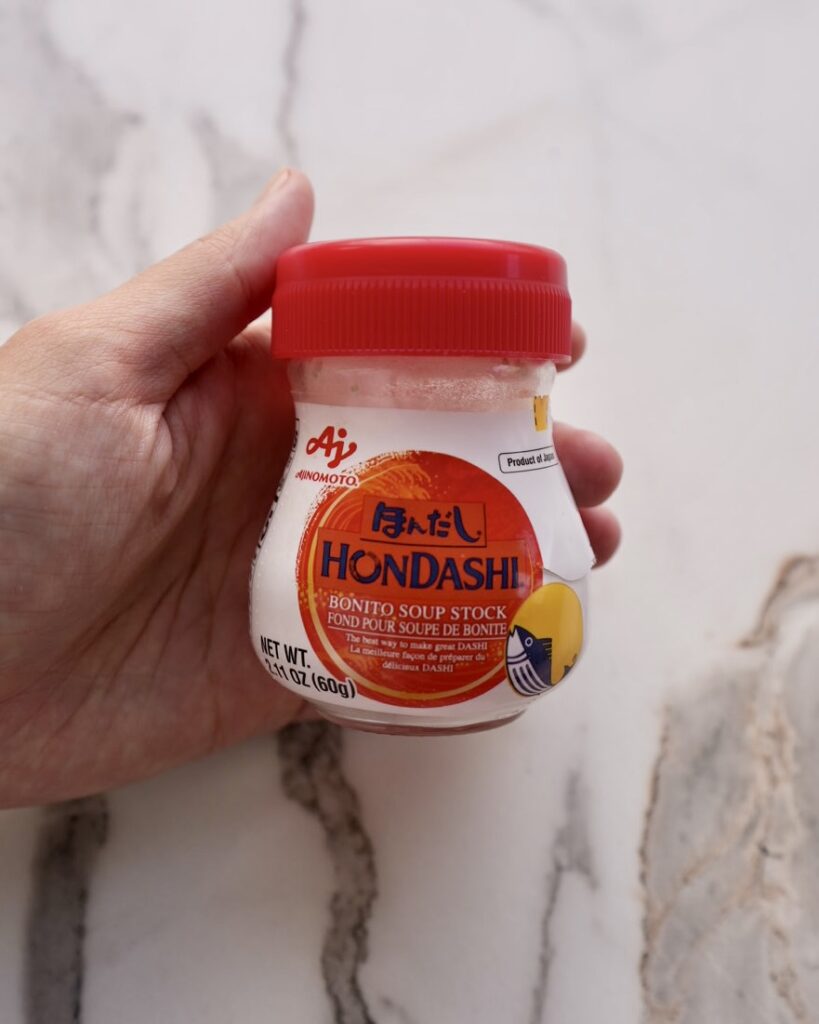
- Instant Dashi (Hondashi): Instant dashi, often called hondashi, is a granulated or powdered form of dashi. Just a spoonful dissolved in hot water creates a quick and flavorful stock. This option is convenient and ideal for busy days. Buy hondashi here.
Making Dashi From Scratch
Dashi is a fundamental Japanese stock that forms the backbone of countless dishes. It provides a delicate yet deeply savory flavor known as umami.
Made traditionally from kombu (dried kelp) and katsuobushi (dried bonito flakes), dashi is prized for its ability to enhance other ingredients without overpowering them. It’s used in a wide variety of dishes, from miso soup and noodle broths to simmered vegetables, nimono, and even sauces and dressings, making it an essential component of authentic Japanese cooking.
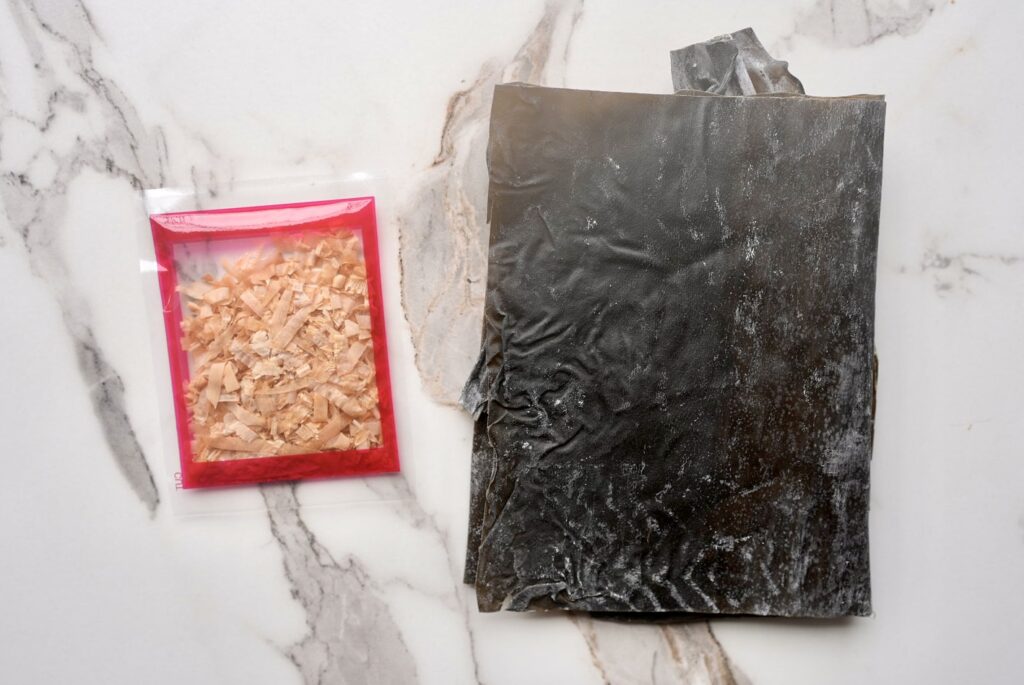
Like I mentioned above, you can use shortcuts to make dashi (which I do all the time! Making it from scratch is a little more work than I am cut out for, especially on busy days). So here’s how to make it from scratch:
- Prepare Kombu: Soak the kombu in cold water.
- Heat the Water: Slowly bring the kombu water to just below a boil.
- Remove: Take out the kombu before the water boils to prevent bitterness.
- Add Katsuobushi: Sprinkle in bonito flakes and let them steep for a few minutes.
- Strain: Remove the bonito flakes using a fine-mesh sieve.
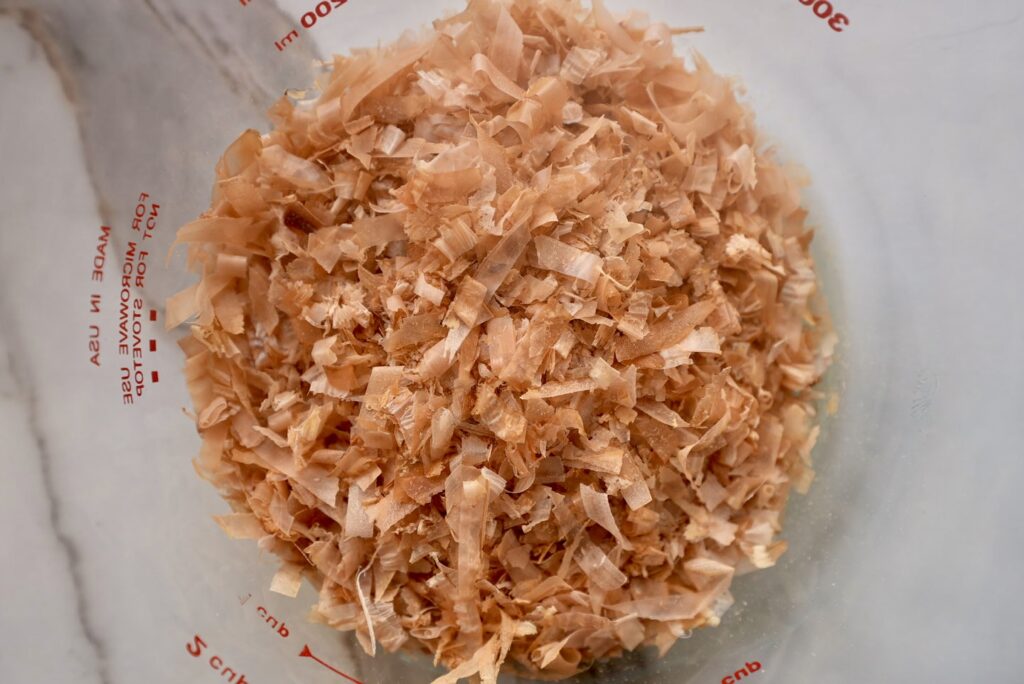
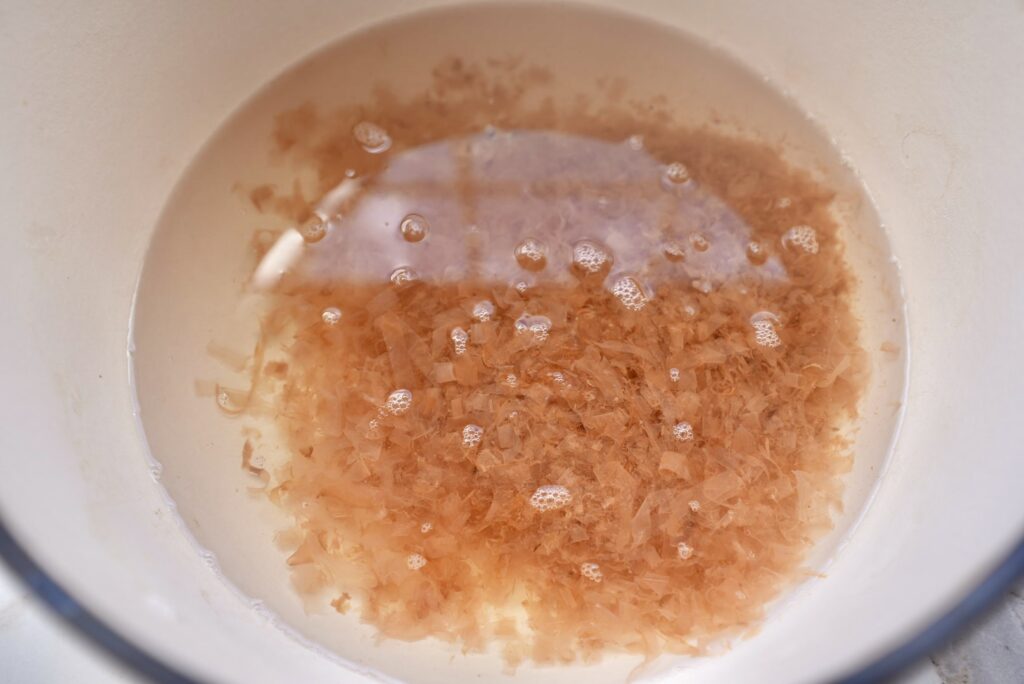
Recipe Notes and FAQs:
- Rinse the soba well after cooking: After boiling, rinse the noodles under cold running water while gently rubbing them. This removes excess starch and gives them a cleaner, firmer texture.
- Serve the noodles very cold: Zaru soba is best when fully chilled. You can even place the serving plate in the fridge briefly before plating for an extra refreshing finish.
- Adjust the dipping sauce strength: The tsuyu can be customized depending on preference. If it feels too strong, dilute slightly with cold water (sometimes I add a couple ice cubes to keep it cold) or extra dashi.
- Use good-quality dashi if possible: Since the sauce is simple, the flavor of the dashi really stands out. A higher-quality dashi will noticeably improve the overall taste.
- Balance sweetness to taste: Mirin adds sweetness, but the sugar is optional. Some prefer a slightly less sweet, more savory dipping sauce.
- Eat immediately after assembling: Soba noodles can dry out or clump if left sitting too long, so it’s best enjoyed right after plating and dipping sauce prep.
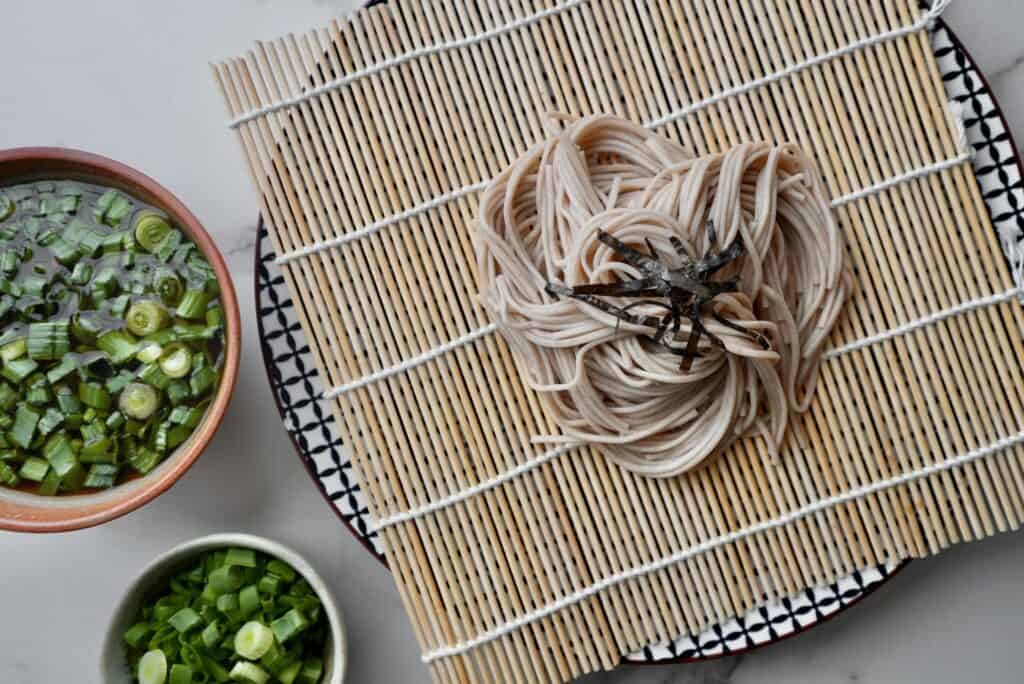
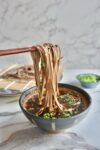
Zaru Soba (Cold Japanese Noodles)
- Total Time: 10 minutes
Description
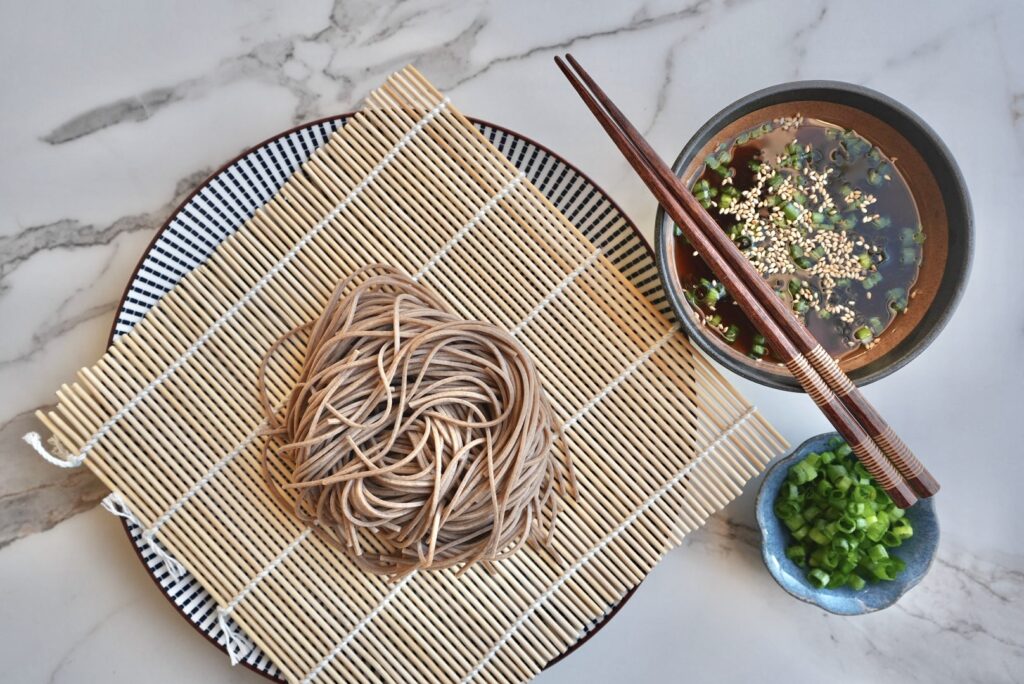
Zaru soba is a refreshing Japanese dish of chilled buckwheat noodles served on a bamboo tray with a dipping sauce called tsuyu, often accompanied by green onions and wasabi.
Ingredients
- 2 servings soba noodles
- 8 green onions, chopped
- Optional toppings: thinly sliced nori, grated daikon, wasabi
Dipping Sauce Ingredients:
Instructions
- Bring a large pot of water to a boil. Add the soba noodles and cook according to the package instructions (usually 4 – 5 minutes).
- Drain and rinse the noodles thoroughly under cold running water to remove excess starch. Set aside in a bowl of ice water to chill, or strain in cold water until cool.
- In a small saucepan, combine dashi, soy sauce, mirin, and sugar (if using).
- Bring to a gentle simmer over medium heat, then remove from the heat. Allow the sauce to cool, then transfer to the refrigerator until ready to serve.
- Divide the chilled soba noodles onto bamboo mats or plates. Pour the dipping sauce into small individual bowls. Place 1/4 cup of green onions on top of the dipping sauce. Serve with optional toppings like grated daikon, nori, or a dab of wasabi.
- Prep Time: 5 minutes
- Cook Time: 5 minutes
Nutrition
- Serving Size: 1



I used to live next to a small hole in the wall that sold zaru soba when I lived in Japan for just a few months. Never made it myself until now. Thank you for sharing this recipe.
Hi Craig – that’s so fun to hear. I’m glad you were able to try this at home 🙂
ABSOLUTELY LOVE THESE NOODLES!!! Have yet to find somewhere that sells this dish at a restaurant where I live. So glad I made it instead. Paired with tempura and it was chefs kiss!
Me too – there are no good restaurants near me that sell Zaru Soba. So glad you enjoyed it, Jess!
I’ve never tried zaru soba before, but it was really good! Thank you!
Great to hear! Thanks for sharing, Joanne 🙂