
Hey all! Real Farmer Jeff here.
Potatoes are one of the most rewarding crops you can grow. They’re productive, forgiving, and incredibly versatile. It’s also so fun finding out how big your harvest will be at the end of the season.
If you want large, healthy potatoes instead of a bunch of small ones, a few key decisions make all the difference. I’ll share some tips and trick in this blog post. Let’s get started!
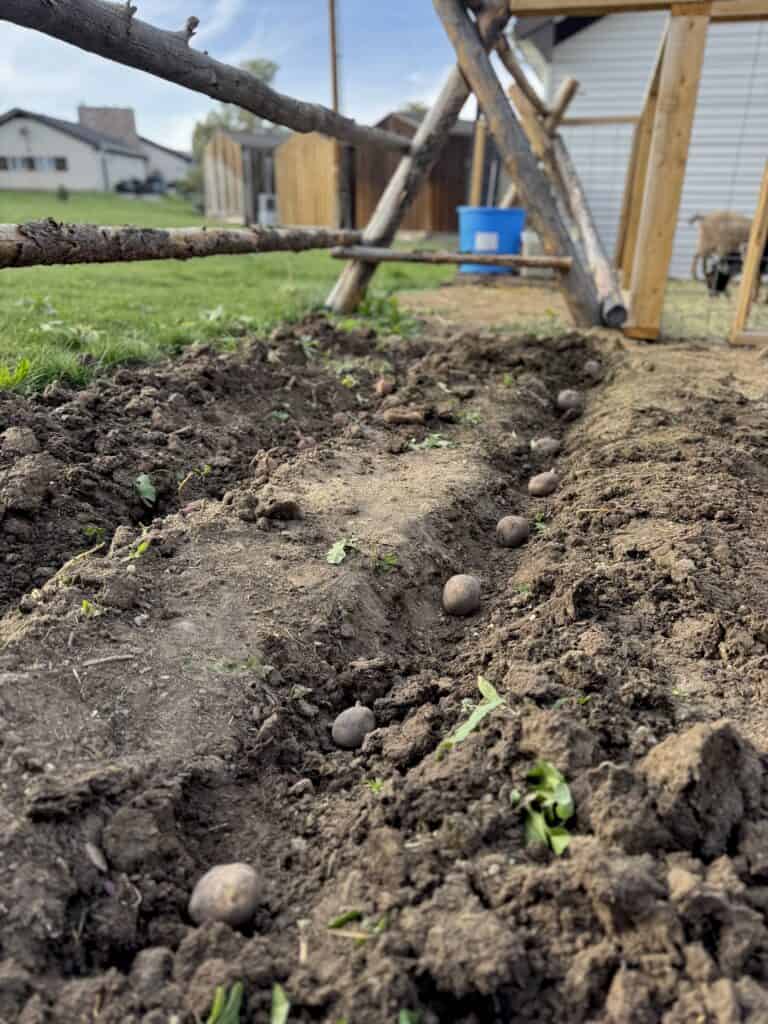
Why Seed Potatoes Are Worth It
Seed potatoes are specifically grown to be planted and not eaten. They’re usually the ideal choice for the following reason:
- Disease-free, which reduces the risk of blight and rot
- No risk of growth inhibitors sprayed unto potatoes (unlike store-bought)
- Better sprouting and more reliable results
That said, you can use certain store-bought potatoes. Just make sure they’re organic, since conventional ones are often treated to prevent sprouting.
Cutting Potatoes the Right Way
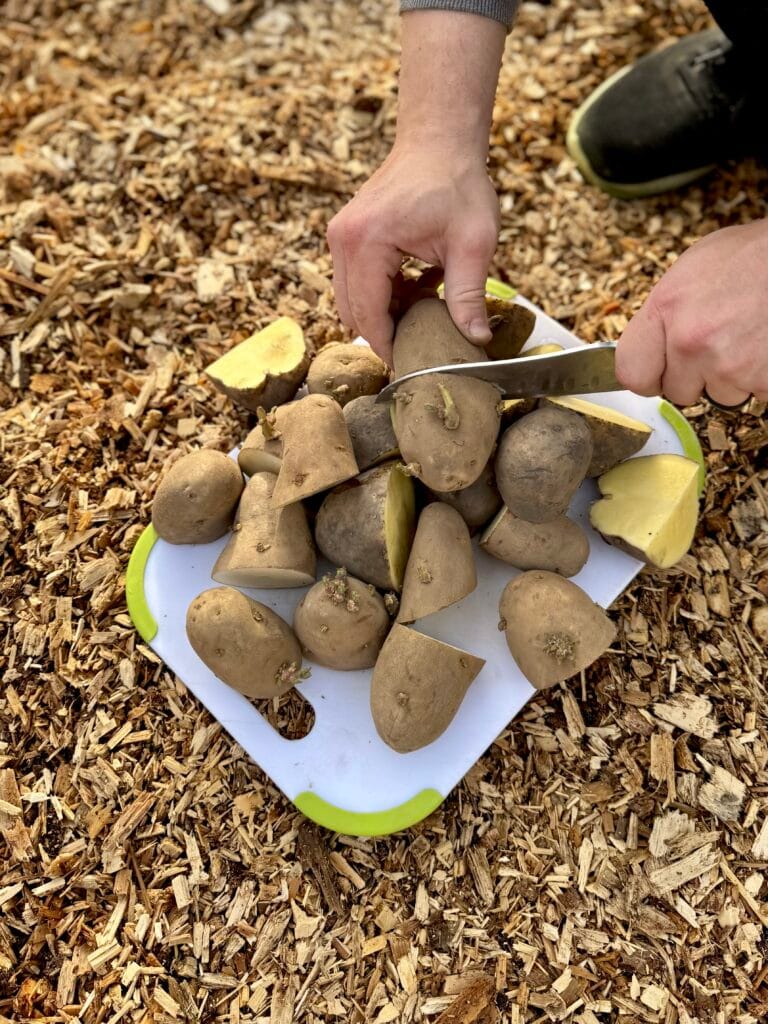
If your potatoes are larger than a golf ball or egg, cutting them can be a smart move. Why cut them?:
- More plants from fewer potatoes
- Big potatoes often have many eyes which each grow into a plant. This will cause more competition that will in turn create smaller potatoes.
How to cut:
- Cut into pieces about the size of an egg
- Make sure each piece has 1 – 3 eyes (the small sprouts or bumps)
- Avoid tiny pieces because they won’t have enough energy to grow well
Important Tip!: Let the cut pieces sit for 1 – 3 days before planting so they can dry out and form a protective layer. This helps prevent rot once they’re in the soil.
3 Simple Ways to Plant Potatoes
No matter which method you choose, the basics stay the same:
- Plant pieces 2 – 4 inches deep to start
- Space them 10 – 12 inches apart
- Rows should be about 2 – 3 feet apart (if applicable)
Here are 3 ways to plant potatoes:
1. In-Ground Trench Method
This is the best method for bigger harvests! Here’s how to do it:
- Dig a trench about 6 – 8 inches deep
- Place your potato pieces spaced 10–12 inches apart
- Cover them with 2 – 3 inches of soil (not all the way)
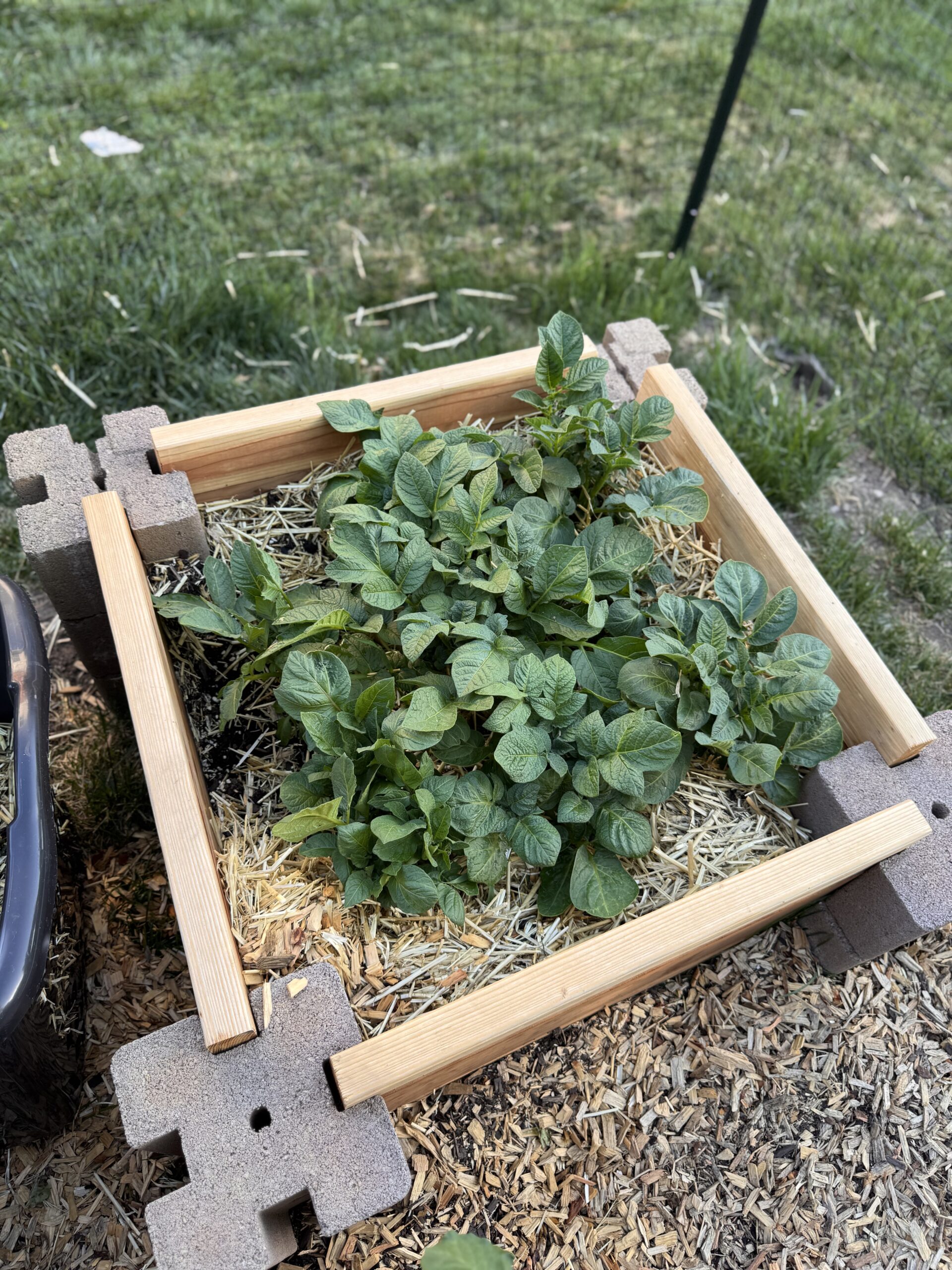
- As the plant grows to about 6 – 8 inches tall, add more soil around the base, burying about half the plant
Hilling helps long-season potatoes produce more by creating additional space for tubers to form. It also supports the plant as it grows and helps retain moisture, meaning you may not need to water as often
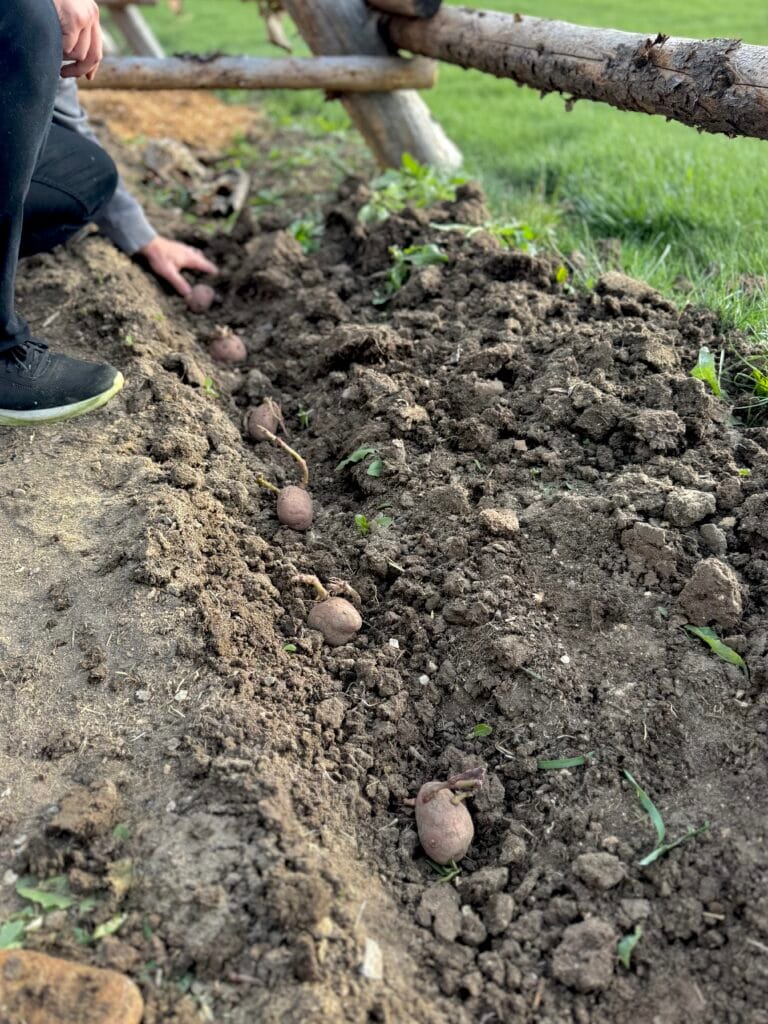
2. Furrow Method
This is the easiest in-ground option. It’s quicker and requires less digging than trenches, while still producing a solid harvest. Here’s how to do it:
- Make a shallow row (about 3 – 4 inches deep)
- Place potatoes 10 – 12 inches apart
- Cover them fully with soil
- As they grow, lightly mound soil around the base once or twice
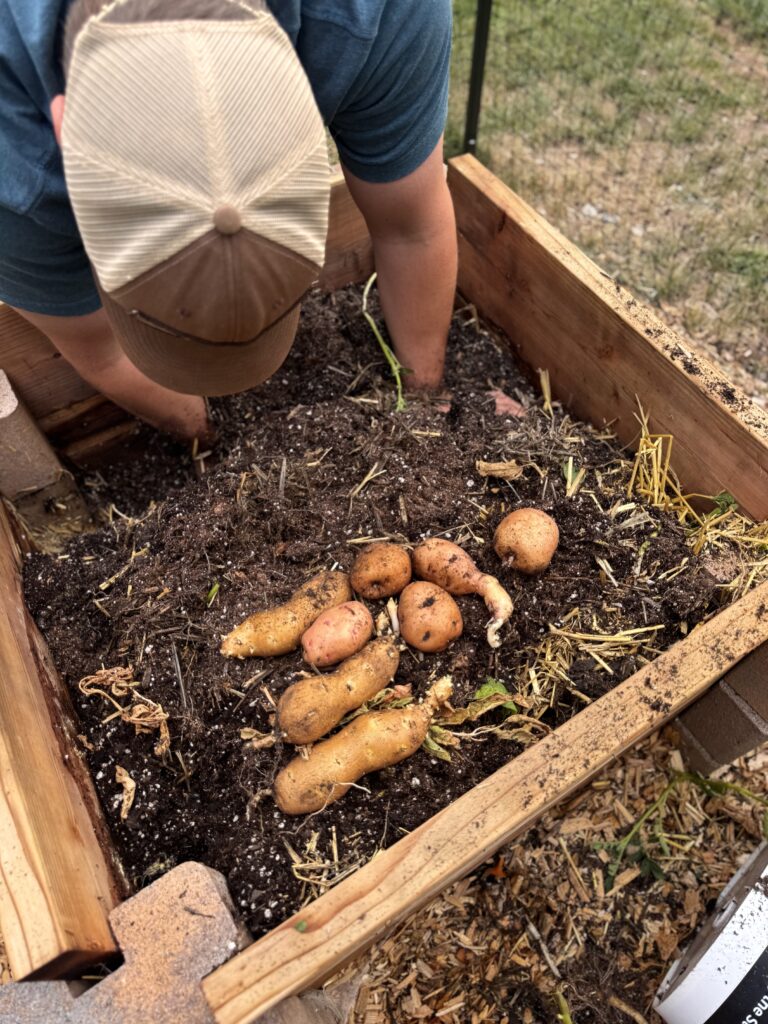
3. Grow Bags
This is the best option for small spaces. Great drainage and super easy harvesting – just dump the bag when you’re done. Water tip: Grow bags dry out faster, so check moisture often.
Soil and Amendments for Bigger Potatoes
Potatoes grow best in loose, fluffy, well-draining soil. If the soil is too hard, potatoes can’t expand properly. Simple ways to improve your soil:
- Mix in compost before planting
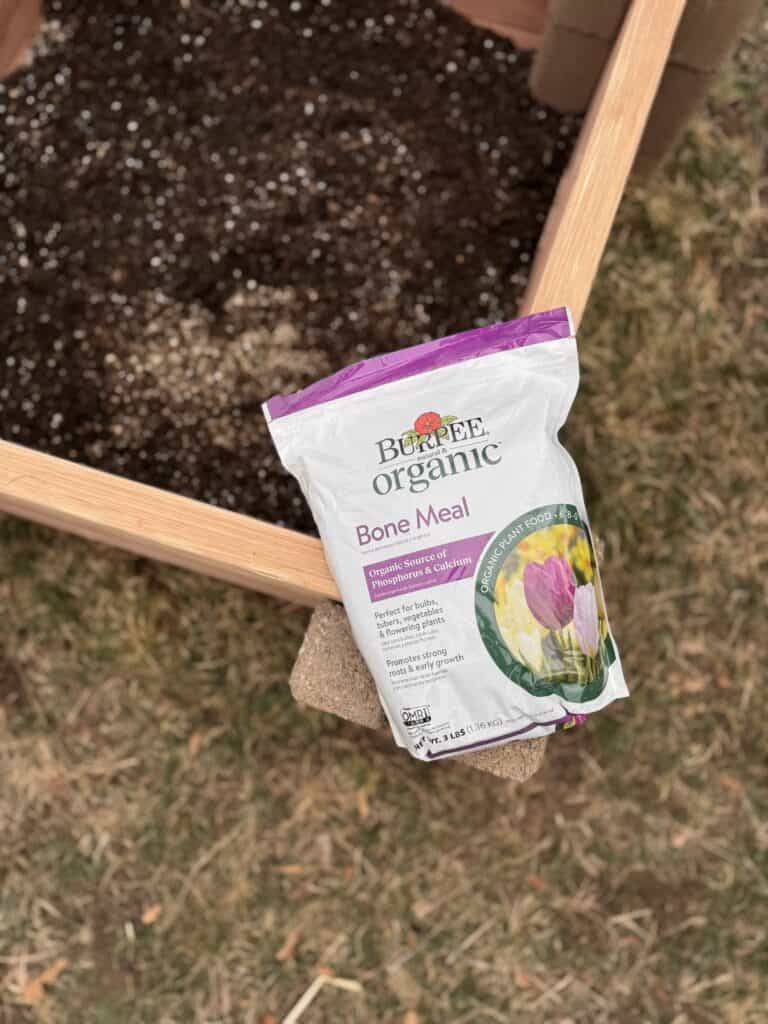
- Add bone meal to support root growth
- Use a fertilizer with higher potassium to encourage larger potatoes
- Try not to add too much nitrogen. It can lead to lots of leaves but smaller potatoes.
Extra Tips for Growing Bigger Potatoes
- Stick to 1 – 3 eyes per seed piece to reduce competition
- Keep watering consistent if possible.
- Make sure plants get 6 – 8 hours of sunlight daily
- For maximum size, wait to harvest until the plant dies back



0 Comments