
Hey all! Real Farmer Jeff here.
Garlic is one of the easiest and most rewarding crops to grow. It’s a top choice for many gardeners because it produces well in limited space, stores well through the winter, and offers many complex flavors beyond the storebought varieties (most grocery stores offer smaller, milder varieties). Plus, my wife Kyrié cooks a lot, so we always have fresh garlic on hand!
Once planted, garlic only requires occasional weeding, watering, and of course patience. It thrives in well-drained soil with plenty of organic matter.
In this blog post, I’ll talk about how to plant garlic, what varieties there are, and when to harvest. Let’s get started!!
When Should I Plant Garlic?
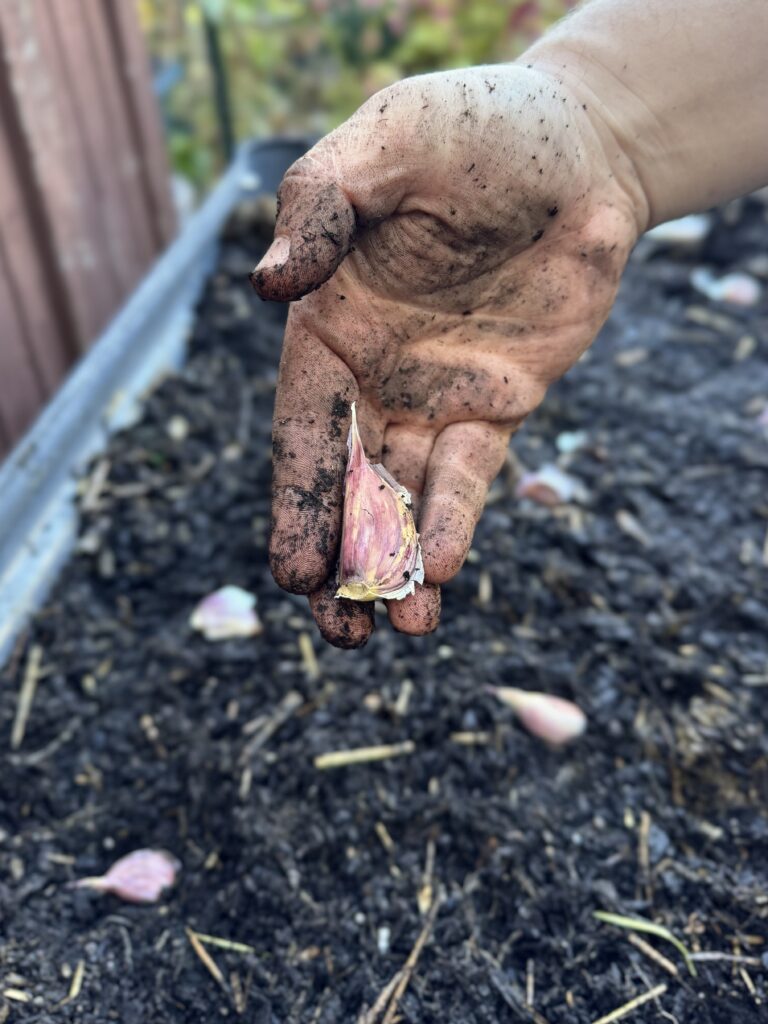
Garlic is planted in fall, usually about 4-6 weeks before the ground freezes. So where I live (in Utah zone 7A), this is usually around October – early November. Fall planting allows the cloves to form strong roots before winter, which leads to larger bulbs at harvest time. Ideally, you want to give the garlic enough time to establish roots before the soil freezes, but not enough time to grow significant green top growth before winter.
In regions with mild winters where the soil does not freeze, garlic can also be planted in late winter or very early spring, although bulbs may be smaller than those planted in fall.
Garlic Varieties
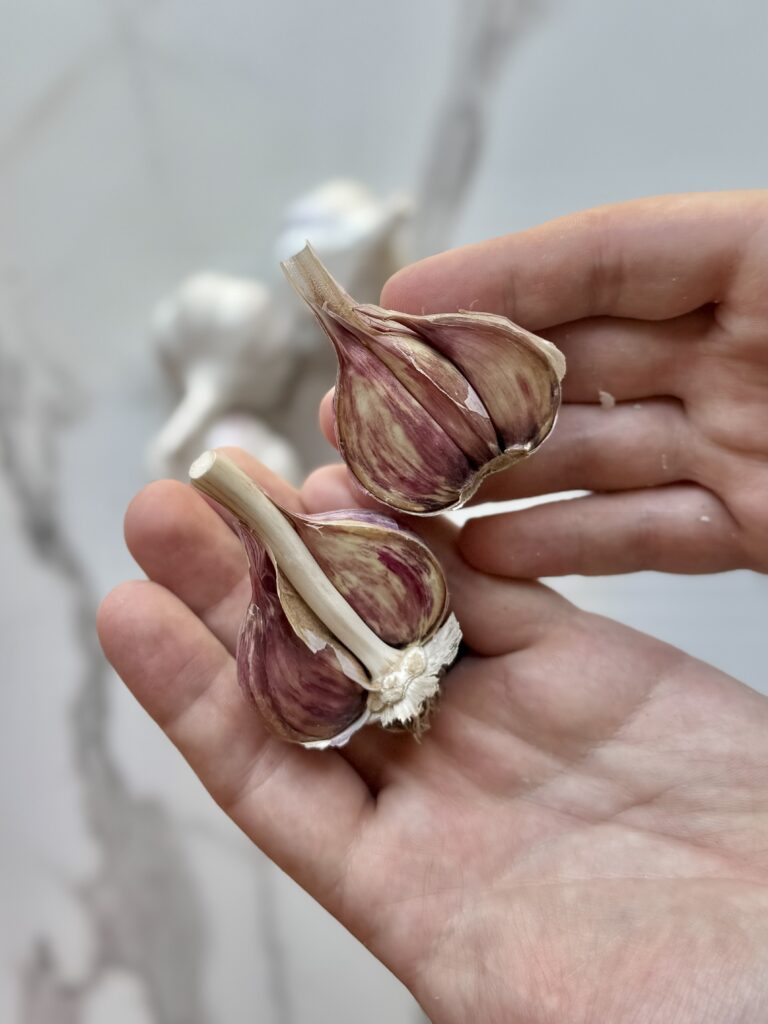
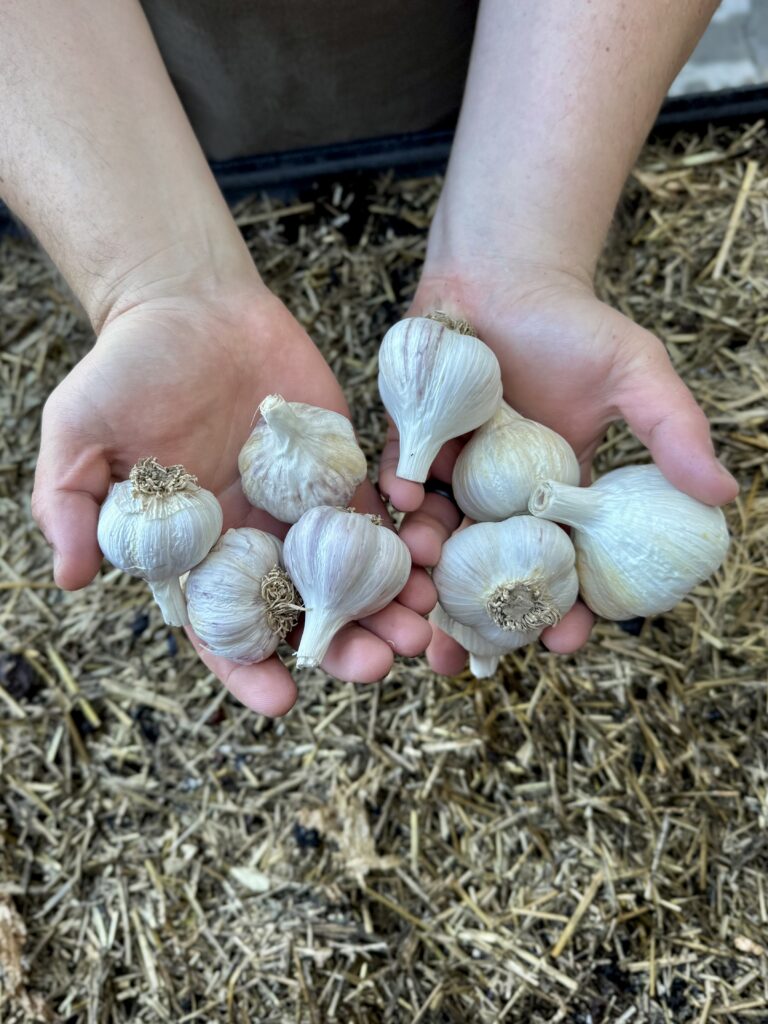
There are two main types of garlic: hardneck and softneck.
Many gardeners grow both types to enjoy hardneck garlic for flavor and scapes (and it’s definitely the one I prefer and enjoy growing more!), and softneck garlic for long-term storage.
- Hardneck Garlic grows best in colder climates and produces a central stalk called a scape. The garlic scape is notable because it is an edible, tender, green shoot similar to how green onions are the edible tops of onions. Hardneck garlic has fewer cloves per bulb but richer flavor and it stores for about three to five months.
- Softneck Garlic grows better in milder climates. It lacks a scape, has more cloves per bulb, and stores longer, often up to nine months. Softneck garlic is far more common is grocery stores because of its longer storage, milder flavor, and consistent appearance.
How Do I Plant Garlic?
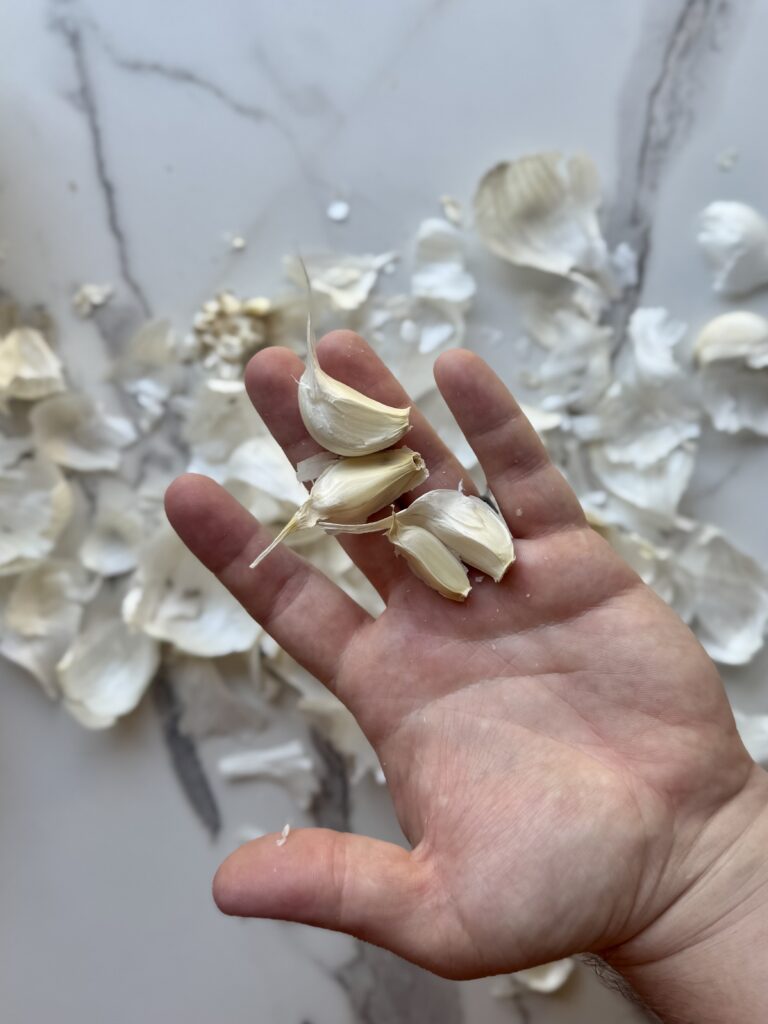
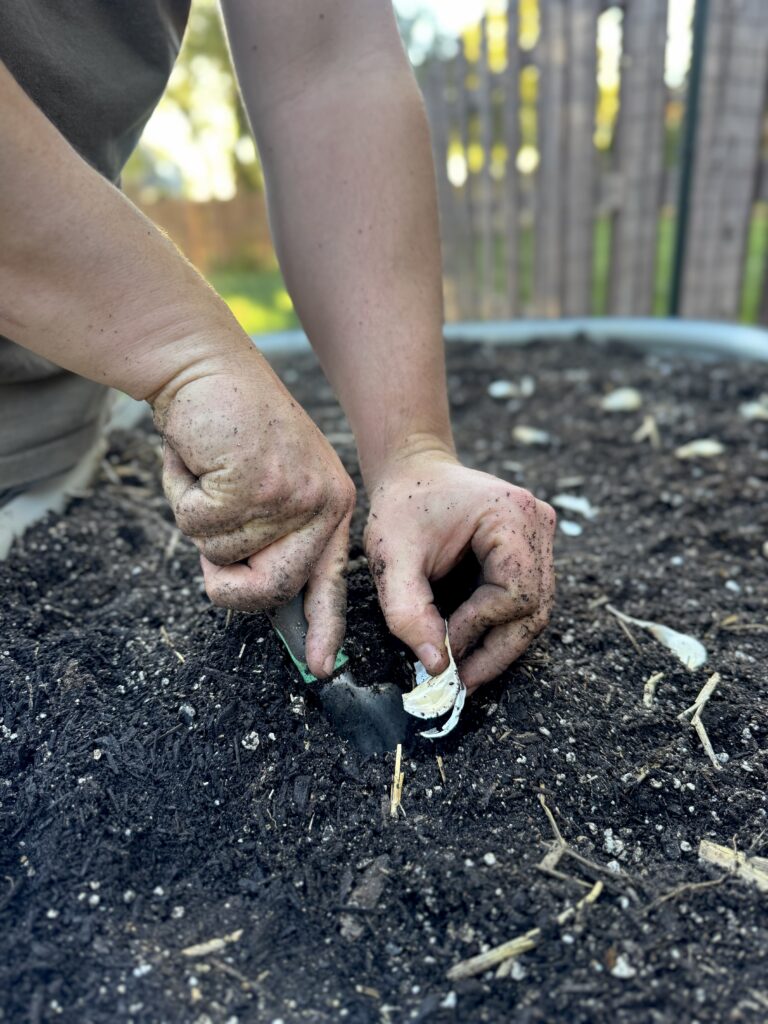
- Separate your bulbs into individual cloves one to two days before planting. This allows the base of each clove to dry slightly and form a small callus, which helps prevent rot. You can also separate cloves right before planting if you prefer, but avoid doing it too far in advance so they do not dry out.
- Do not remove the papery skin on each clove. It protects against disease, retains moisture, and helps the clove sprout properly.
- Choose the largest, healthiest cloves for planting. This will result in bigger bulbs at harvest. Smaller cloves can be used for cooking.
- Plant each clove pointed side up, about two inches deep and four to six inches apart. If possible, leave ten to twelve inches between rows for good airflow and bulb growth. If not, you should be able to get away with six inches between rows.
- Water deeply once after planting, then cover the bed with two to four inches of mulch. The best mulch options are clean straw, shredded leaves, or grass clippings without seed heads. Mulch keeps the soil warm, holds in moisture, and protects cloves through the winter.
Where I Bought my Seed Garlic
*Note that this is not sponsored! I decided to order my seed garlic from Keene Garlic, and I had excellent results. The bulbs arrived in great condition, produced healthy, vigorous plants, and grew into a beautiful harvest. If you’re looking for a reliable place to buy seed garlic, here’s why I’d recommend them:
– Large Variety: Dozens of hardneck and softneck varieties to match your climate, cooking preferences, and storage goals.
– High-Quality Seed Garlic: U.S.-grown, heirloom, organically grown, and carefully inspected for healthy, productive plants.
– Trusted by Gardeners: Along with my own great experience, Keene Garlic is known for healthy seed garlic and dependable service.
When Should I Harvest Garlic?
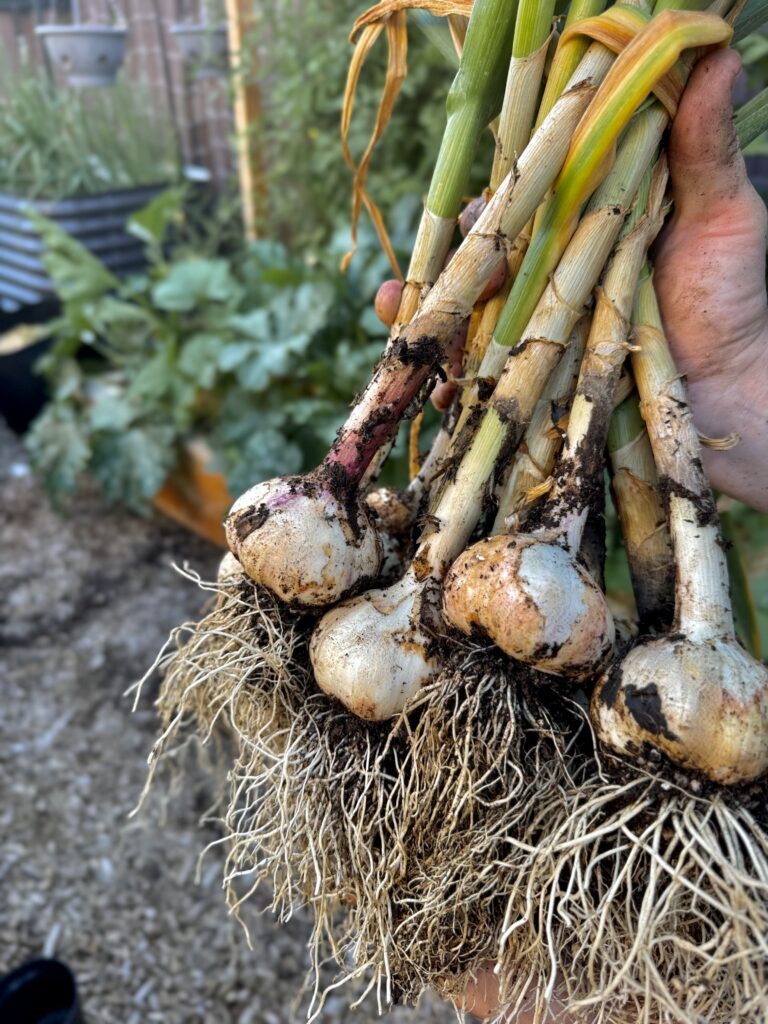
Garlic is usually ready to harvest in mid-summer, about 8-9 months after planting.
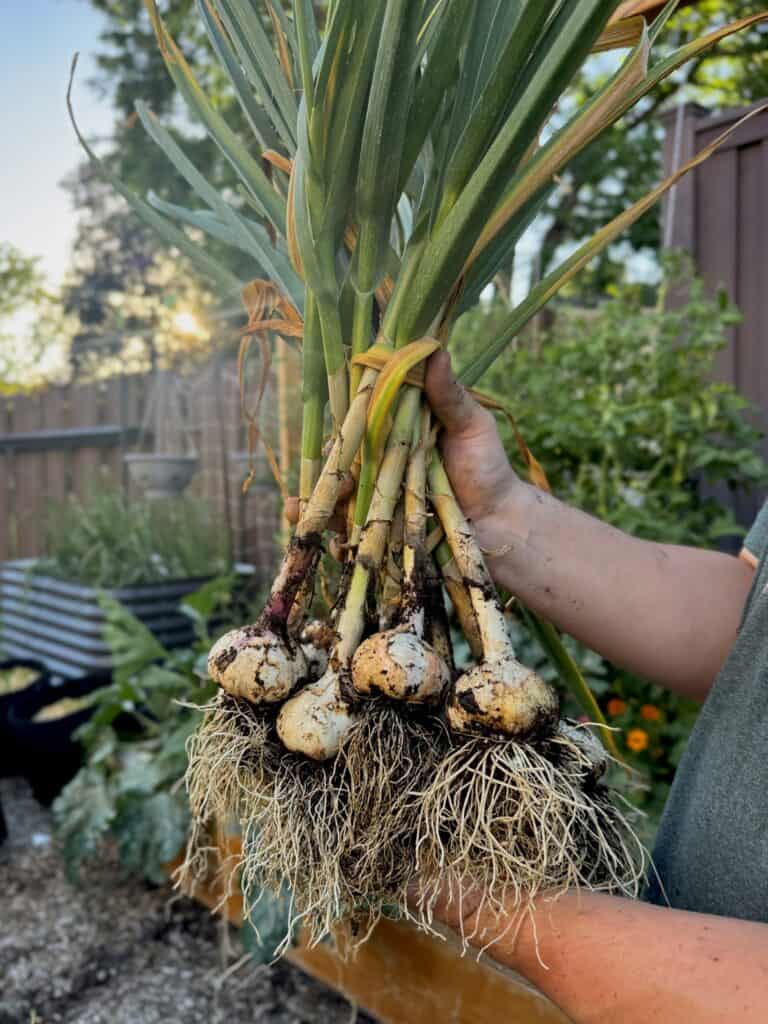
Hardneck garlic is typically ready first. It often ripens in early to mid-summer depending on your climate. You will know it is time when the lower leaves turn brown but the top three or four leaves remain green. The scape, which grows in early summer, should be removed when it begins to curl so that the plant focuses its energy on bulb growth.
Softneck garlic matures a little later, usually from mid to late summer. It will not produce a scape, so you can rely on leaf color as your guide. When about half to two-thirds of the leaves have turned brown, the bulbs are ready to dig up.
To harvest either type, gently loosen the soil with a garden fork and lift the bulbs carefully. Avoid pulling by the stalks to prevent damage.
What to Plant After Garlic:
Garlic is a heavy feeder, so it helps to rotate with crops that use fewer nutrients.
After hardneck garlic, try planting beans, peas, or leafy greens. They grow well in summer and help replenish nitrogen in the soil.
After softneck garlic, which is often harvested later, consider lettuce, spinach, or radishes. These fast growers can mature before the first frost and make good use of the remaining season.
Understanding the Allium Family
Garlic is part of the allium family, which also includes onions, shallots, leeks, and chives. Plants in this family share similar growing needs and are prone to the same pests and diseases, so it is important to rotate crops and avoid planting other alliums in the same soil immediately after garlic.
Final Garlic Growing Tips and Tricks
- Feed garlic with compost or an organic fertilizer high in nitrogen in early spring.
- Keep weeds under control since garlic does not compete well.
- Water regularly in spring but reduce watering once the tops begin to yellow.
- Save your largest bulbs to plant again next fall so your crop continues improving year after year.



0 Comments