
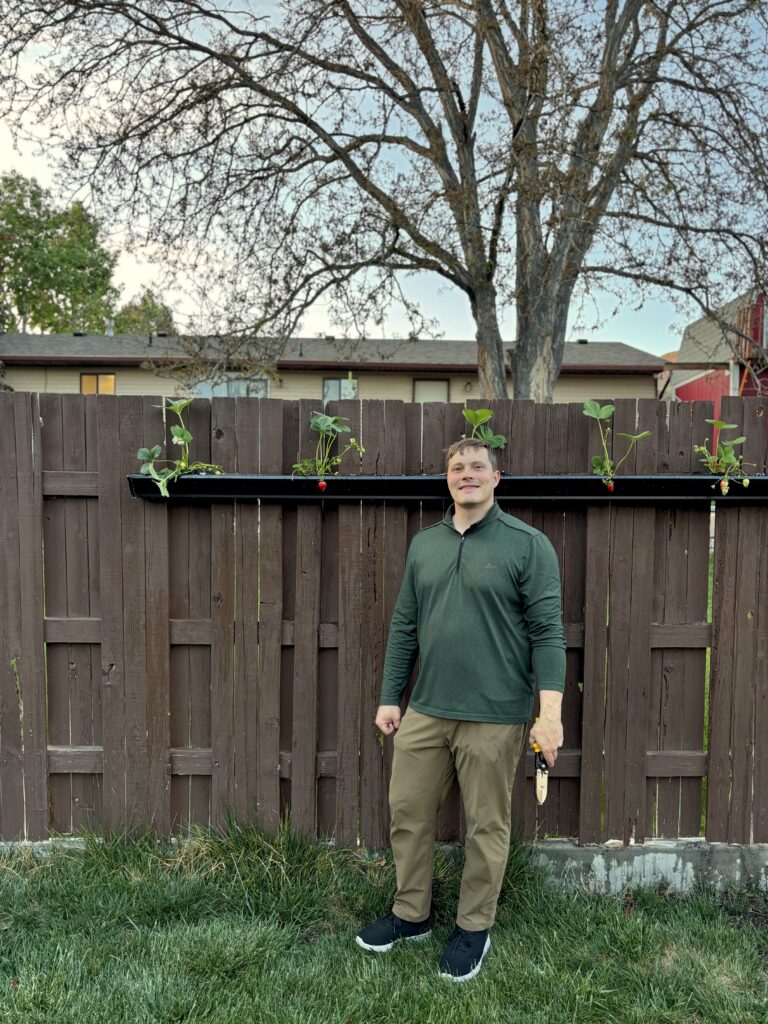
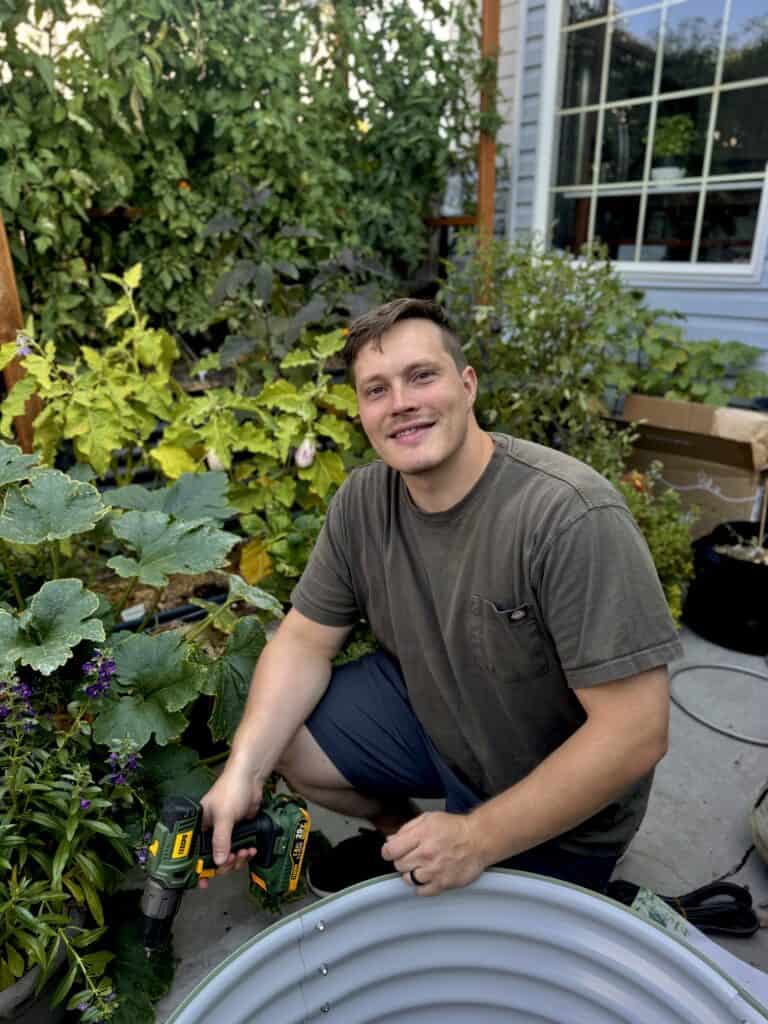
Hey all! Real Farmer Jeff here.
As many of you know, figuring out new ways to maximize garden space is my favorite way to make the most of my backyard. This is how I learned about gutter gardening. Gutter gardening is a simple way to turn unused vertical space, like a fence, into a productive garden. Gutters can be great for herbs, greens, or even certain strawberries.
In this blog post I will walk you through how to install your own gutter garden!
Materials You’ll Need
- Aluminum or vinyl gutters (I bought mine at Home Depot)
- Gutter hangers
- Gutter end caps
- Gutter sealant for end caps (you can also use screws or crimpers)
- Power drill
- Potting mix or light potting soil
Installation Steps
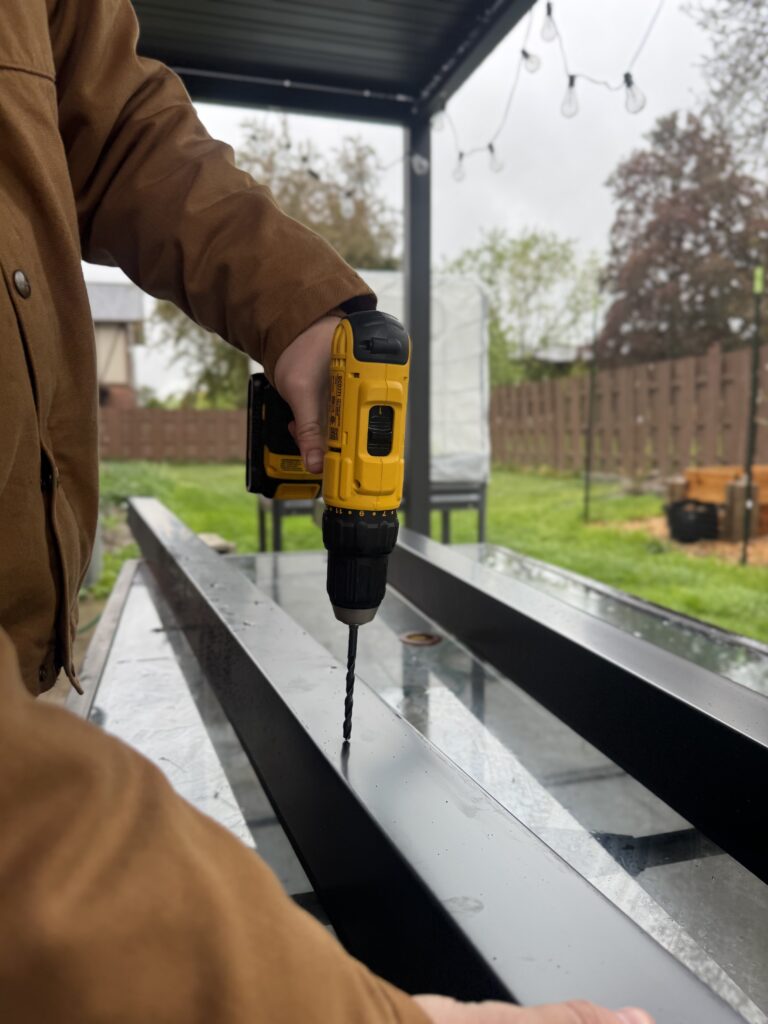
1. Drill Drainage Holes
Proper drainage is especially important in shallow containers like gutters, where excess water can build up quickly.
Instead of drilling drainage holes directly in the bottom center of the gutter, drill them about an inch off-center. I also recommend alternating sides as you go down the gutter rather than keeping all the holes in the exact same line. This helps water drain evenly while maintaining more structural strength.
Use larger drainage holes, around 1/4 inch wide, spaced every 12-18 inches.
2. Add Supports
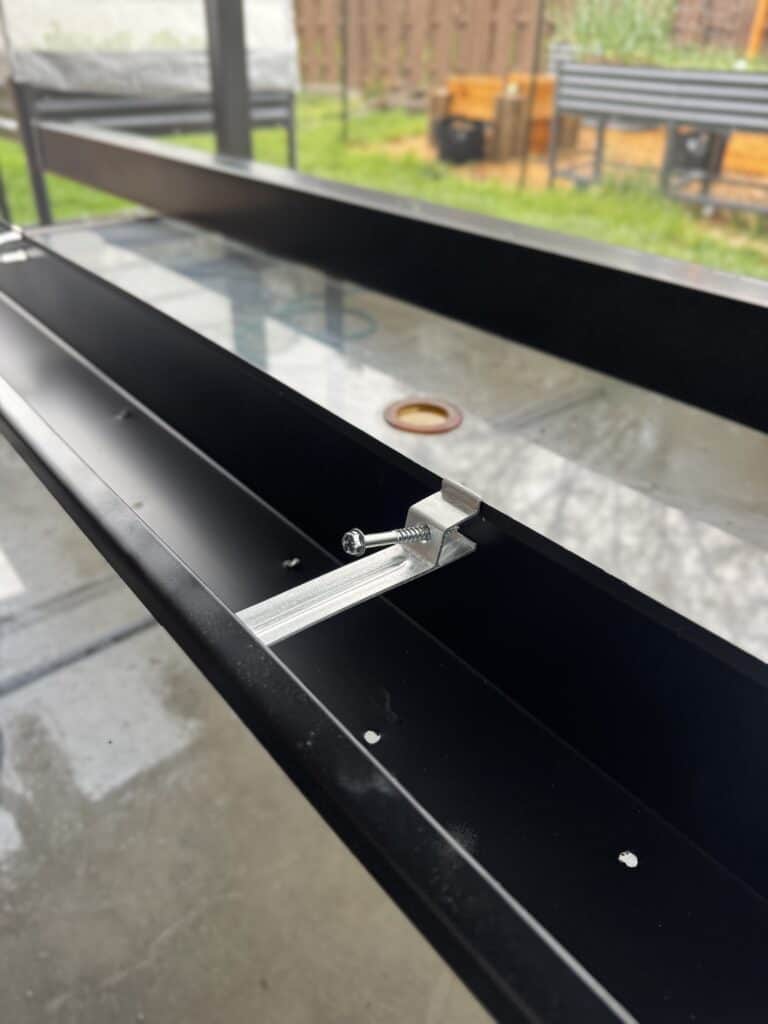
Wet soil becomes heavy, so structure matters. Add supports (gutter hangers or mounting brackets) every 12-18 inches along the gutter. On my 10-foot gutter, the sweet spot was between 7 and 8 supports.
Closer bracket spacing prevents sagging and helps the gutter to stay level long-term.
3. Mount
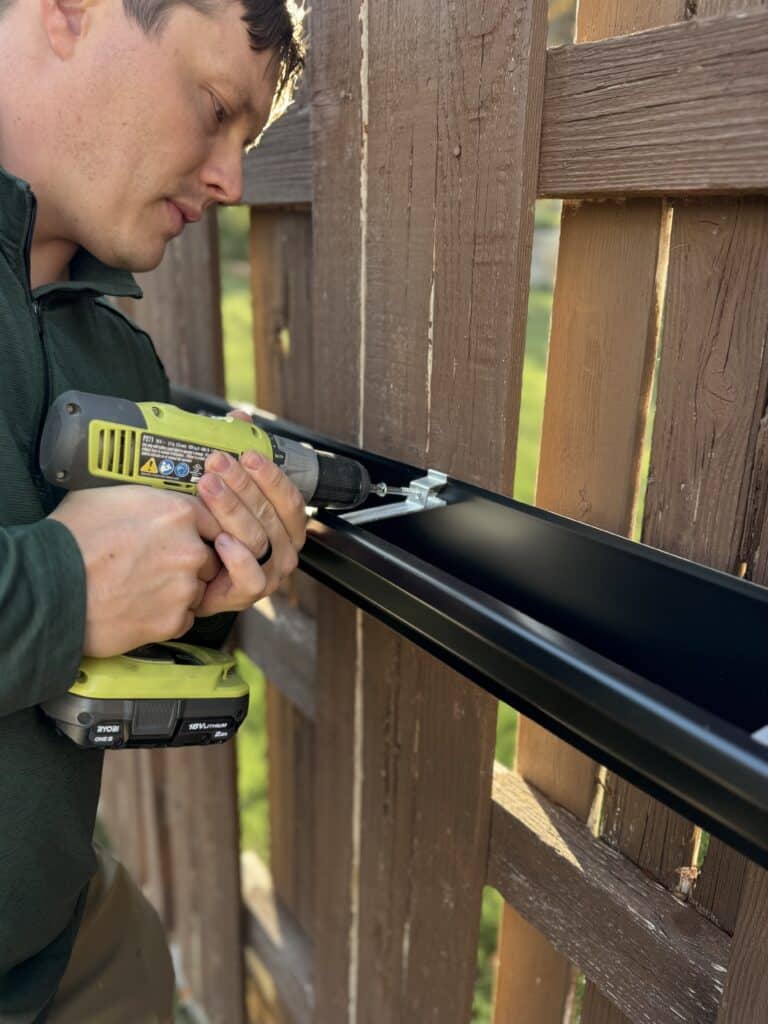
Before hanging your gutter, know that wood is generally the best option because gutter brackets are designed to screw into wood.
The mounting brackets that I used included the screws. Ideally your fence is at least ½ inch thick so the screws don’t poke through the other side.
Hang the gutters at a very slight slope to encourage drainage. The goal is to prevent excess standing water.
If you have multiple gutters it is possible to stack them, but make sure to leave a couple feet in between so that the top gutter does not cast too much shade. Stacking gutters is only preferable if your fenceline gets a lot of sun.
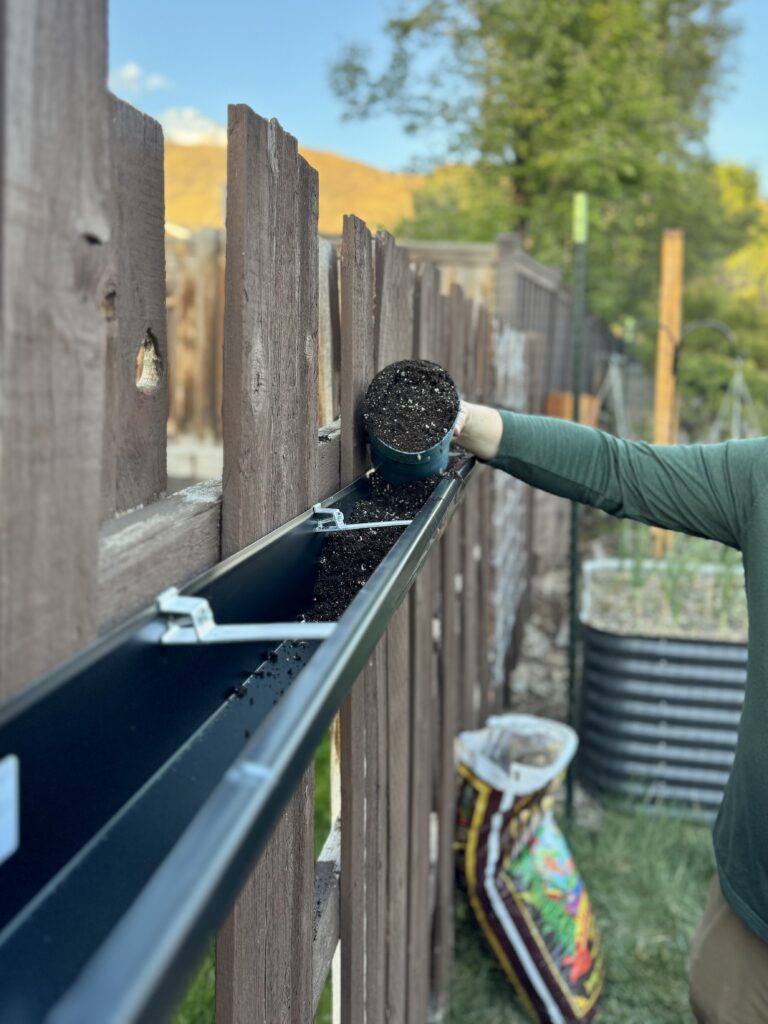
4. Fill with Soil
Use a light potting mix or light potting soil that:
- Retains moisture well
- Drains excess water
- Doesn’t compact easily
This is especially important because gutters hold very little soil, so drying out can happen quickly.
Best Plants for Gutter Gardens
Gutters are best for shallow-rooted crops.
Leafy Greens:
- Lettuce
- Spinach
- Arugula
Herbs:
- Basil
- Thyme
- Oregano
- Chives
- Mint
Flowers:
- Nasturtiums
- Marigolds
- Alyssum
Other Small Crops:
- Green onions
- Microgreens
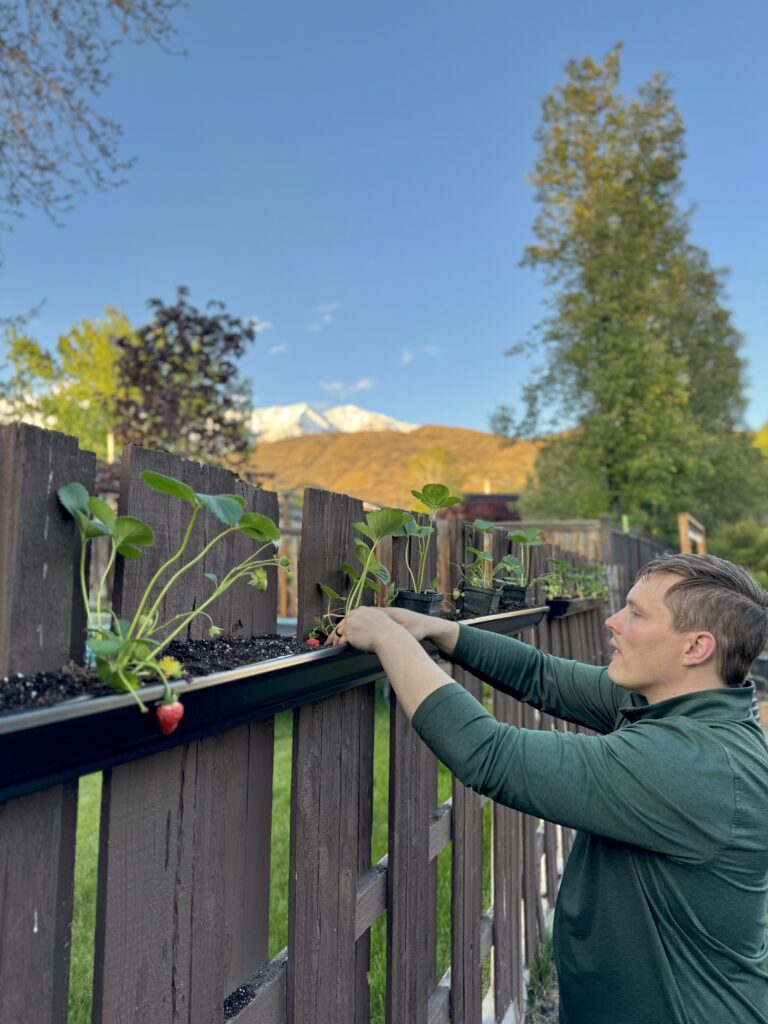
Why I Recommend Strawberries For This
Strawberries are one of the best crops for a gutter setup because they thrive in shallow soil, stay compact, and produce fruit that hangs neatly over the edge. Specifically, most of their roots stay in the top 4-6 inches of soil and spread outward instead of downward. They also fit the system structurally:
- Compact root system
- Low-growing plant
- Trailing habit
- Fruit hangs over edges for easy picking
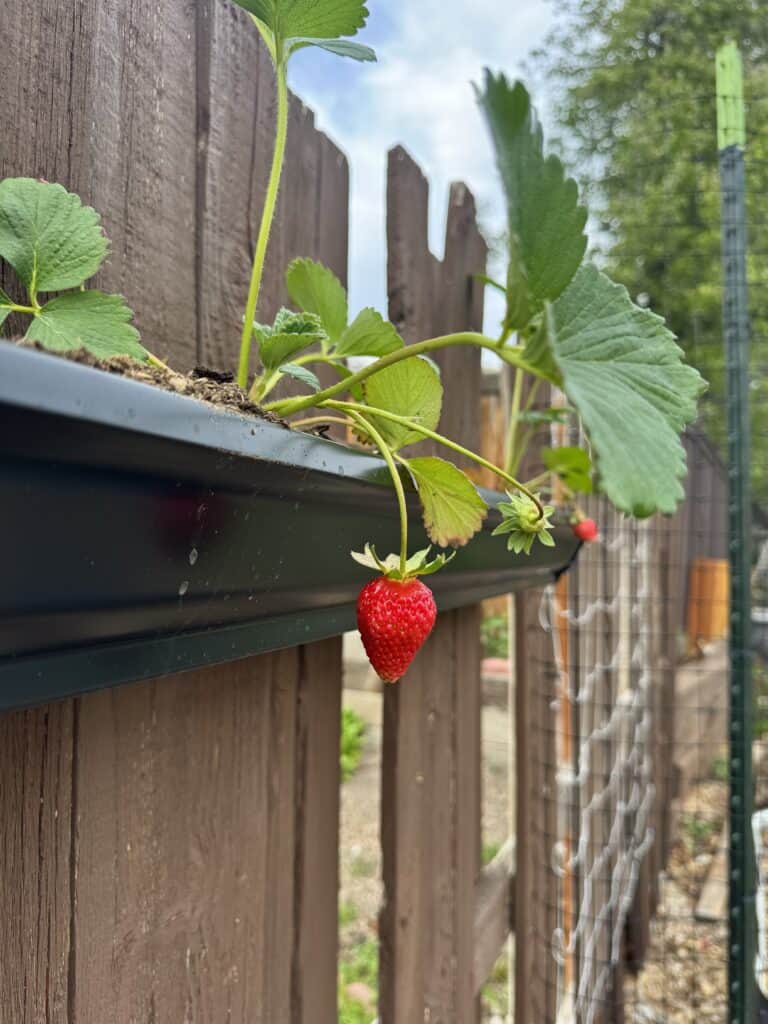
All that said, there is a tradeoff. Because gutters are shallow…
- Soil dries faster
- Plants stay smaller than in raised beds
- Watering and feeding must be consistent
Strawberries in gutters might take a bit more work, but they can still produce very well when managed properly. Plant strawberries 8-12 inches between plants if you want to fast track a dense harvest!
Best of luck with your gutter garden! Lastly, I’ve created a pros and cons list to help you determine if a gutter garden really is the best fit for you. To help you determine other options, I have another blog post with 3 other garden containers I recommend! Check it out.
| Pros | Cons |
|---|---|
| Uses vertical fence space efficiently | Soil dries quickly |
| Easy harvesting | Limited root depth |
| Cleaner fruit | Needs strong mounting |
| Fewer ground pests and weeds | Requires frequent watering and feeding |
| They look awesome | Lower yield than raised beds |



0 Comments