
Hey all! Real Farmer Jeff here.
Beautiful DIY flower arrangements are an easy way to elevate a space all summer long. For a long time, I thought professional looking flower pots required some kind of special design skill. However, the reality is that most flower pots follow a few simple principles that anyone can learn.
My hope is that this blog post will help you feel confident enough to save money make your own custom flower pot this year. Let’s get started!
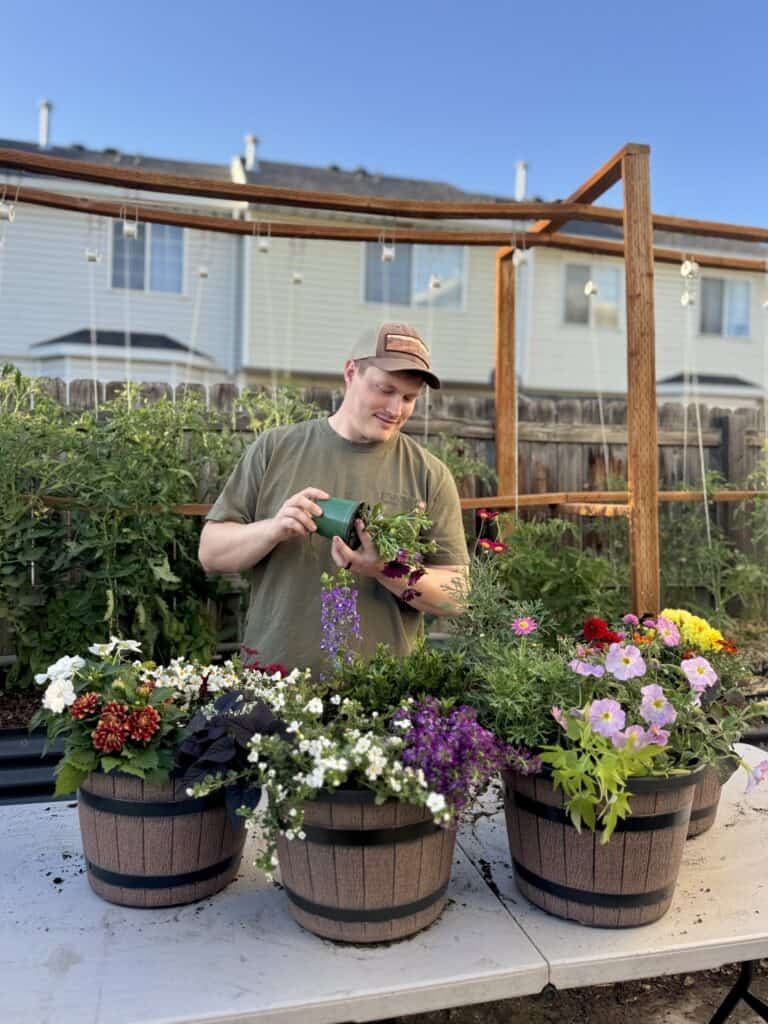
MAIN TIPS:
Start With the Right Pot Size
I prefer to start with a pot that’s between 12 and 16 inches wide, but any size can work. In my experience, 16 inch pots are much harder to find for a reasonable price and so this year I used 14-inch pots that I bought online.
One of the biggest mistakes beginners make is choosing a pot that’s too small. Larger containers hold more soil, stay moist longer, and give you room to create a much more dramatic display.
In a typical 14-inch pot, I’m often comfortable planting five or six plant combinations together.
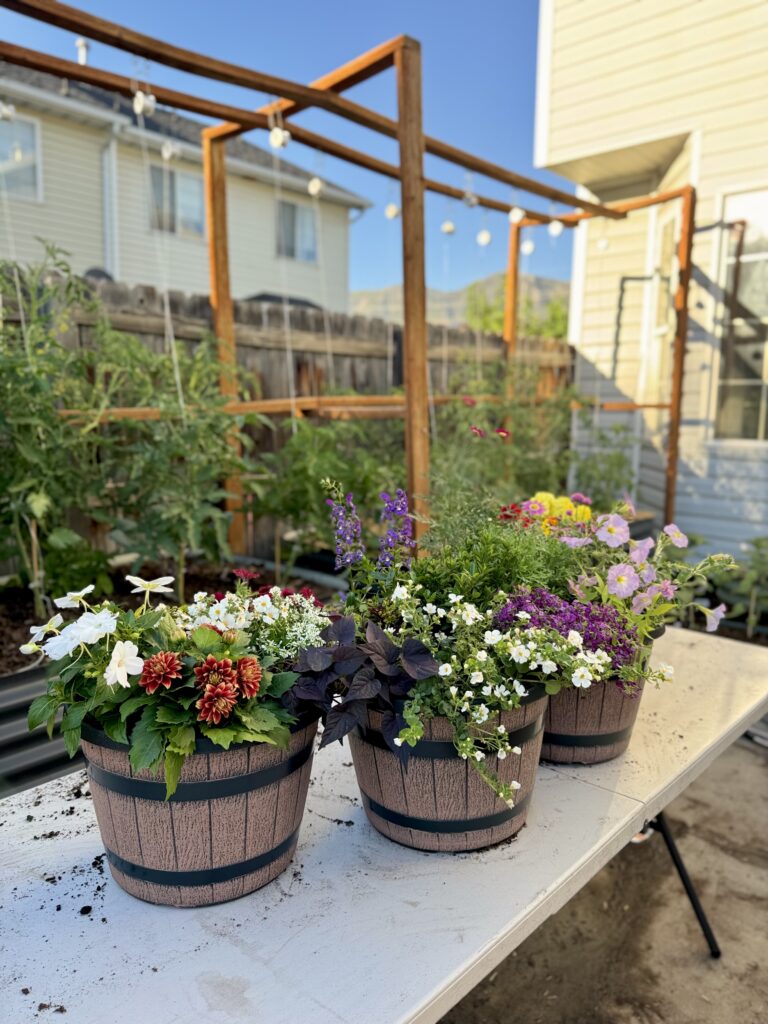
Match Your Plants to the Sun
Before shopping, determine how much sunlight the container will receive.
Full-sun plants generally need at least six hours of direct sunlight each day, while shade plants prefer protection from intense afternoon sun.
One of the biggest reasons flower arrangements struggle is because sun-loving and shade-loving plants are mixed together in the same pot. Keeping all the plants suited to the same growing conditions makes success much more likely.
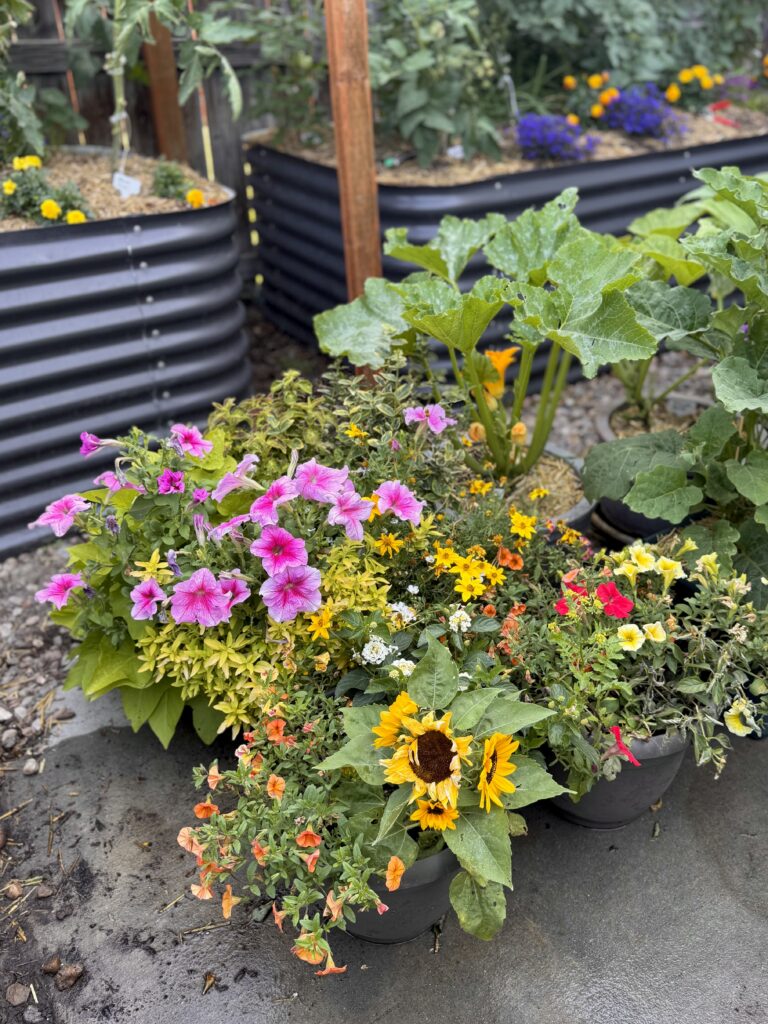
My Simple Nursery Shopping Strategy
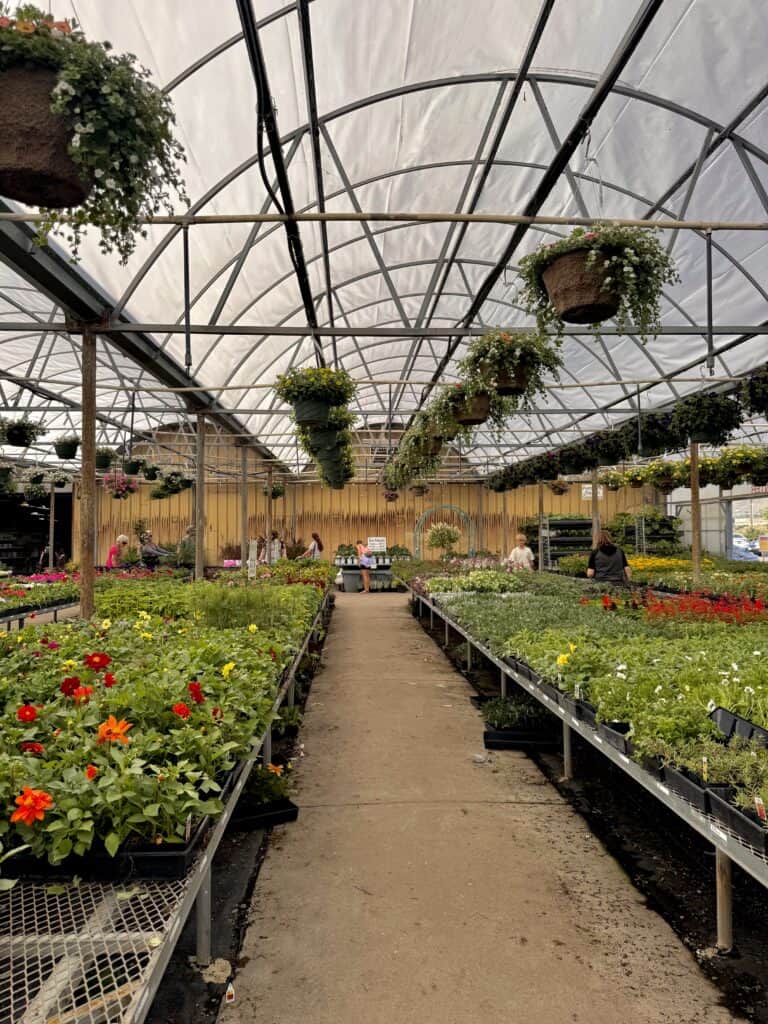
After getting a pot, my next step is to figure out if I want sun or shade arrangements. In my opinion, you should feel no pressure to determine exactly what plants you will use before getting to the nursery.
Instead, I focus on knowing 3 general points:
• What color palette am I interested in?
• How many tall, medium, and short plants am looking for?
• Do I want any plants that will “trail” or flow over the pot as they grow?
I’m usually looking for:
• One or two trailing plants
• One taller backdrop plant
• Several filler plants
This approach is especially helpful if you’re creating multiple flower pots and are flexible with what types of flowers you use.
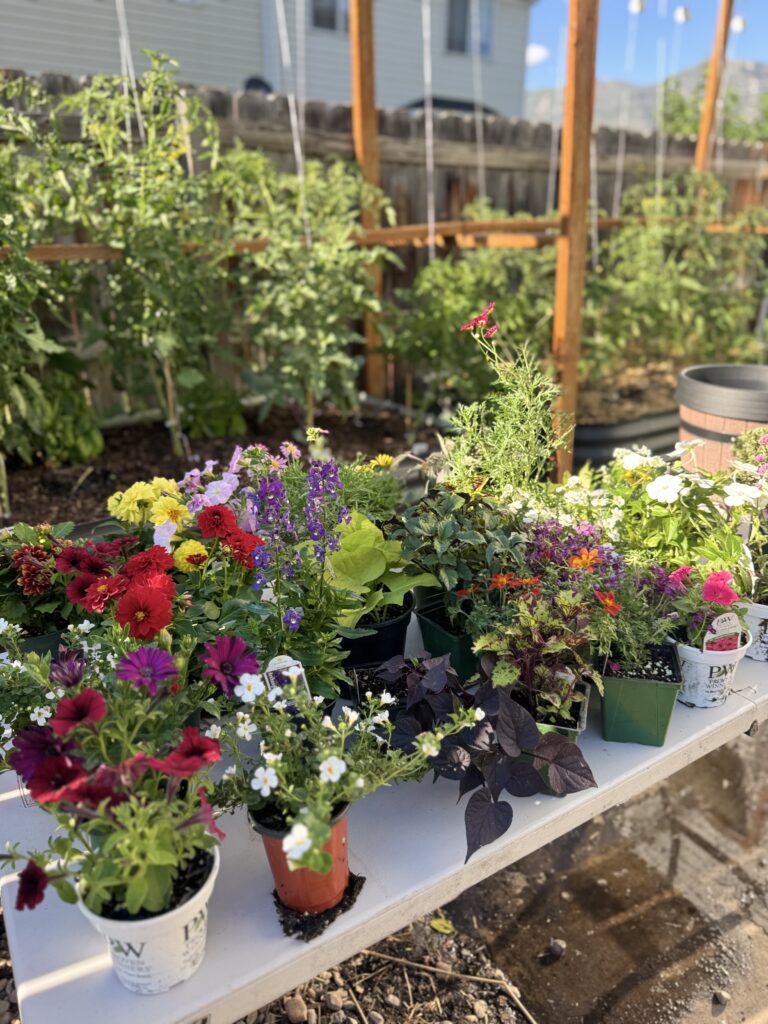
Rather than planning every arrangement ahead of time, I simply gather plants that fit my color scheme and growing conditions. This allows me to adapt to what plants look the best at the nursery and get exposure to new plants as well. Once I get home, I lay everything out and experiment with different combinations until I find something I like.
Many of my favorite arrangements weren’t fully designed until I started mixing and matching plants at home. And that’s the fun part about it!
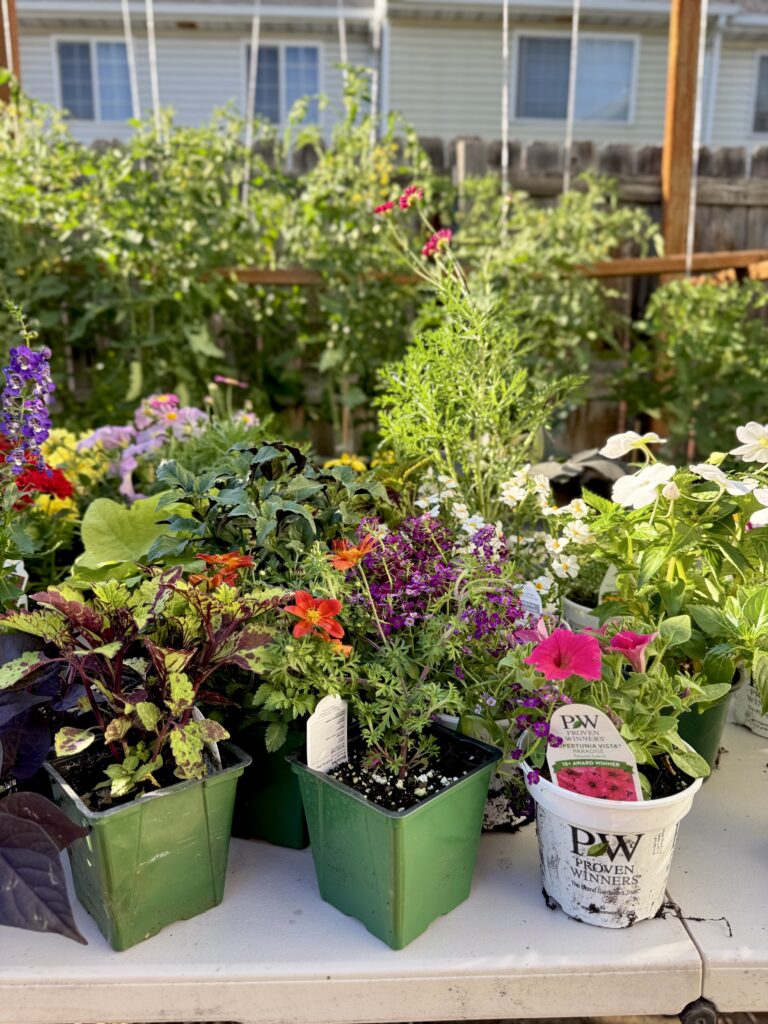
Use the “Back, Middle, Front” Method
Most flower pots sit against a wall, porch railing, fence, or front entryway. Because of that, I usually don’t place the tallest plant in the center. Instead, I put the main backdrop as far back in the pot as possible.
Back: The Backdrop Plant
This is your tallest plant and serves as the focal point. With the backdrop plant its possible to think outside the box and use mini shrubs or other plants that might not typically be used in flower pots.
Middle: Filler Plants
These provide most of the color and fullness. Just a reminder to choose plants that can tolerate the same amount of sunlight.
Front: Trailing Plants
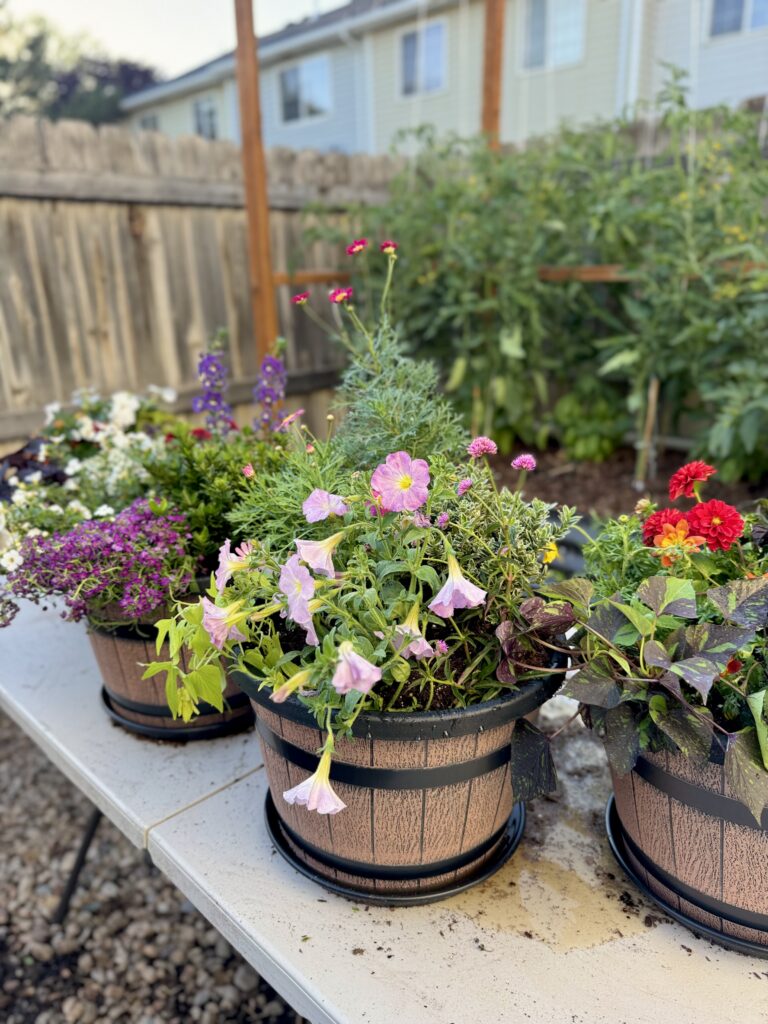
Trailing plants grow over the edge of the container and create that overflowing look that makes arrangements feel mature and professionally designed.
Examples include: Sweet Potato Vine, Creeping Jenny, Lobelia, and Dichondra ‘Silver Falls’.
This simple layout is one of the easiest ways to create a container that looks balanced and intentional.
A Money-Saving Trick: Use a Perennial Backdrop Plant
One of my favorite strategies is using a perennial or evergreen plant as the backdrop. For example, I’ve used Wintercreeper Euonymus as the focal point in containers.
Because it survives year after year, I can simply replace the annual flowers around it each spring.
Don’t Be Afraid to Plant Densely
One thing that surprises many gardeners is how many plants can fit into a larger container. In a 14-inch pot, I often shoot for the following breakdown of plants:
• 1 backdrop plant
• 3 – 4 filler plants
• 1 – 2 trailing plants
The key is staying on top of watering and fertilizing. I recommend using a quality potting mix that retains water well and fertilizing every couple weeks throughout the season if possible. Alternatively, you can amend the potting mix with slow release fertilizer at the beginning of the season.
My Favorite Full-Sun Flower Pot Combination
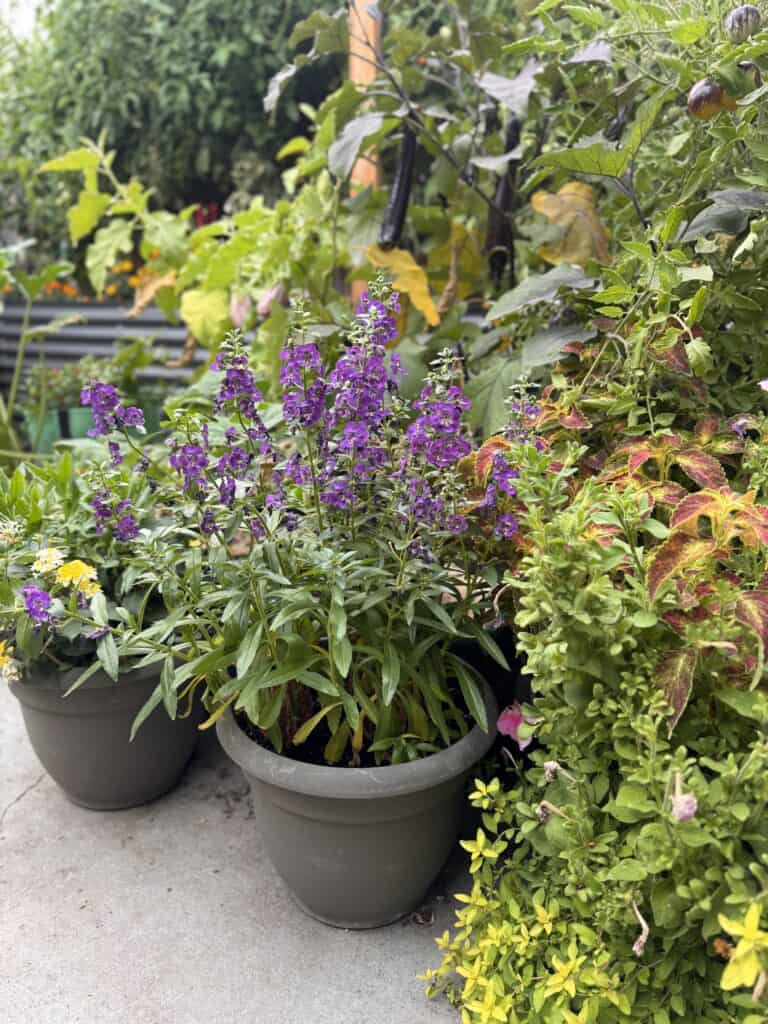
One of my favorite arrangements to date was the following:
Backdrop
• Wintercreeper Euonymus
Fillers
• Yellow Bidens
• Pink Petunias
• Colorful Coleus
• White Bacopa
Trailers
• Sweet Potato Vine
Accent Foliage
• Gold Mound Duranta
What I love about this combination is the variety of colors and textures. The yellow Bidens and pink Petunias provide bright flowers, while the white Bacopa softens the arrangement and ties everything together. In addition, the Sweet Potato Vine spills over the edges, and the Coleus adds colorful foliage that makes the entire container look more professionally designed.
Choosing Colors That Work Together
One of the easiest ways to make a flower pot look professionally designed is to limit yourself to two or three main colors.
A few simple guidelines can help:
• White goes with everything and helps tie colors together.
• Pink and purple create a softer, more cohesive look.
• Purple and yellow create bold contrast and stand out from a distance.
• Lime green foliage pairs well with almost any flower color.
• Repeating a color two or three times throughout the container helps the arrangement feel intentional.
• If you’re unsure, choose one main flower color and one accent color. Simpler combinations often look better than trying to use every color available.
• Flowers with multiple colors can help bridge your color palette. Certain Petunias, Calibrachoa, and Lantana varieties naturally tie different colors together.
• Dark foliage makes flower colors pop. Plants with burgundy or deep purple leaves create contrast and help brighter flowers stand out.
Best of luck!
Don’t feel like every plant needs to flower. Some of the best containers combine flowers with foliage plants for added texture and contrast. As a general rule, I like roughly one-third of the container to be foliage plants. Green, chartreuse, burgundy, or dark purple foliage helps the flower colors stand out without making the arrangement feel too busy.
If you end up creating a custom flower pot this summer I’d love to see a picture of what you came up with!
Here are my main pieces of advice:
• Water and fertilize consistently
• Start with a larger pot
• Match plants to the sunlight available
• Shop for colors and heights that work together
• Build your arrangement from back to front
• Include trailing plants
• Plant more densely than you think
You got this! As always, let me know in the comments below if you have any questions.



0 Comments